
Zimbabwe: Building change from the community up

A Community Facing Deep Challenges
Before any interventions took root, Munyati and surrounding areas under Zibagwe RDC faced chronic social and developmental issues. Children walked long distances for clean water. Poor sanitation made waterborne diseases common. Teenage pregnancies and early child marriages forced girls out of school. Youth voices were absent from local decision‑making. Information about health, rights, and opportunities rarely reached the community.
As a Junior Councillor, I joined others to help amplify youth voices and address these barriers. Supported by the local authority and several NGOs, our Junior Council introduced programmes that focused on civic education, hygiene campaigns, anti‑drug abuse awareness, and school attendance. What makes our initiative meaningful is that it places young people at the centre of change—supporting us not only to speak but to act.
The Change We Witnessed
The transformation in our community has been powerful and visible. One of the most significant shifts has been the reduction in school dropouts—especially among girls. Through consistent awareness campaigns, dialogues and mentorship, learners gained confidence to speak about early marriages, peer pressure, and the importance of staying in school. Teachers began reporting improved discipline, increased attendance, and more active participation in class.
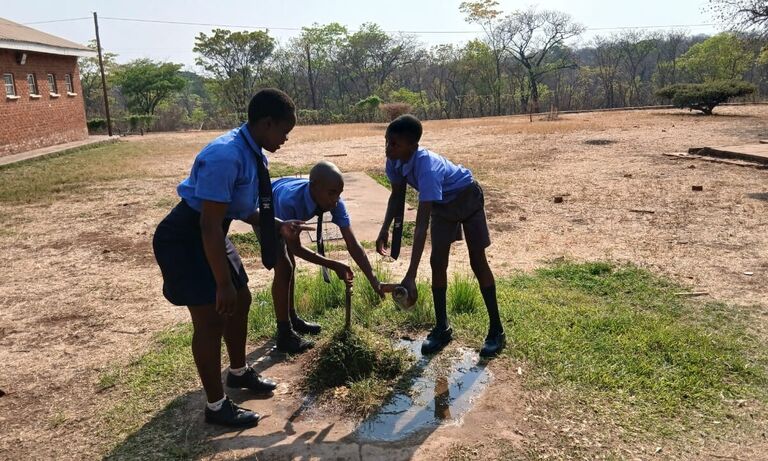
Sanitation and hygiene practices also improved. Previously, open defecation and limited access to safe water placed families at constant risk. After clean‑up campaigns and health department engagements, more households constructed proper toilets, and communities now maintain cleaner surroundings. Regular school‑led clean‑up campaigns became the norm. The installation of new water taps at Munyati Secondary School reduced the long daily walks once endured by students.
These changes benefited children, girls, and vulnerable families the most. They now have better information, improved services, and increased inclusion in planning processes that affect their lives. At the same time, Junior Councillors like myself have grown more confident—learning to lead, mobilise, and drive solutions.
How the Change Happened
The progress we see today came through strong collaboration. The Junior Council worked hand‑in‑hand with community leaders, teachers, health officials, and students. Youth forums opened space for young people to express their concerns. Clean‑up campaigns helped restore pride and responsibility for our environment. School engagement sessions introduced difficult but necessary conversations on drug abuse, sexual health, and child rights.
Local NGOs and government departments strengthened our efforts by providing resources, training, and mentorship. Campaigns for girls’ empowerment, safe learning environments, and community responsibility began to gain real traction. Students who once felt disengaged now participate in school clubs, speak confidently during assemblies, and join problem‑solving activities.
What once felt impossible—reducing absenteeism, curbing early pregnancies, improving sanitation—became achievable through youth-led and community-supported action.
Sustaining and Scaling the Change
To ensure the impact continues, we have established youth-led clubs such as the Junior Council Club, Health Club, and Girls’ Empowerment Network. These clubs form a sustainable structure for awareness on education, hygiene, rights, and gender equality. Through peer educators, knowledge keeps circulating among students and growing stronger with each new school year.
In partnership with the local council and NGOs, we plan to introduce termly training workshops to build leadership and life skills for new students. Parents and guardians are being engaged through School Development Committees to reinforce these efforts at home.
Scaling up is just as important. We plan to extend our model to nearby schools through inter‑school awareness campaigns, youth dialogues, and clean‑up competitions. Social media and local radio will help share success stories—ensuring the ripple effect reaches beyond Munyati.
Evidence of Change
The evidence of this transformation is reflected in everyday life. Teachers report reduced drug abuse, fewer early pregnancies, and improved class participation. Students now take pride in maintaining a clean and safe environment. Clubs are active, leadership is visible, and young people are taking responsibility for their wellbeing and that of their community.
Areas that were once littered are now maintained by students who lead regular clean‑up campaigns. Girls are speaking out more boldly after empowerment sessions with mentors and health personnel. Water taps installed at the school have dramatically improved hygiene and reduced absenteeism.
From improved sanitation to stronger youth leadership, from safer learning spaces to empowered girls and boys—the change is undeniable.
This story proves that when young people are given the tools, trust, and space to lead, a community can transform itself from the inside out. And when communities work together, they build a stronger, safer, more hopeful Zimbabwe—starting from the community up.
By: Sam Micheal Razzle
Comments
Related Drivers Of Change