
Zimbabwe: Breaking cycles, building futures

In a society where national leaders often speak proudly about women’s economic empowerment, many families in the heart of Bulawayo continue to battle daily struggles that remain unseen. My journey toward leadership began among these families, orphans, single mothers, young people, and men pushed to the margins by poverty, violence, and systemic neglect. Working with them transformed my understanding of service and inspired me to step into political leadership as the Councillor for Ward 23 in Nkulumane Township.
In this community, the statistics tell a story of profound vulnerability. Among sex workers, 63% have experienced violence, 58% have been arrested, and 45% are living with HIV. Substance abuse among young people is equally alarming: 68% use cannabis, 38% misuse cough syrups, and more than 57% consume high‑potency “skunk.” Many begin experimenting as early as age ten. These patterns fuel school dropouts, violent behaviour, and long‑term trauma. In a society where patriarchy still dominates, the girl child is often the first to lose out, her rights diminished, her safety compromised, and her future determined by circumstances beyond her control.
Our organisation exists to disrupt this cycle. Through gender mainstreaming, skills development, and holistic psychosocial support, we work to ensure that women, youth, orphans, and those affected by gender‑based violence and poverty have access to education, health services, and economic opportunities. Before our intervention, drug and alcohol abuse, commercial sex work, and HIV prevalence were growing at an uncontrollable pace. Today, this is beginning to change.
A community rising: what has changed
There is a noticeable shift taking place in Nkulumane. Through sustained engagement, counselling initiatives, and community mobilisation, rates of drug and alcohol abuse are declining as more young people choose healthier paths. Women and youth are participating in livelihood projects that offer not only income but also dignity.
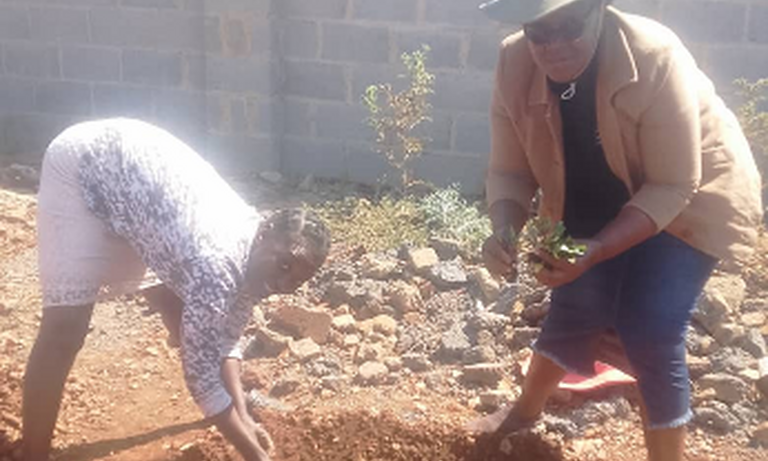
Gardening, vocational training, and entrepreneurship programmes are strengthening household resilience. Families who once depended entirely on handouts are now producing vegetables, handmade household products, and items for resale. These initiatives have boosted confidence, supporting families to rebuild their lives with pride.
To expand opportunities, we are establishing a youth‑led bakery that will employ at least ten young people currently completing hotel and hospitality training. This bakery will act as both a business and a skills‑training hub, giving young people hands‑on experience in production, management, and entrepreneurship. Women in the community are also gaining momentum. A floor polish production project has empowered them with practical skills to build micro‑enterprises. For many, this marks the first time they have been able to generate independent income.
Health remains a critical pillar of our work. Our breast cancer awareness campaign encourages women to prioritise early detection, take ownership of their health, and break the silence that often surrounds cancer in low‑income communities.
These combined efforts are strengthening the social fabric of Nkulumane, fostering resilience and creating avenues for long‑term stability.
How this change emerged
The progress we see today is rooted in community‑driven solutions. Gardening and vocational training have restored dignity among families who once felt trapped by poverty. By enabling households to generate income through vegetables, home‑care products, and small enterprises, we are building a pathway to self-reliance. At the same time, we are investing in youth-focused, income-generating projects that offer practical skills and real employment prospects. The youth bakery, floor polish manufacturing, and hospitality training are part of a broader vision to build a thriving local economy anchored in skills and enterprise.
Our interventions in breast cancer awareness, psychosocial support, and gender-based violence prevention are strengthening community health and restoring hope. These initiatives are woven together to support a larger mission: creating a community where every person, especially women and youth, can live with dignity, opportunity, and safety.
Sustaining and scaling impact
Sustainability is at the heart of our strategy. We are actively positioning community members to lead their own development journey. Peer counselling programmes are being introduced to equip young people and women with tools to address substance abuse, gender‑based violence, and mental health challenges. This peer‑led model ensures that support structures remain long after initial funding ends.
We are strengthening our partnerships by showcasing real stories of transformation to local authorities, traditional leaders, and private-sector actors. By building multi‑sectoral support, we hope to replicate this model in other wards across Bulawayo.
Our future plans include establishing community‑based rehabilitation centres offering counselling, skills training, and reintegration programmes for recovering drug users and survivors of abuse. These centres will serve as safe spaces where healing and empowerment come together.
Evidence of change
The transformation is visible. More young people are engaging with training centres and local governance structures. Individuals leaving commercial sex work or recovering from substance abuse are stepping into new roles as entrepreneurs, trainees, and community contributors. Women’s financial independence is growing, strengthening households and reducing vulnerability.
There is a clear behavioural shift among youth, less involvement in risky behaviours, more engagement in productive initiatives. Social cohesion is increasing, bridging ethnic and political divides that once fuelled distrust.
This initiative has proven to be a replicable model for community-led development, offering hope and measurable impact on vulnerable populations. With continued investment, the ripple effect will only grow stronger.
By: Trish Nyamidzi
Comments
Related Drivers Of Change