
Zimbabwe: Breaking barriers and empowering gender equality at an early age

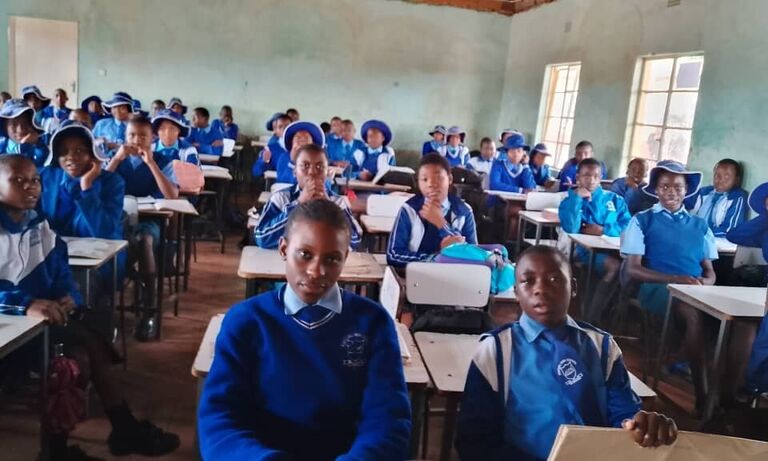
As a young girl, I rarely challenged boys’ opinions in class. Not because I lacked ideas, but because I feared being dismissed or ridiculed. I assumed that boys were inherently more capable, stronger, and more intelligent. With time, I realised these beliefs were not mine alone. Many girls around me felt small in the presence of boys, and many boys had been raised to see themselves as leaders by birthright.
Everything began to shift when I became the Junior Council Chairperson of Bubi District. In this position, I was exposed to ideas that challenged long‑held norms about gender. I began to reflect deeply on my own experiences and recognised that much of our inequality stemmed not from ability, but from mentality — the stories we are told about ourselves and the stories we learn to believe.
Determined to make a change, I began visiting schools across the district, initiating open conversations with children about gender equality. I asked them what they believed about boys and girls, and their responses echoed my own childhood experiences. Boys openly stated that doing household chores “lowered a man’s value,” and that cooking or washing dishes was work meant for girls. Many girls admitted to staying quiet even when they disagreed with boys’ opinions in class, for fear of appearing disrespectful or “out of place.”
These discussions opened my eyes further. The problem was not behaviour alone — it was mindset. And mindsets could be changed.
The Shift Begins
During my lessons, I encouraged learners to question stereotypes, challenge what they had grown up hearing, and imagine a world where everyone had equal opportunities. We spoke honestly about the pressures boys face to appear strong, and the limitations girls face when they are told they are weak. I shared real-life stories of women leaders, scientists, activists, and community builders to demonstrate that leadership is not a birthright — it is a choice.
Soon, something remarkable happened.
Children began reflecting on their own beliefs. Boys started admitting that some of the norms they followed made no sense. Girls began raising their hands in class, speaking more confidently, and challenging ideas with boldness. Learners who previously believed gender roles were fixed started asking how they could help others shift their thinking too.
A group of students requested that we start a gender equality club, a platform to continue the discussions and to educate others who were struggling with the same assumptions. Together, we formed a vibrant group that now includes more than 30 active members.
To reach even more young people, students began recording short videos, sharing testimonies of how their thinking had changed. Some spoke about how they used to view chores, others about how they used to dismiss girls’ opinions, and many girls shared how they had gained confidence to participate in leadership and decision‑making. These videos became powerful tools of peer education.
How Change Was Achieved
The shift did not come from one workshop or one speech. It came from continuous open discussions, safe spaces where learners could express themselves, and relatable mentorship. We talked about respect, shared responsibilities, mental strength, and the harmful impact of stereotypes on both girls and boys. We created a community of young people who were ready to unlearn old beliefs and support one another.
This change became visible in everyday life:
- Boys began helping with household chores without shame.
- Girls stepped forward to lead school activities and class discussions.
- Learners collaborated as equals in school projects.
- Teachers noticed an improvement in respect and cooperation between boys and girls.
The transformation proved that mindset change is powerful — and possible.
Sustaining the Movement
To ensure this journey continues, we plan to sustain and expand the gender equality programme. I am continuing school visits, and our gender equality group remains active, supporting learners across the district. We aim to integrate gender awareness into school clubs, youth groups, and community activities, and to train peer educators who will keep the movement alive even after my term as Junior Council Chairperson ends.
We also plan to use social media to share messages of empowerment with wider audiences and involve local governance structures to reach more youth.
Our long-term goal is simple but powerful:
to make gender equality a normal, everyday practice — not a lesson, but a lived reality.
Evidence of Change
The evidence is everywhere. Behaviour has shifted. Mindsets have changed. Boys and girls alike now speak, act, and lead differently. Girls who once stayed silent now confidently share their views. Boys who once mocked chores now embrace responsibility. More than 30 young people actively participate in the gender equality group, and many more engage through social media and discussions at school.
Their testimonies say it all:
“We realised that equality starts with how we think. When we changed our mindset, everything around us changed too.” — Wendyflix
“At first, I thought doing chores was for girls. Now I know respect and responsibility belong to everyone.” — Gareth Kamungira
“Gender equality begins with recognising that we are all worthy and capable.” — Nithule Muroiwa
These voices, alongside photos, videos, and school observations, paint a powerful picture of transformation.
What began as personal reflection has grown into a movement led by young people determined to reshape their communities. And this is only the beginning.
By; Agatha Ncube
Comments
Related Drivers Of Change