
Zimbabwe: A mother to the motherless.

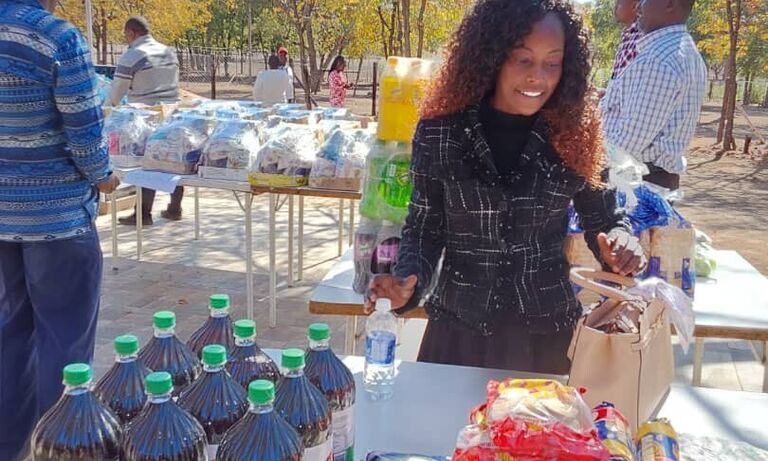
Nyaradzo Madzikura is the Councilor for Ward 9 in Gweru City Council and also serves as the Deputy Mayor. Long before stepping into public office, her heart was drawn to the underprivileged especially the many child-headed families in her community. She has always said that it pains her to see children living without school fees, without food, without medical attention, and without parents. HIV devastated Ward 9, leaving behind children carrying the weight of grief, sickness, and adult responsibilities.
Faced with this reality, she felt compelled to become “a mother to the motherless.” The “Ahaa” moment came when Gender Links Zimbabwe held some councillors’ induction workshops that championed issues of women and youth in leadership positions as well as gender mainstreaming into local governance. This marked her journey to want to bring a change and lasting solutions to challenges faced by the vulnerable members of the community.
She began by researching and identifying every struggling family in the ward whom she documented putting each vulnerable family, orphaned children and households where situations spoke of pain more than words would express. After gathering enough information, the councilor then sprang into action by devising a well-coordinated movement comprising of fellow councilors, the business community, churches and other well-wishers dedicated to supporting young vulnerable children. Councilor Nyaradzo then started mobilizing school fees, collecting groceries, receiving clothes from well-wishers, and delivering every item personally to the beneficiaries.
One of her proudest achievements was sourcing a wheelchair for a child who had spent years being carried on relatives’ backs. The child later said with joy, “I am finally independently mobile, thank you councilor.” The councilor was emotionally moved by both happiness and gratitude and that episode marked the beginning of yet another zeal to want to bring more change to the affected vulnerable children.
The councilor quickly followed up children who had dropped out of school to organize for their readmission to school where she personally paid school fees for ten children. One of them, after returning to school, went on to represent Zimbabwe in Swaziland and won a Gold Medal at COSSASA. She often reflects on how easily that talent could have been lost without the timely intervention. Further, many children who had turned to drugs and idleness were taken to council clinics for rehabilitation and counselling, child-headed families, especially those affected by HIV, received critical support like medical supplies and follow up on those who had defaulted on ART were initiated again. She also ensured that they received nutritious food and emotional care.
Whilst doing this work some families resisted outside involvement, preferring privacy over assistance. In such cases, the councillor would negotiate by involving other players such as the department of Social Welfare to ensure the children’s safety. This also acts as a sustainability measure. The involvement of potential sponsors, churches, caregivers, and community members is a clear sign of a coordinated approach. Her idea was that “No child in Ward 9 deserves to suffer alone we must restore dignity, health, and opportunity.” Said councillor Nyaradzo. In the delivery of her charity work the councillor had placed issues of transparency and accountability at the core of her work.
In addition, before her intervention she noted that children in Ward 9 roamed the streets, engaged in drug abuse, early sexual activities, and risky behaviour. Some HIV-positive children were constantly sick and not collecting medication. Today, ten children are in school, others participate in weekend nutritional gardening, and previously sick children are stable on medication. Their faces have transformed from sadness to confidence and hope.
Learah and Lilly, two young girls she supports, once told her,
“We did not lose a mother when our mother passed on we now have a mother.”
Another child, Shabdeen, expressed,
“A non-biological mother gave me a second chance.”
To ensure sustainability, she engaged professional counsellors to equip the children with life skills, addressing trauma linked to drugs, early sexual behaviour, and abandonment. She taught them to manage nutritional gardens to reduce dependence on donations. HIV-positive children were linked with nurses for long-term care. She established support groups of caregivers who routinely check on the children and respond to their needs. She also trained peer educators, empowering the children to guide and support one another.
As part of retaining evidence The councilor has been documenting all photos, videos, success stories and reports both qualitative and quantitative in nature. Looking back before the intervention, Ward 9 was filled with idle children who would indulge in unlawful activities such as underage sexual encounters, and drug abuse. The registered milestone is that children are back in classrooms, whilst others are actively engaged in income generating activities such as horticulture, buying and selling and trades like welding and motor mechanics.
The councilor is committed to ensuring that the change lasts beyond donations by introducing some counselling programs led by professional counsellors were youths are taught life skills, self-worth, and emotional resilience. Support groups and peer educators meet regularly to review on the children’s way of life.
The councilor is posed to register a community based organization that would spearhead the needs of the vulnerable groups in Gweru and beyond. The journey has just started and will not stop at anything until the best is realized for the underprivileged.
Evidence of this transformation is abundant clear as photos and videos of distributions, school enrolment activities, nutritional gardens, and support group meetings. A child once unable to walk now moves freely with a wheelchair. A young athlete from Ward 9 represented Zimbabwe. Children who once filled the streets now fill classrooms and gardens.
Children who once felt abandoned now feel protected and cared for. She continues her work with humility, commitment, and maternal love. Her mission remains simple and unwavering no child in Ward 9 should ever feel alone again. Through collective effort, compassion, and leadership, that mission is becoming reality one life at a time.
By Nyaradzo Madzikura, Zimbabwe
Comments
Related Drivers Of Change