
Zimbabwe: Ntombizodwa Kumalo Leads a Revolution of Hope in Bulawayo

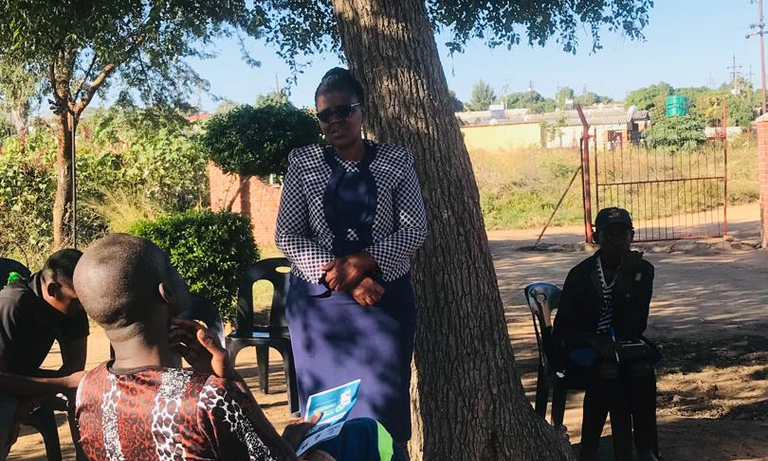
In the heart of Nkulumane Township in Bulawayo, a powerful wave of transformation is rising led by Ntombizodwa Kumalo, a woman who turned compassion, courage, and community service into a lifelong mission. Her journey began long before she stepped into politics. It started on dusty streets, in crowded homes, and in conversations with underprivileged families whose stories moved her into action. She worked closely with orphans, single mothers, youth, and men who were fighting silent battles that society too often ignored.
What she witnessed was heartbreaking. In Bulawayo, 63% of sex workers face violence, 58% are arrested, and almost half live with HIV. Young people were spiralling into substance abuse, with cannabis, cough syrups, and high-potency “skunk” drugs becoming alarmingly common. Many started as early as 10–15 years old. Gender inequality remained deeply rooted, leaving girls vulnerable and without a fair chance at shaping their future. These realities compelled Kumalo to step forward not as a bystander, but as a leader determined to break destructive cycles and build new pathways for dignity, opportunity, and hope.
As Councillor for Ward 23, she created an environment where marginalized groups could reclaim control over their lives. Her organisation became a home for empowerment through gender mainstreaming, capacity building, behavioural change, and economic transformation. The impact was immediate. Women, youth, and orphans once excluded from opportunity now had access to practical skills training, counselling, and income-generating projects.
Change began to take shape in gardens, workshops, and classrooms. Vocational training programs taught young people and women new skills, while gardening projects brought food security and income generation into the homes of struggling families. A youth-led bakery is now taking shape set to provide employment, training, and a sustainable business model for the community. Ten young people are already enrolled in a hotel and hospitality course, positioning themselves for stable employment. Women are producing floor polish for resale in local markets, a new step toward financial independence.
Beyond livelihoods, Kumalo placed strong focus on health and wellbeing. Her breast cancer awareness program inspired women to prioritise early detection and self-care steps that could save lives in vulnerable households.
The ripple effects of her work continue to reshape Nkulumane. A recovering drug and alcohol user, Mthembu, shared how her intervention changed his direction: “Ms Kumalo inspired me to do a course in hotel and hospitality. Now I’m focused.” A former sex worker, MaMkwebu, expressed pride in her new life: “I used to be a sex worker, now I’m into agriculture fending for my family in a noble way.” A group of women who benefited from her training spoke with gratitude about their new skills: “We are a group of women who were skilled in making floor polish.”
These stories paint the larger picture of change youth who once felt lost now finding purpose, women who once depended on unstable incomes now creating their own, and entire households rebuilding themselves with dignity. Behavioural shifts among young people are visibly reducing risky activities, while former sex workers and recovering drug users transition into productive community members.
Kumalo’s strategy ensures that this change does not fade. Through peer counsellor training, she is equipping young people and women to lead community support systems. Through expanded SRHR education, she is empowering local schools, churches, and families with accurate, life-changing information. And through plans to establish community-based rehabilitation centres, she is envisioning safe spaces where survivors of abuse and recovering drug users can heal, learn skills, and reintegrate into society with confidence.
Her efforts have fostered unity across political and ethnic lines, strengthening local networks and creating a culture of mutual support. The evidence is visible reduced vulnerability, increased civic participation, new sources of income, and stronger communal bonds.
In Ward 23, progress is no longer an abstract idea. It is seen in revived gardens, in the hands of young trainees, in the quiet confidence of recovering addicts, and in the newfound independence of women who once felt invisible. Ntombizodwa Kumalo has shown that sustainable change begins when one person chooses to uplift others with intention and compassion. Her work stands as a model of what community-led development can achieve: resilience, dignity, and a future where no one is left behind.
Comments
Related Drivers Of Change