
Elias Rathabeng Mamabolo - South Africa

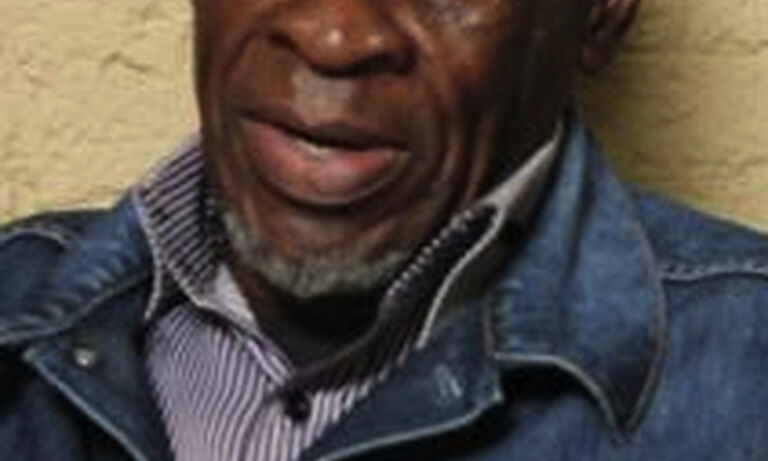
I come from the rural part of Limpopo, where Chiefs and traditions are the order of the day. There are places where a woman is not allowed to go in, or when she is in she is not allowed to talk. In the "lekgotla," the place of our traditional court, a woman can lay a charge but she is not allowed to talk. That is how men in my community are raised, and this shapes the attitudes that they carry around.
I am doing what I can to change the minds of people in my community. I write columns for different publishers around HIV and AIDS. I am a volunteer councillor with the support group for people living with HIV/AIDS in the Capricorn municipality, with the Department of Health. I did research work for the book "Through the Voice of South African Men," by Christopher Brooks. I also established a library at my village.
There are students who help me run the library. They have just finished their grade twelve and either they did not have an opportunity to further their studies, or they are studying long distance education. Our library has books that were donated by the municipality from Gender links. These books have particularly helped me with the after school program for young boys. I chose to do a program for boys because there is a program for girls already that is run by the queen in the village.
Soon after holding a village workshop about the SADC Gender Protocol, I realized we are actually helping the government deliver on the promises it made by signing the Protocol. The targets of the Protocol are relevant. Even though I am still learning about the Protocol, and what needs to be done to achieve its targets, I can see that it speaks to the needs of the people, and how they can be assisted.
I work with young boys to change stereotypes that are instilled by their families and the village. They need to respect women, and know that they are equal. I also work with women who are given the responsibility of dealing with the HIV and AIDS pandemic on their own. They are not allowed to negotiate condom use by their partners. When they find out that they are HIV positive and they need to be on ARV's, they cannot even tell their partners or husbands. Women are expected to be the ones who take care of the people who are sick from HIV/AIDs, even though they are not paid, or even compensated for the work.
Gender Links can come to our villages and do more village workshops in our languages. Through the media work Gender links does, the university community radio invites us to talk about our work. We can have a space where people can talk about gender issues and the Protocol.
Comments
Related Drivers Of Change