Swaziland: Swazi government promotes self-reliance for women and youth

| Gender Links
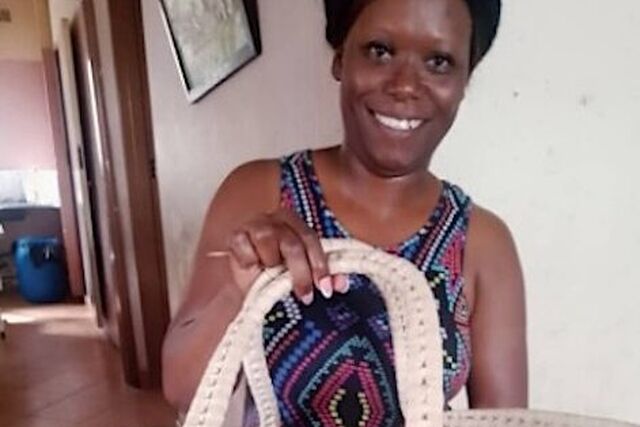
The Swazi Governmen Thembekile Myeni from Tibane says: “This project has removed the burden of us expecting to receive money from our husbands, we are now able to bring food and send our children to school." Men have been supportive of the project because they see the contribution that this group scheme brings to the homesteads.The project can be replicated fairly easily. The operational costs are kept to a minimum. Groups members live close together to negate transportation costs. Rather than giving participants money to start businesses, the project teaches participants how to save and manage their own money right from the outset. Group members use their initial deposit to cover the minimal start-up costs.A training-of-trainers model is used to build the capacity of staff and community members to ensure knowledge and skills stay with the communities. Groups take control of their own operations, including mobilisation, development of an agreement for operating, and identification and problem-solving of challenges and issues. This process creates ownership and builds capacity in management and leadership.Community members are provided with workbooks that can be re-used and shared. Project results and lessons learned will be shared with authorities in an effort to increase awareness and interest in the economic empowerment of women and youth.
Entry 13844
t Micro Projects Department spearheads a project to improve the quality of life of people at local level (in rural and peri-urban areas of Swaziland). More specifically, its purpose is the socio-economic empowerment of local communities through improved community organisation, increased access to basic services in health, water and sanitation and improved food and income security.It aims to improve income generation for local communities to enable them, to maintain structures in the community and especially women and youth. The specific objective of this project is the provision of training on social, economic, entrepreneurship and vocational skills, with a focus on youth and women.The training encourages women and youth in rural communities to establish savings and credit groups for business formations for groups and individuals for economic empowerment.The main activities are:- Meeting relevant stakeholders such as local leaders for support.
- Group sensitization and mobilization. Nomination and training of trainers in the community.
- Training women and youth about savings problem-solving.
- Running the loan scheme.
- Data collection on how many businesses have been formed from such groups.
Thembekile Myeni from Tibane says: “This project has removed the burden of us expecting to receive money from our husbands, we are now able to bring food and send our children to school." Men have been supportive of the project because they see the contribution that this group scheme brings to the homesteads.The project can be replicated fairly easily. The operational costs are kept to a minimum. Groups members live close together to negate transportation costs. Rather than giving participants money to start businesses, the project teaches participants how to save and manage their own money right from the outset. Group members use their initial deposit to cover the minimal start-up costs.A training-of-trainers model is used to build the capacity of staff and community members to ensure knowledge and skills stay with the communities. Groups take control of their own operations, including mobilisation, development of an agreement for operating, and identification and problem-solving of challenges and issues. This process creates ownership and builds capacity in management and leadership.Community members are provided with workbooks that can be re-used and shared. Project results and lessons learned will be shared with authorities in an effort to increase awareness and interest in the economic empowerment of women and youth.Comments
Related Stories Of Change