South Africa: Stitching Through Pain: Economic Empowerment in the Face of Trauma

From Trauma to Transformation
In KwaKhoza, near Eshowe in KwaZulu-Natal, the story of Nelisiwe Mthembu is one of resilience, courage, and hope. At just 21 years old, Nelisiwe survived a brutal attack by her own brother a violent assault with ucelemba (a traditional weapon) that left her unconscious and fighting for her life. When she woke up in hospital, her world had changed forever. The attack left her with severe injuries, affecting her speech and mobility on the right side of her body.
Instead of receiving comfort from her family, Nelisiwe faced blame. Her mother accused her of causing her brother’s death after he took his own life following his arrest. Isolated and traumatized, Nelisiwe turned to the Department of Social Development for help. This was the beginning of her journey toward healing and empowerment.
The Turning Point
The Department referred Nelisiwe to The Rainbow Circle, a GBVF-focused community organization committed to empowering women through psychosocial support and skills development. She joined a six-month sewing project designed to help survivors rebuild their confidence and gain economic independence.
When Nelisiwe first walked into the sewing class, she was quiet, withdrawn, and visibly burdened by pain. Her disability made participation difficult, and soon she left, convinced she could not succeed. But the organization's social worker refused to give up. With compassion and encouragement, she reminded Nelisiwe that her disability did not define her potential. Slowly, Nelisiwe returned and began to re-engage.
The Change
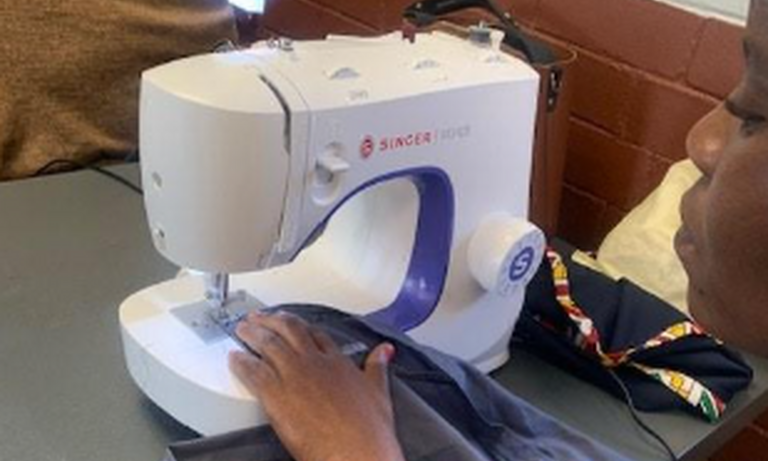
Today, Nelisiwe is learning to sew. She has successfully made an apron and a straight skirt and is now working on a shirt. Each stitch represents more than skill it symbolizes healing, resilience, and a renewed sense of purpose. Her confidence is growing, and she now interacts with her peers, asks for help when needed, and participates fully in group activities.
“Sengikwazi ukuthunga, angikaze ngicabange ukuthi ngiyoke ngisebenzise isandla sami futhi.”
(I know how to sew something I never thought I would do again considering my disability.) Nelisiwe Mthembu
Her transformation has also impacted others. Fellow participants have learned the value of inclusion and solidarity, offering support and encouragement. The sewing project has become more than a skills program it is a safe space for healing and empowerment.
“Ngezandla Zethu singaziphilisa. When women who have survived abuse are given both emotional support and skills, they heal their trauma wounds and begin to rebuild their live not defined by trauma, but by what they’ve done to change their situation.” — Zinhle Zungu, Project Coordinator
“Despite life’s challenges, hope must never be lost. People we are born with may not walk the entire journey with us, but God will give us new family along the way to support us.” — Sduduzile Ngcobo, Social Worker
Evidence of Change
- Attendance and Commitment: Nelisiwe now rarely misses a class, showing strong motivation and engagement.
- Skills Development: She has completed multiple garments and continues to learn despite physical challenges.
- Emotional Growth: Once withdrawn and silent, she now communicates more, seeks help, and participates confidently.
- Social Connection: Nelisiwe has built positive relationships within the group, replacing isolation with belonging.
Sustainability and Next Steps
The Rainbow Circle is committed to walking this journey with Nelisiwe and other women. Beyond sewing skills, the organization provides ongoing counseling and a safe space for survivors to heal at their own pace. Plans include:
- Continued psychosocial support after training ends.
- Expanding economic empowerment programs for GBVF survivors.
- Building networks for women to access markets and sustain livelihoods.
Nelisiwe’s story is not just about learning to sew it is about reclaiming dignity, finding strength in community, and proving that healing is possible even after unimaginable pain.
By Zinhle Zungu, Eshowe KZN
Comments
Related Stories Of Change