Zimbabwe: From Hatcliff with Power

| Gender Links
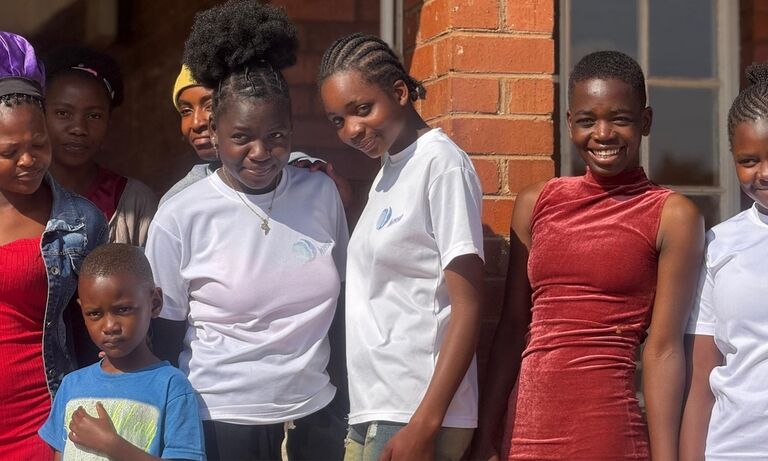
In Hatcliff Harare, young feminists are reclaiming their Sexual and Reproductive Health and Rights (SRHR) advocacy through lived languages and the power of intersectional experiences to counter backlash.Hatcliff is a high-density suburb on the outskirts of Harare, Zimbabwe’s capital city. Initially established as a resettlement area, it has evolved into a vibrant yet under-resourced community, home to many young families and unemployed youth. Like many peri-urban settlements, Hatcliff faces challenges such as limited access to healthcare, overcrowded schools, unemployment and inadequate infrastructure. At the same time, it carries a strong sense of resilience and community spirit, with young people, especially adolescent girls and young women, at the heart of both its struggles and its potential for change.This is the very community where I proudly rolled out my Women of the South Speak Out Advocacy Project, SafePath Zimbabwe – Guiding Girls Towards a Secure Future. Through it, young women and girls were not only equipped with knowledge and skills on SRHR but also empowered to recognise opposition, challenge harmful narratives and boldly reclaim their own stories and future.
Entry 68380
It is here where young feminists are reclaiming SRHR defendership and countering backlash, anti-gender and anti-rights narratives, by grounding their advocacy in lived language rather than bureaucratic slogans, ensuring SRHR advocacy and change messaging truly resonate with their community. Over the years, slogans such as No means NO, #WithHer have been used by feminists and activists all over the country to advocate for the respect of women’s rights and bodily autonomy, but more than anything, it has led to more resistance and backlash. This is because most communities do not understand or relate to the call to action due to pervasive harmful gender norms and values that are prevalent and over the years has shaped their general belief systems on gender and women’s rights. These young women are using an intentional, decolonial and nuanced approach to resist backlash, they are mapping power and influence recognizing that social transformation rarely begins with state actors alone. Rather than centring the state or relying solely on legal enforcement in advocacy against unsafe abortion and EUP, they are prioritising local-level advocacy.The young girls are harnessing indirect influences and ensuring alignment with existing social systems to build lasting change. Instead of always confronting backlash head-on, these young feminists are working through influential but less obvious channels like parents, faith leaders, peer networks, teachers and even cultural practices. These actors shape everyday attitudes, which is why they strategised and saw the need to have them as allies if engaged strategically. It’s easy to have a heart-to-heart conversation with a guardian, a pastor, or your teacher in making them see life from your perspective as a young person. What it truly means for them to create an enabling environment to harness your full potential in relation to your health and well-being, thus they have started engaging them as “low-hanging fruit”.In their churches and community events, they are using storytelling in local languages to share their peer’ negative experiences as a result of negative SRHR outcomes through SRHR messaging that is more relatable and less confrontational. For instance, they often remind faith leaders with the saying “makuva haadzokere kuchurch” (graves don’t repent). This comes from the painful reality of losing young women and girls to unsafe abortions. It challenges them to reflect on their role as guardians of souls because a girl lost too soon is a spirit that never gets the chance to live fully, let alone walk back into the pews. This means rooting advocacy in lived languages, traditions and intersectional realities of young women’s lives so SRHR is seen not as “foreign” or imposed but as part of the community’s own growth.The lesson we can learn from these bold young women is that rather than dismissing cultural norms or community structures, advocacy can work within them to create change that feels authentic and sustainable. Instead of dismissing cultural norms or community structures, advocacy can bend with them like reeds in the wind, finding strength in what already holds communities together.In places like Hatcliff, traditions, faith, and family hierarchies are not just barriers; they are also entry points. When we speak SRHR through lived languages, weave it into proverbs or align it with values of care and protection that elders already uphold, the message is harder to resist. Change then feels less like an external imposition and more like a community’s own wisdom rediscovered. This approach ensures that advocacy is not only heard but also embraced, as it echoes the rhythm of everyday life while quietly shifting the ground beneath it.Backlash may try to silence young women and girls, but in Hatcliff, the girls are rewriting the script. They are proving that advocacy spoken in lived languages, rooted in community and carried by young feminists is unstoppable. This is not a closing chapter, but rather it’s a spark.I challenge us all to stop seeing young women and girls as beneficiaries and start seeing them as architects of the future. Give them the tools, the spaces, and the voices they have long been denied, and watch how they flip the script on bodily autonomy, SRHR and resist backlash.(Written by: Lynet Tinoza, Women’s Rights Advocate, WOSSO Fellow)Comments
Related news