Lesotho: Untold story of women cross-border traders


Women navigating risk, resilience and survival in Lesotho’s informal economy
Every week, dozens of Basotho women queue at the Maseru Bridge border post, bags packed and calculations running through their minds. They are not tourists. They are informal cross-border traders – bo ‘mathoto – whose livelihoods depend on navigating customs rules, transport costs, currency fluctuations, and unpredictable border procedures.
Though often missing from national economic conversations, these women sustain households, pay school fees, support extended families, and keep local markets alive. Yet their work remains exposed to policy gaps, limited access to information, and gendered risks within an informal trading system.
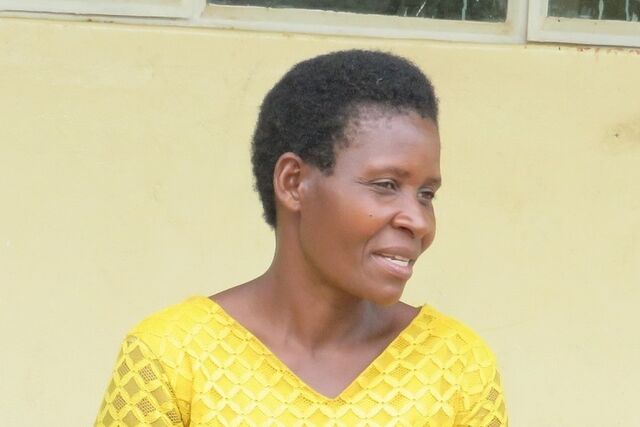
Among them is Moratuoa Mavis Motseki, a professional Dental Therapist turned entrepreneur and founder of Seasonal Fashion Home.
From employment to informal enterprise
Moratuoa began cross-border trading in 2022 after resigning from formal employment to pursue entrepreneurship.
“I have always loved entrepreneurship, so I resigned to start selling clothes from South Africa to Lesotho,” she explains.
What started with women’s clothing later expanded to men’s fashion, driven by customer demand. Like many women traders, her business supports daily household needs and contributes quietly to Lesotho’s informal economy.
Reality of the journey
A typical trip involves travelling from Lesotho to South Africa to source stock, then navigating customs back home. Initially, Moratuoa relied on public transport – an option she describes as unreliable and unsafe.
“You need connections just to travel, and even then, it is inconvenient,” she says.
She now uses her own car, which is safer and saves time, but increases costs through fuel and maintenance – an option for many women traders cannot afford.
At the border, challenges range from long queues and delays to tax compliance stress and unexpected expenses.
“Tax is the most stressful part,” Moratuoa says. “Some shops issue handwritten slips, and that becomes a problem at the border.”
What the law requires – and where confusion arises
According to Revenue Services Lesotho (RSL), all imported goods – regardless of scale – must be declared at designated border posts.
RSL official Ms. Phamotse explains that requirements are the same in principle, but procedures differ by trader category.
Small-scale traders do not use clearing agents or the ASYCUDA system, she explains.
Instead, they must present original tax invoices stamped by SARS, along with a valid passport.
Importantly, such tax invoices are acceptable from as little as M250, provided all required features are present. Goods only need to be declared into the electronic system if they are registrable goods, such as vehicles or tractors.
Confiscation, she emphasizes, is not arbitrary.
“Goods are only detained if requirements are not met or documents are missing,” Phamotse explains.
“If a tax invoice is missing even one required feature, it becomes invalid.”
In cases where goods are undeclared or documentation is incomplete, RSL assesses the goods, collects VAT, and releases them.
“We encourage voluntary compliance,” she says.
“The system is not meant to punish, but to ensure fairness.”
Survival through solidarity
Despite these challenges, women traders rely heavily on each other. Moratuoa credits fellow traders for guiding her through border processes, pricing, and supplier choices.
“Other traders shared their experiences and warned me about mistakes,” she says.
“Without that support, many of us would fail at the beginning.”
This informal solidarity network helps traders reduce losses, manage risk, and stay afloat.
Training as a bridge to compliance
Formal training remains limited, but organizations like BAM Group Foundation (BGF) are stepping in.
BGF President Mamashiya Tikiso says the Foundation partners with RSL to provide tax compliance and cross-border trading training.
“Most women do not know the border requirements,” she explains.
“They also do not realize that tax disclosure generates revenue for Lesotho.”
Training reduces fear and misinformation.
“Women begin to understand that RSL is not there to harm them, but to help them comply,” she says.
After training, BGF has observed increased confidence, better documentation, and improved compliance among women traders.
Beyond survival
While peer support and training help, Moratuoa believes structural reforms – especially affordable, organized transport – are critical.
“Not everyone can afford a car, and public transport is unreliable,” she says.
She believes safer, coordinated transport systems could stabilize incomes and reduce risk.
Women cross-border traders are not just surviving – they are sustaining the economy from the margins. With clearer information, simplified systems, and supportive partnerships, their informal trade could become safer, more predictable, and more profitable.
“If cross-border trade was safer,” Moratuoa says, “We could grow – not just survive.”
Written by Lintle Tsita. This article, first published by Informative News is part of the Media Parity Capacity Building Programme and republished as part of the programme series.
Comments
Related news