Zimbabwe: Goromonzi Rural District Council – Tree Planting, Climate Change and Sustainable Development

| Gender Links
Entry 13356
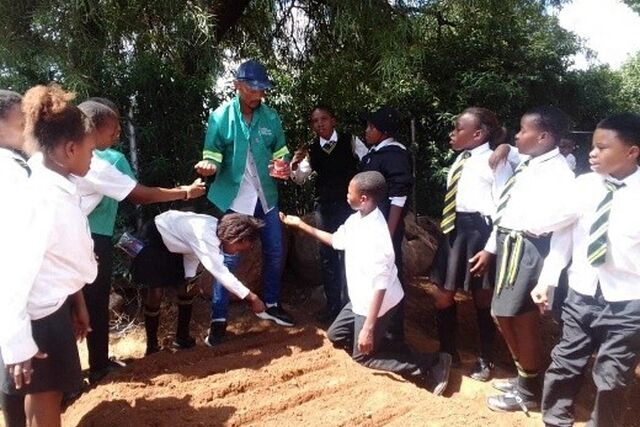
There was much debate on the issue of climate change and its causes. Many argued on whether it was a natural cycle, man-made or both. There were clear signs that the climate was changing. Climate change is a global predicament hence there is need to devise sustainable measures and practices to alleviate or mitigate this challenge. If left unattended it would destroy our mother planet. As a local authority, Goromonzi had considered it as its duty to advocate and educate its community on the importance of Tree Planting as a measure to mitigate climate change. The project was innovative especially in Goromonzi area where people were not aware of the effects of climate change. People in the rural areas were the ones who normally cut down trees mainly for domestic purposes. However, they rarely plant trees be they indigenous or exotic ones.The council noted that there had been serious deforestation, river siltation such that many water sources and wetlands were quickly drying up. The formation of gullies in many parts of the district was everywhere. There was need for the council to take environment protective action to curb such challenges. The partners took it upon themselves to educate the participants on what actually needed to be done to plant and have a sustainable forest/gum plantation. That project was set out to replace trees and reduce the effects of deforestation and other problems associated with it. The project was to make the people in Goromonzi aware of the contribution of trees to the world. The project has directly benefited 300 people and indirectly benefitted 1 500 people. That brought a total of 1 800 people who benefitted from the project.Budget wise no gender specific allocation was allocated to the project. $350 was allocated to gender in mainstream projects. Partners (Nyaradzo Funeral Services and Friend of the Environment) both came up with $10 000 in cash and kind. They supplied tree seedlings, the expertise, T-shirts, caps, sunhats, umbrellas and food for the participants especially during workshops and tree planting occasions. Goromonzi R.D.C. provided the venues for workshops and the land for tree planting. The total budget for the project was $10 350.The community had been empowered to a greater extend as evidenced by the planting of trees at different homesteads. It was evidenced by the council officials and both partners during their routine monitoring visits. The community resorted to other sources of energy for their household chores like cooking because they had been taught on the importance of trees. They curb a lot of hazards in the environment, fruit trees produce fruits and medication which would be of much importance to the society. Therefore the community had appreciated tree planting as it empowered the community to a large extend. Women were taught how to plant trees and told of the benefits that one can derive from a tree such as medications, timber as well as income from sale of fruit from trees. At community level, people value trees and they had resorted to other sources of energy. By so doing, the community would be reducing the effects of climate change and global warming. Some people had started planting trees in their farms so that they would have firewood at their doorsteps.The main challenge was the fact that the community did not know the importance trees to the ecosystem and the environment. The council then made it a priority to first educate as many participants as it could. The partners had to go round the district educating the people especially Chiefs and village heads. The other challenge that was faced was the lack of participation by the girl child as they viewed the project as meant for men and women. The women considered that preparation of the land was again a task for men and that took long to convince that everyone had a role to play. The council had to provide labour and the partners gave out items such as T shirts, caps and umbrellas to get the job done. Funding was also a problem as the budgeted funds were not enough to procure enough resources. The partners’ involvement overcame the hurdle by donating the tree seedlings and the expertise. The tree planting project in Goromonzi finally succeeded.Wellington Mugodo, a council officer, stated that the local authority was continuously monitoring the progress of the planted trees in the district simply because the local authority was determined to show everyone that the initiative would benefit every communal member in the not too distant future. Mugodo further indicated that the tree planting project must for it to be sustainable. The community took the leading role with village heads and other communal leaders being at the forefront. The communal leaders had put in place measures to deter the people from cutting down trees without the leaders’ approval. The community had taken heed of that as they had to seek permission from their communal leaders before cutting down trees.The council worked on building nurseries in every ward in the district so that they could foster tree planting culture. The project could contribute to the mitigation of global warming. The council worked on building nurseries in every ward in the district so that they could foster the tree planting culture in the district thereby contributing to the mitigation of global warming. The council, through the gender focal person, signed the Memorandum of Understanding with Nyaradzo, Friend of the Environment and Ministry of Primary and Secondary Education so that tree planting could be a regular event not a project in the district. That initiative could be cascaded to other organisations through partnerships and allowing them to see the results that the initiative had brought to the community. The project could be replicated easily by keeping the operational costs minimal. Group members who stay nearby could even start such projects at village level. A training-of-trainers model is used to build capacity of staff and community members to ensure knowledge and skills stay with the communities. Groups would take control of their own operations, including mobilisation, development of operating agreements, identification and problem-solving techniques. By so doing, it would create project ownership.Comments
Related Stories Of Change