South Africa: Youth empowerment and gender equality in education

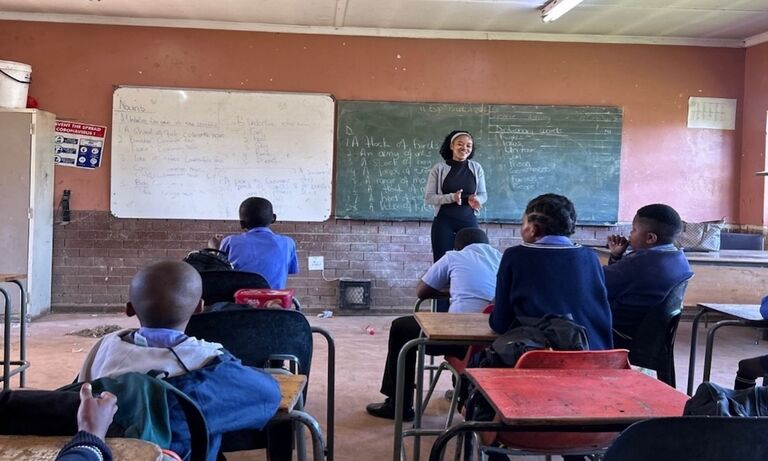
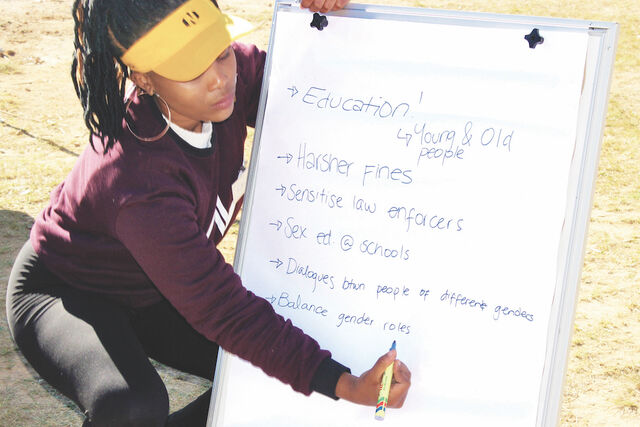
Serving as a facilitator at Toka Primary School has deepened my understanding of what it means to nurture young minds. Through the STEM Girls Programme facilitated under the guidance of Gender Links, I had the opportunity to engage with learners about science, technology, engineering and mathematics (STEM) and the possibilities these fields can unlock.
As I stood in front of the class, I asked the learners what they wanted to become one day and how much they hoped to earn. Their responses were honest and ambitious. Many of the girls spoke about becoming doctors, engineers, pilots and entrepreneurs. What stood out to me was that they did not limit themselves. They spoke confidently about earning well, travelling, and supporting their families. Their dreams were not confined by circumstance.
One learner in particular left a lasting impression on me. She shared that she wanted to become a nurse. When I asked her why, she did not focus only on income. She said she has a heart for people and wants to care for those who are sick. Her response reminded me that purpose and compassion are just as important as ambition. According to the World Health Organization (WHO), nurses make up a significant portion of the global health workforce and play a critical role in strengthening health systems found at https://www.who.int/health-topics/nursing.
The STEM Girls initiative aligns with broader global efforts to increase the participation of girls in science and technology fields. The United Nations Educational, Scientific and Cultural Organization (UNESCO) reports that women remain underrepresented in STEM careers worldwide. Encouraging girls at primary school level to explore these subjects is therefore an important step towards closing this gap. Further information is available at https://www.unesco.org/en/gender-equality/education/stem.
Facilitating this session made me reflect on how important it is to validate young people’s dreams. When adults listen attentively and affirm children’s aspirations, we help build confidence and resilience. Young people need safe spaces where their goals are taken seriously. Schools and community organizations play a key role in creating such spaces.
This experience reminded me that empowerment begins with conversation. By simply asking learners about their dreams, we open the door for them to imagine a future beyond their current environment. As a young woman and a facilitator, I felt a responsibility to encourage them to pursue their ambitions with determination, integrity. Young people’s dreams deserve to be nurtured, guided and supported. When we invest in their potential, we invest in stronger communities and a more equal society.
Encouragement at a young age can influence subject choices, career paths and levels of confidence later in life. Exposure to STEM subjects also helps leaners see that these fields are accessible to them regardless of their gender. As facilitators, teachers, community members we carry a responsibility to provide guidance, share information and importantly to challenge limiting beliefs. By consistently reminding young girls that their dreams are valid and achievable.
(Written by Paballo Koeli, a WVLSA intern)
Comments
Related news