South Africa: CSF 2026 - human rights, gender equality and social justice

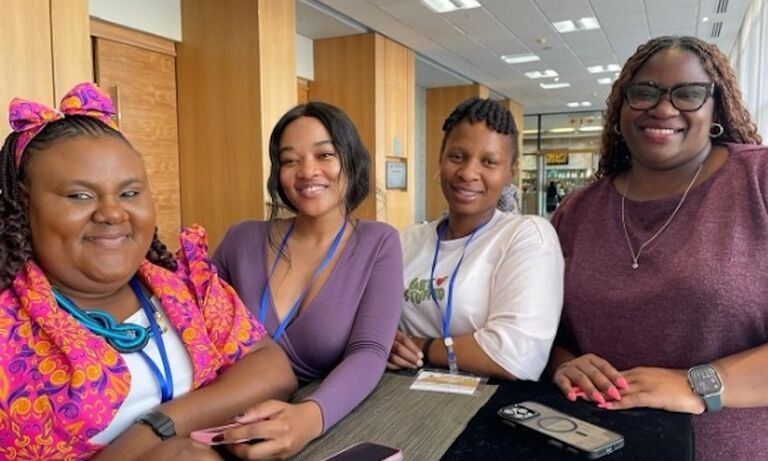
Attending the Southern African Civil Society Forum (CSF) 2026 in Durban gave me an opportunity to listen, learn and reflect on some of the social challenges facing South Africa and the wider Southern African region. The forum, held alongside the Southern African Development Community (SADC) Heads of State Summit processes, brought civil society voices together under the broader theme of Democratic Futures in Africa. (See Gender Links)
For me, however, the conversation that stayed with me most strongly was about unemployment and the lengths people may go to when they cannot find opportunities at home. During the forum, the discussion around unemployment highlighted how the search for economic opportunities can extend beyond national borders.
People who are desperate for work may consider opportunities abroad, sometimes without having enough information about the employer, recruitment process or conditions they will encounter once they arrive. This can expose vulnerable job seekers to exploitation and human trafficking.
What struck me was that unemployment cannot be viewed simply as a statistic. Behind every percentage is a person trying to build a life, support a family, pay for their education or create a better future. When legitimate opportunities are limited, the decisions people make can become increasingly difficult and risky.
I found myself thinking about how easily a promise of employment can become something very different from what was originally presented. Someone may leave the country expecting a legitimate job, only to discover that the reality is not what they were promised. The possibility of being exploited or trapped in circumstances they did not anticipate demonstrates why access to decent work, accurate information and protection for migrant workers matters.
The conversations at the Civil Society Forum reminded me that social issues cannot be addressed in isolation. Unemployment connects to economic inequality. Economic inequality connects to people’s access to education and social protection. Digital rights connect to how people access information and opportunities. Gender equality connects to who has access to decision-making and economic opportunities. Media representation connects to whose experiences become visible in public debate.
This is why civil society spaces matter. They create opportunities for people and organisations working on different issues to recognise the connections between them and to consider collective responses. The Southern Africa Gender Protocol Alliance has emphasised the need for stronger accountability and coordinated civil society action as the region works towards 2030. (Gender Links)
As an intern at Gender Links, attending the forum also gave me a different perspective on the work I see around me. It reminded me that research, advocacy, communication and community engagement are not separate activities. They can work together to bring evidence into conversations, amplify experiences and encourage decision-makers to respond to the realities people face.
I left the forum with more questions than I arrived with, but I also left with a stronger understanding of why these conversations are necessary. The challenges facing our societies are complex, but acknowledging them is an important starting point. Whether the issue is unemployment, digital rights, education, social protection, human trafficking or women’s representation in the media, meaningful change requires people to listen to one another and work together.
(Written by Paballo Koeli, a RWVL intern)