Press release: Namibia launching #SheDecidesSADC

| Gender Links
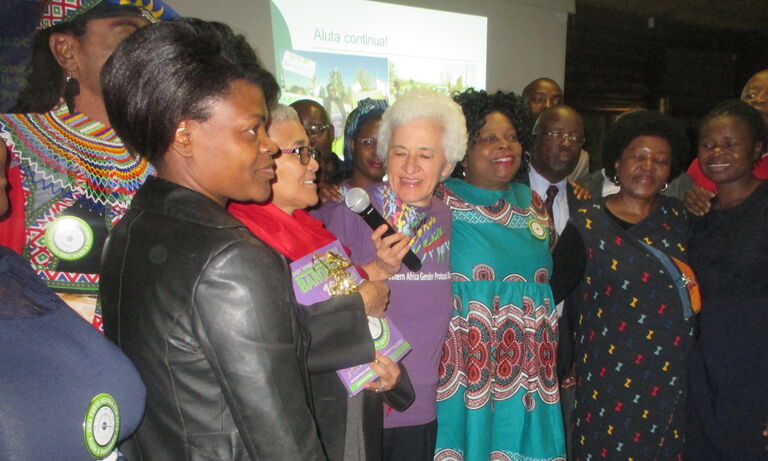
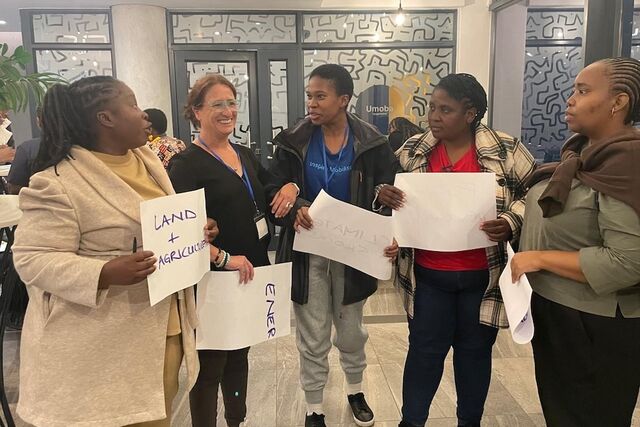
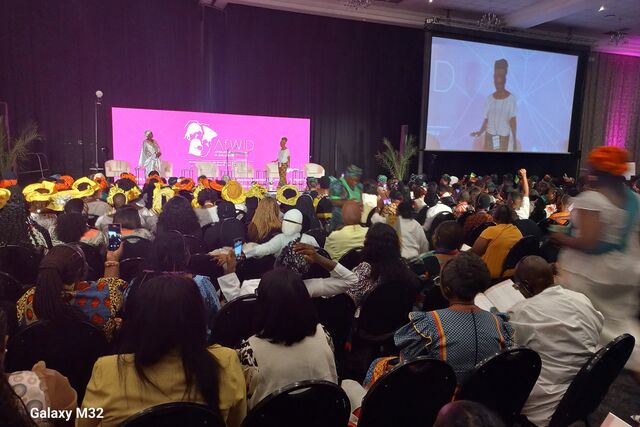
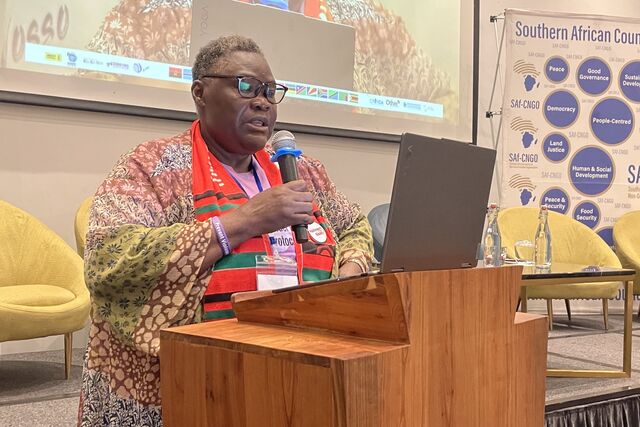
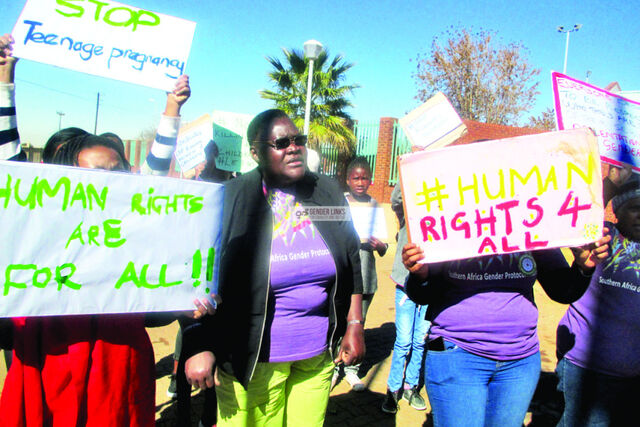
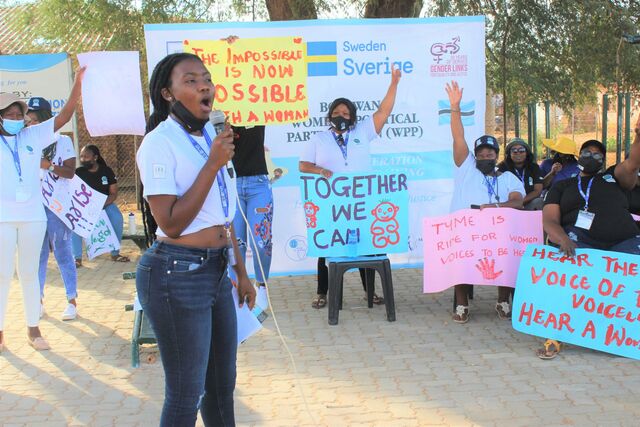
[slideshow id = 94390]Windhoek 10 August: Gender activists from around the region will launch the tenth edition of the SADC Gender Protocol Barometer and the #SheDecidesSADC campaign at Hage Lodge on 13 August, ahead of the Heads of State Summit.“For every step forward on gender equality we have witnessed a step backwards,” noted GL CEO and co-editor of the annual state-of- women in Southern Africa report. “In the year that saw women across the world and our region march for equality, our strong message is that it’s time for women to claim their space, and make their own decisions about their bodies, their work, their relationships and their lives.”The Barometer uses two yardsticks: the empirical SADC Gender and Development Index (SGDI) and the perception based Citizen Score Card (CSC). The regional SGDI has in the past year gone down from 61% to 59% and the CSC from at 65% to 62%. At 63% and 71% for the SGDI and CSC, Namibia scores fifth out of the 15 SADC countries. Namibia, the new chair of SADC, received the Gender is My Agenda Campaign (GIMAC) Award in 2017 for its efforts to promote gender equality. One more SADC country needs to sign the updated Post 2015 SADC Gender Protocol for it to go into force. As the new chair of SADC, it is hoped that Namibia (which has still not signed) will do this.Key findings include:
- Over the last decade eleven countries in the region have undertaken Constitutional reviews. All but two (Botswana and Seychelles) now have specific references to promoting gender equality. But five countries (Botswana, Lesotho, Malawi, Mauritius and eSwatini) have “claw back clauses” giving precedents to customary provisions that may undermine equality.
- In the attitude survey that accompanies the report, 55% of respondents said that people should be treated the same whether they are women or men, yet 56% said that a woman should obey her husband!
- Despite boasting the only country in the world with a constitution that recognises sexual orientation (South Africa) only three other countries in the region (Mozambique, DRC and Seychelles) have decriminalised homosexuality. But the Botswana High Court ordered the government to change the gender of a transgender woman on her identity documents. Swaziland had its first Pride March.
- Women’s representation in parliament in SADC is at 26%, one percentage point lower than at baseline in 2009, but two percentage points higher than the global and Sub-Saharan average of 24%. Women’s representation in cabinet in the region is lower at 20%. This is also true in local government (23%).
- The 30 July Zimbabwe elections, with four women presidential candidates, will be remembered for women finding their voice, but failing to make any significant electoral headway. Young women broke new ground by demanding a 25% quota.
- Out of the 15 SADC countries, 13 now have equal enrolment at primary school (compared to five at baseline); 8 at secondary school (compared to seven at baseline) and 11 at tertiary (compared to 7 at baseline). But more than 20% of children between ages seven and 14 spend their days working instead of studying in nine SADC countries.
- Over the decade women’s representation in economic decision-making has increased by a mere two percentage points from 19% to 20%. Employers in all SADC states pay women less than men. At 54%, the difference between women’s and men’s average earnings is highest in eSwatini, and lowest in Botswana (12%).
- GBV Baseline Studies show that at least one in three women in the region have experienced GBV in their lifetime. Emotional abuse, the most prevalent form of GBV, is the type of GBV least likely to be reported to the police. Sexual and physical abuse are grossly under-reported. There is little or no government support for prevention and places of safety.
- Maternal mortality across most of SADC, with the exception of Mauritius and Seychelles, is unacceptably high and declining too slowly to meet even the SDG target of 70 per 100 000.
- Only South Africa and Mozambique have legislation that allows abortion on request. In late 2017 Madagascar passed the Reproductive Health and Family Planning Law after a clause that would have legalised abortion had been removed. Angola has withdrawn a bill that was passed in early 2018 that would have made abortion illegal after women marched against it.
- In the past year there has been significant focus on menstrual health and hygiene. The Botswana parliament voted to provide free sanitary ware in schools. Tanzania has removed taxes on sanitary ware. But the Tanzanian government sparked an outcry when in a public address in June 2017, President John Magufuli reinforced a ban on teenage pregnancies.
- Though new infections of HIV and AIDS are declining, at the current rate of decline the region will still have at least 570,000 new infections annually (more than double the target). Gender inequality is still a strong driver of the pandemic: 59% of new infections in Southern Africa are women, but 53% of AIDS-related deaths are men. Young women 15 to 24 years old are only 10% of the total population but 26% of new HIV infections.
Comments
Related news