Malawi: Experts weigh in on equality

There are calls for increased investments, stronger enforcement of legislation and deeper partnerships for Malawi to address persisting inequalities women and the youth are facing.
We sought reactions from various stakeholders on how Malawi has performed on addressing inequalities thirty years after the Beijing Declaration and Platform for Action.
UN Women in Malawi notes that despite notable progress, several areas require urgent and sustained action in so far as addressing inequalities is concerned.
In a written response to our questionnaire, the UN agency’s Resident Coordinator for Malawi, Letty Chiwara says women’s political representation remains low at 21% in Parliament and 13% in Local Councils.
“And as the country moves toward the 2030 elections, this presents both an opportunity and a risk; without deliberate measures, these gaps may widen. Economic inequality persists, with women’s labour force participation at 43.3%, and women disproportionately represented in informal employment at 94%,” Chiwara says.
Chiwara goes on to say that youth employment also remains a critical concern.
She says the 2024 labour-force survey, which indicates 41.4% of the youth aged between the ages of 15 and 35 were not in employment underscores the vulnerability of young people, especially young women.
She also says Gender-Based Violence remains widespread, with rising cases of digital violence and other harmful practices affecting women and girls.
“Addressing these interlinked challenges requires increased investment, stronger enforcement of legislation, and deeper partnerships across government, civil society, the private sector, and communities,” Chiwara says.
She however says Malawi has made considerable progress in the past thirty years.
According to Chiwara, Malawi has expanded access to education for girls, improved the policy and legal framework on gender equality with various laws like the Gender Equality Act (2013),
“There is strong multisectoral coordination through the Ministry of Gender and the National Gender Machinery which has seen increased visibility of women in leadership across the civil service, judiciary, civil society, and the private sector,” she says.
NGO Gender Coordinating Network’s Executive Director Maggie Kathewera Banda concurs with Chiwara saying Malawi has made progress over the years.
“The fact that we are able to commemorate and actively participate in the 16 Days of Activism, shows how far Malawi has gone to ensure it addresses inequalities that women face,” Kathewera Banda says.
She however says there is need for implementation of existing laws while coming up with new and progressive legislation to ensure women and the youth actively participate in issues of national importance.
“Malawi has good policies but the problem lies in implementation, so we need good laws and the capacity to implement them, for example we need to emulate other countries where issues like gender quotas are working,” Kathewera Banda says.
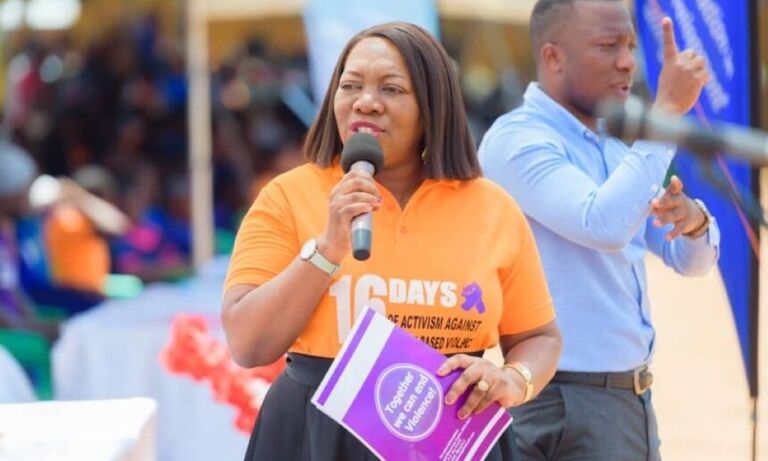
At the launch of this year’s 16 days of activism against gender-based violence campaign at Khwisa in Balaka, minister of gender Mary Navicha reiterated the government’s commitment to women empowerment.
The Beijing Declaration and Platform for Action is considered the most progressive blueprint ever for advancing women’s rights. Among others, it provides for an intersectional approach to gender equality and disability inclusion.
Written by Eric Msikiti. This article, first published by The Times Malawi is part of the Media Parity Capacity Building Programmeand republished as part of the programme series.
Comments
Related news