
Zimbabwe: Women’s safety, health and dignity safeguarded as villages achieve open defecation free status

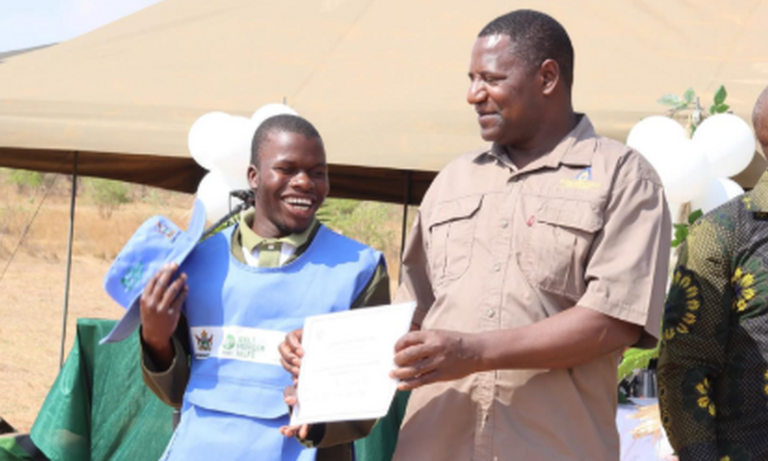
In Muchada Village A and B in Ward 12 of Guruve Rural District Council, the struggle for safe sanitation had long been a silent crisis one that particularly burdened women, children, and people with disabilities. With 44 households and a population of 339 people, only three households had standard toilets. The rest relied on open defecation, a practice that exposed the entire community to health threats such as diarrheal diseases, while stripping women and girls of privacy, dignity, and safety. At night or early morning, many walked long distances into the bush, facing the constant risk of sexual violence, harassment, and wildlife encounters.
As the councilor of Ward 12, Blessmore Munzara understood that sanitation was not just a development issue it was a gendered safety and human rights concern. Guruve Rural District Council, a gender-responsive local authority, already prioritized rural water and sanitation. However, the severity of the situation in Muchada compelled deeper, targeted action. National assessments confirmed the urgency: the 2024 Zimbabwe Livelihoods Assessment Committee (ZimLAC) report highlighted sanitation gaps that disproportionately impacted rural women and children.
Against this backdrop, the village embarked on an ambitious journey to move from widespread open defecation to being recognized as Open Defecation Free (ODF) zones. The transformation began by equipping the community with the skills and tools needed to construct standard toilets. In partnership with development organizations, nine villagers were trained as builders, including three youths, ensuring the project would be sustainable across generations. Each trainee received a builder’s kit, enabling them to construct toilets locally at far lower costs than hiring external builders.
The results were remarkable: 41 standard toilets were constructed, including a fully disability-friendly unit for a household with special needs. Combined with the three existing toilets, this meant every household in both villages now had access to a safe, dignified sanitation space. Alongside this, all homes installed handwashing facilities, significantly improving hygiene practices.
What emerged was not just infrastructure but a profound behavioral shift. Villagers began to understand the health, environmental, and gender implications of poor sanitation. So strong was the shift in mindset that the community adopted a new local policy: any new settler must first build a standard toilet before constructing their homestead. This was not merely about toilets it was about dignity, safety, and a collective commitment to uphold the rights of women, children, and vulnerable groups.
The impact was immediate and far-reaching. Women and girls, who previously faced the indignity and danger of seeking private spaces outside, could finally relieve themselves safely and comfortably. Children were protected from diseases associated with poor sanitation. Households began practicing regular handwashing, reducing the risk of diarrheal outbreaks. People with disabilities gained equal access to sanitary facilities that accommodated their needs.
The training of local builders created employment opportunities and reduced toilet construction costs from USD 150 to USD 40, making it affordable for even the poorest families. Youth involvement also helped ensure long-term skill retention and continuity. Perhaps most importantly, the project restored community dignity and strengthened the belief that rural communities can design and sustain their own solutions when empowered with knowledge and support.
On 31 July 2025, Muchada Village A and B officially achieved Open Defecation Free (ODF) status, certified by the Ministry of Health and Child Care. The milestone was celebrated on 31 October 2025 at Village Head Muchada’s homestead, attended by the Minister of State for Provincial Affairs and Devolution in Mashonaland Central Province, Honorable Christopher Magomo. Certificates, builder training records, media coverage, and photographic evidence all stand as testimony to this achievement.
The celebrations were not only a recognition of improved sanitation but a collective triumph proof that community-led development can shift deep rooted practices and reshape lives. This approach ensured that the community did not rely on external builders or expensive materials. Instead, the project used locally available resources, affordable labor, and locally trained builders. The inclusion of youth ensured generational continuity, while the new village policy on sanitation guarantees that ODF status will not only be maintained but strengthened. The project’s design also encourages scaling up to neighboring villages, with the trained builders able to replicate the model elsewhere.
At its core, this story is about restoring dignity, protecting the vulnerable, and showing that investment in sanitation is an investment in gender equality, health, and safety. Women and girls now walk confidently in their own homes, freed from fear and humiliation. Children are protected from preventable diseases. Families live with a renewed sense of pride, and the community stands united behind a shared vision of wellness and development. Muchada Village A and B are now living proof that when communities are given the tools, skills, and leadership to transform their environment, they build not just toilets but safer futures, healthier homes, and stronger, more resilient generations.
Blessmore Munzara, Zimbabwe
Comments
Related Drivers Of Change