South Africa: Leave No One Behind Skills Development Training

A sewing‑based empowerment project in Sasolburg is transforming lives by giving survivors of violence practical skills, support and pathways to economic independence.
Shibe Seheshe is a 52‑year‑old seamstress, a mother of three, and a survivor of emotional and economic abuse living in Vaalpark, Free State. Although an experienced seamstress with a partially completed fashion design qualification, her business operated only from home due to her spouse’s controlling behaviour. This limited her income, independence, and opportunities for growth. The abuse also affected her children, who became secondary victims and struggled at school.
When Shibe discovered that one of her sewing clients worked for Curios Future Movement (CFM), she reached out for help. CFM is part of the Metsimaholo Stakeholders Forum, which made it possible to refer her quickly for support. She received legal counsel from Advocate Mafusi Lekeka of the National Prosecuting Authority and psychological care from Dr Thami Mbonambi, who admitted her for two weeks. CFM continued supporting her recovery.
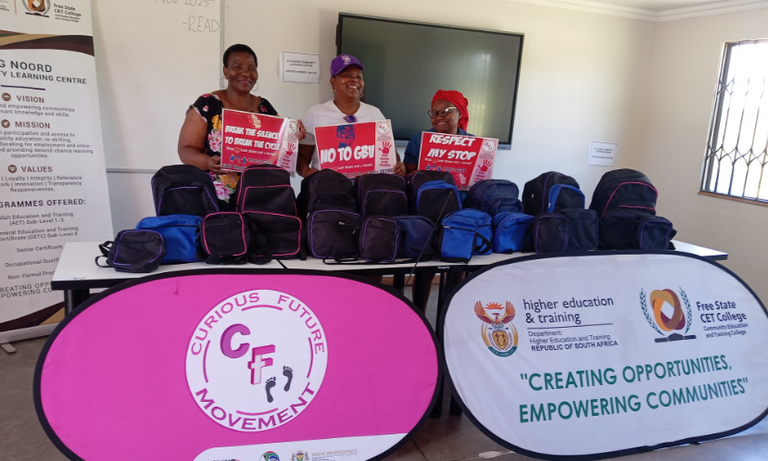
In 2024, CFM’s ward councilor invited the organisation to submit CVs for a two‑month employment project. Shibe became a beneficiary. Later that year, for Women’s Month, CFM organised a bag‑making skills development programme funded by the GBVF Fund. Five women, including four survivors and one staff member, benefited from the pilot project, creating seven bag types each.
After receiving training, Shibe immediately began giving back. She volunteered at the CFM shelter, teaching residents how to make toiletry bags, document side bags and sports bags. To date, she has trained more than 10 women. Shibe was then appointed facilitator for the Gender Links funded Leave No One Behind project, where she trained 10 women.
During the programme, she suggested expanding the training from five to seven bag types to increase participants’ opportunities. Although the training took longer than planned, her patience ensured that women unfamiliar with sewing machines gained confidence. SEDFA offered training facilities at no cost, and a shelter from Welkom sent a staff member to learn, paying Shibe for her services.
Afterwards, Shibe was recruited by the Community Learning Centre to train 12 unemployed women using leftover materials from the project. Each woman produced three bags. This created more visibility for her skills and expanded opportunities for community empowerment.
Sustainability stems from continued capacity‑building. Shibe received an honorarium for facilitating training between August and December 2025. Two new survivors, Lerato Phokojoe and Nomadlozi Khoza, demonstrated training potential and joined Shibe and CFM staff in a new sanitary‑pad and underwear sewing project set to launch in February. CFM purchased 20 sewing machines, with an additional five donated by Seriti Mines.
Shibe herself now receives orders through SEDFA referrals and participates in information sessions. Her story inspires other survivors, and those she trains speak openly about how the project restored their confidence, purpose and ability to provide for their families.
Quotes
Lerato Phokojoe, When I first joined the programme I had lost hope... Thank you for giving me hope for a better future.
Mpolokeng Motaung, Being part of the bag‑making programme taught me a new skill and gave me confidence and purpose.