South Africa: From Silence to Strength – Shifting Mindsets on GBV and Sexual Health in Under-Resourced Schools

Background: Breaking the Silence
Before our intervention, learners at LEAP School Langa, like many others across South Africa, were navigating adolescence without adequate, accurate or accessible information about their bodies, relationships and rights. Life Orientation classes, while mandated, often fail to create space for honest conversations about critical topics such as consent, gender-based violence (GBV), puberty and mental health. Learners described confusion, fear and isolation around these issues.
Quote
One 14-year-old participant explained, “I didn’t know why I was bleeding when I got my period.”
This challenge reflects a broader systemic problem. A critical gap in comprehensive, inclusive and age-appropriate sexual and mental health education is leaving millions of young people vulnerable, particularly those in underserved communities.
In South Africa, where GBV rates remain among the highest globally, only five percent of schools offer comprehensive sexuality education (Sonke Gender Justice, 2019). UNESCO (2024) reports that just 37 percent of youth understand HIV transmission and over two-thirds of girls lack basic knowledge about puberty.
In Langa, cultural silence and stigma compound these gaps. Young people often do not have trusted adults they can turn to.
Quote:
One NGO staff member noted, “A lot of children are starting to be sexually active at a very young age. It would help to start educating the children early.”
Without accessible, stigma-free education, adolescents are left vulnerable to unintended pregnancies, sexually transmitted infections, poor mental health and cycles of inequality.
The Intervention: Love Land Steps In
Love Land was created to close this gap. Our hybrid platform includes a gamified mobile app, a large-format interactive board game, virtual training and a web-based Learning Lab for educators and caregivers. These tools are designed to be accessible, fun and grounded in evidence. They spark open conversations and equip young people with critical knowledge and life skills.
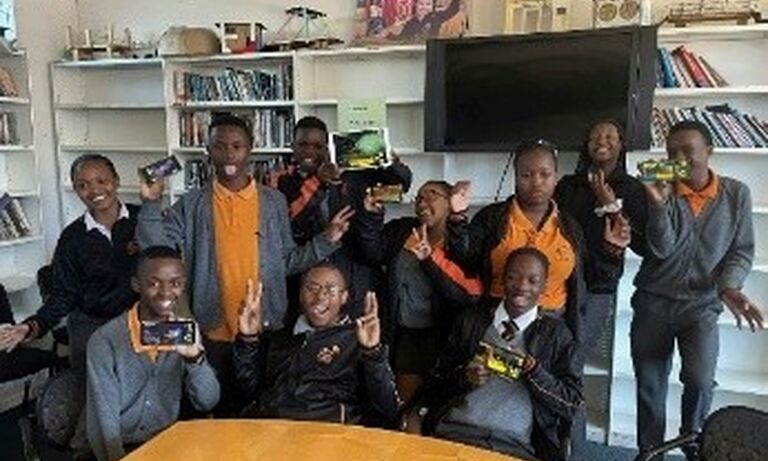
LEAP School Langa believed in us from the beginning. They opened their doors for testing, feedback and ongoing collaboration. Together, we created a safe, interactive learning environment where learners felt seen, heard and respected. This school did more than support a project. They helped shape a movement toward stigma-free, engaging and empowering sexuality and mental health education.
The Change: From Silence to Strength
The change has been positive and impactful. Students and teachers at LEAP School Langa helped shape the content and adaptations of the board game, app and upcoming chatbot. This collaboration made the tools more relevant and empowering, supporting broader knowledge and growth among students in areas such as GBV, sexual and mental health and consent. Learners are gaining confidence and skills to better understand their rights and make informed decisions.
Pre and post-tests show improved knowledge and understanding among students. Testimonials highlight increased confidence and empowerment to discuss their rights and well-being. Video evidence further captures these positive shifts, confirming the resources are relevant, accessible and impactful.
Evidence of Impact
In a recent test with LEAP School Langa, 100 percent of participants found the new GBV topic island Break Free Bay helpful or very helpful. Key indicators of change include improved quiz scores, greater confidence in decision-making and reductions in risky behaviour. Engagement is monitored through app usage, completion of Topic Islands and reflective discussions during board game sessions. Educators and learners alike have praised the programme’s impact.
Quote:
A 15-year-old participant shared, “It’s nice working with others who understand what we’re going through without embarrassment.”
Quote:
Former Principal Patricia Mudiayi described Love Land as “transformative” for students.
Quote:
Name and Surname or
UCT Professor Catherine Ward commended the project’s focus on quality and sustainability.
Quote:
The CEO of TLC stated, “I have waited over 30 years for a comprehensive programme like Love Land.”
Quotes
Quote 1
Name and surname or Pseudonym Neo Gaopalanwe, Leap School Principal
I’ve deeply appreciated the opportunity to be part of this journey with Love Land. The stakeholder gathering was a powerful space and I’m grateful for the chance to connect with others who are just as passionate.
Quote 2:
Name and surname or Pseudonym Neo Gaopalanwe, LEAP School Principal
It’s truly a pleasure for me to be part of your work. I deeply appreciate what you do for humanity and especially for the LEAP students.
Quote 3:
Name and surname or Pseudonym Patricia Mudiayi, Teacher and Former Principal
You’re seeing that other kids have the same problems you have daily, and you get prepared for your future. 15-year-old learner
Sustainability and Next Steps
To sustain and scale up these positive changes, we are committed to deepening partnerships with LEAP School Langa and expanding into the wider network of eight LEAP schools across South Africa. This will allow us to reach more young people in underserved communities with relevant, inclusive sexual and mental health education.
We will continue refining our tools based on ongoing feedback from learners and educators to ensure they remain accessible and impactful. Plans include integrating Love Land into formal education settings, conducting large-scale research with UCT and J-Pal to advocate for inclusion in the national curriculum, and enhancing digital engagement through a chatbot and improved app features. By continuously adapting and expanding, we aim to embed inclusive, stigma-free sexual and mental health education into mainstream learning and youth support systems across South Africa.
By: Karin Stierlin
Comments
Related Stories Of Change