Zimbabwe: Men as allies, building equality

| Gender Links
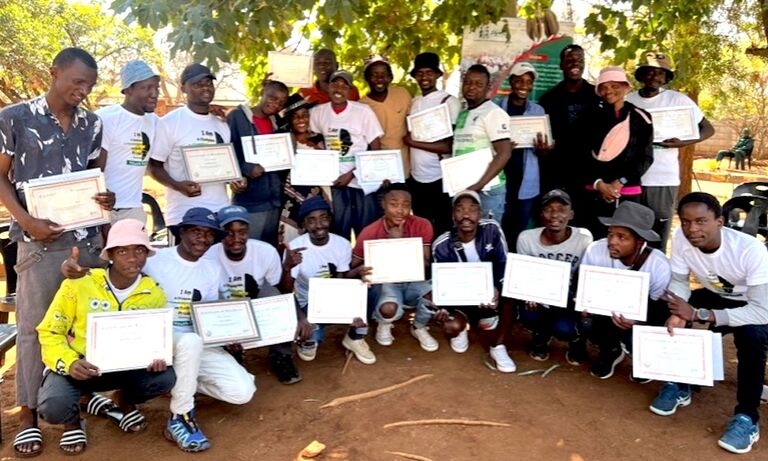
In the fight for gender equality and the protection of key populations, one often-overlooked resource is men themselves. In Bulawayo, Zimbabwe, ZIMSWA implemented the Men as Supporting Partners (MasP) Club as a sub-grant of SAfAIDS under the Youth PoPs programme, a bold initiative engaging men as allies in advancing health, HIV rights, and gender equality for sex workers and other vulnerable groups. MasP challenges harmful masculinities and transforms potential sources of stigma into advocates for change. By shifting mindsets at the community level, the initiative fosters safer spaces, improves access to services, and tackles gender inequality at its roots.This innovative, community-led model directly addresses the backlash faced by sex workers who are frequently excluded from health systems, stigmatised, and left vulnerable to violence and HIV. Rather than seeing men as adversaries, MasP brings them into the conversation as supportive partners. More than just a local effort, MasP offers a replicable strategy for organisations and countries seeking to build inclusive, rights-based HIV and SRHR responses. It demonstrates that sustainable change is possible when communities work together to reshape norms, support the most marginalised, and uphold dignity for all.MasP is a bold, community-driven initiative that engages men not as adversaries, but as allies in advancing HIV rights, health equity and gender justice. The clubs deliberately challenge entrenched gender norms by creating a space where men reflect on their role in perpetuating inequality and learn how to become supportive partners. This shift is transformative. Instead of reinforcing patriarchal systems that silence and marginalise, MasP members become advocates for dignity, equality and inclusion.For sex workers, who face some of the harshest backlash in Zimbabwean society, the impact has been profound. Through MasP, men who once viewed sex work through the lens of stigma are now working alongside women to promote safety, reduce violence and expand access to health services. The presence of supportive men in these spaces helps to dismantle harmful stereotypes, improve community acceptance and reduce barriers to HIV prevention and treatment. By standing in solidarity, these men demonstrate that progress in SRHR is not just possible but sustainable when communities are mobilised.Men can be efficient partners in driving gender equality and countering backlash because they often hold positions of influence within households, communities and institutions. When men shift their perspectives and use their power to challenge harmful norms, they help create an enabling environment for change. By championing equality, they model positive masculinities, reduce resistance to SRHR initiatives and open doors for women and key populations to access their rights more freely. In doing so, men become part of the solution, amplifying the impact of advocacy efforts and making social transformation more attainable.What makes MasP particularly powerful is its replicable model. It shows that when men are constructively engaged, they can play a critical role in countering backlash and strengthening SRHR responses. Rather than leaving men on the sidelines or worse as obstacles, MasP equips them with the tools to be partners in change. This is a strategy that other organizations and countries can adapt to address their own contexts, whether to advance the rights of sex workers, promote inclusive health services or confront rising gender-based violence.At its core, MasP demonstrates that gender equality is not a women’s issue alone. It is a collective responsibility. By tackling gender inequality at its roots, the initiative is building bridges where walls once stood. It is proof that sustainable change happens when everyone, regardless of gender, plays a role in dismantling stigma and upholding human rights.#PushForward4Equality(Written by Fraser Mpofu)
Comments
Related news