
Madagascar: Fils d’une victime, un jeune leader face aux violences de genre

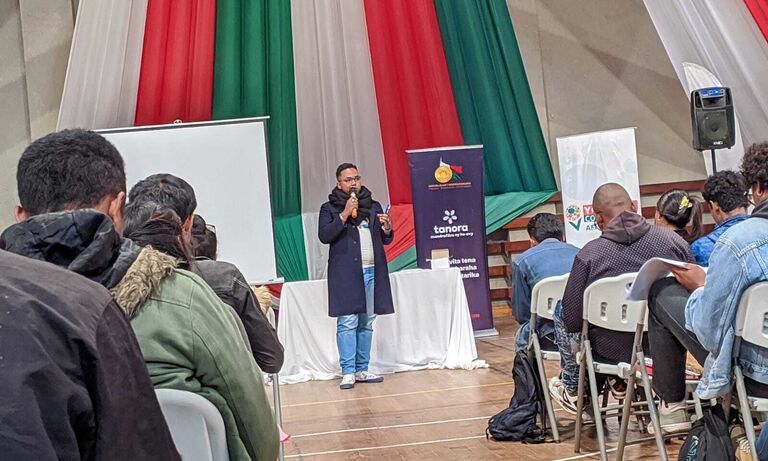
A young Malagasy leader transforms personal pain into community action, empowering youth and women to prevent gender‑based violence, strengthen civic participation and build resilient, informed communities across Madagascar.
RABESANDRATANA Anjaranirainy Arius Guy Joseph is a youth leader whose advocacy is shaped by a deeply personal history. Growing up as the son of a woman who suffered gender‑based injustice, he witnessed early the emotional, social and structural harms caused by violence and discrimination. Those experiences taught him responsibility, dignity, and the need to turn personal challenges into collective transformation.
His journey began as an educator, teaching young people and understanding how limited knowledge and weak systems reinforce inequality. Over time, he expanded into community activism, linking education, law, and civic engagement. Today, as Secretary General of the FPFE Youth Section in Antananarivo, he works at the intersection of youth leadership, digital safety, equality, and community resilience.
Before his interventions, many communities, especially young people, lacked reliable information on their rights and on mechanisms to protect themselves from violence, including digital forms. Structural inequalities, harmful social norms and exclusion from decision‑making continued to expose women and youth to risks and silence. His work responds directly to these gaps.
Change emerged through a combination of awareness sessions, civic education workshops, youth and women’s leadership trainings and national advocacy. These activities provided tools for recognizing, reporting and preventing violence, while enabling young leaders to influence their communities through example. Support groups and mentoring networks helped survivors and youth leaders share their experiences and build solutions collectively.
Collaboration was central to this transformation. Guy Joseph worked with FPFE members, local youth leaders in areas such as Ampasanisadoda, Nanisana and Ambodin’Isotry, women’s associations including CNFM, and government ministries responsible for youth, population, solidarity and justice. Partnerships with UNFPA, UNDP and EISA expanded technical support and institutional reach.
As a result, young people and women strengthened awareness of their rights, digital safety and equality. Communities became better organised to identify, prevent and respond to violence. At regional and national level, FPFE’s activities help shape public dialogue and improve institutional responses to gender‑based violence
Sustainability is built through continuous capacity‑building, mentoring and youth leadership clubs. Beneficiaries become relay actors who pass on knowledge to their peers. Inter‑regional platforms promote shared learning, while advocacy ensures prevention and equality are embedded in community policies. Partnerships with national institutions and international organisations create continuity and scale.
Through these actions, a new generation of Malagasy youth emerges resilient, informed and committed to justice, dignity and gender equality
Qoutes
RABEMANANJARA HANTANIRINA MARIE JOSETTE, Je vois et je comprends, savoir ses droits est un pouvoir si grand qu’il change des vies.
Maman’i Maya, Le fokontany peut espérer à une société plus noble et équitable pour tous.
Comments
Related Drivers Of Change
