South Africa: Stories of Resistance and Hope

| Gender Links
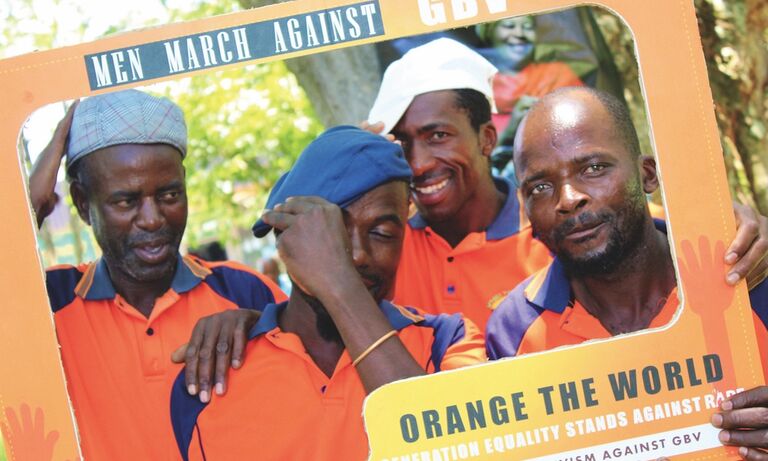
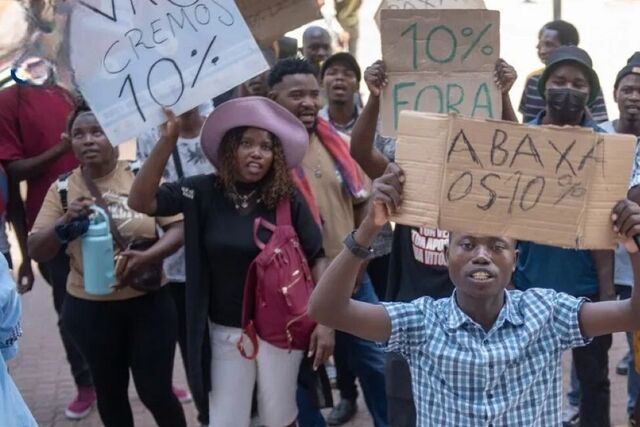
I remember the first time I heard my cousin Evidence whisper the words, “I wish I could just exist without fear.”He wasn’t speaking softly out of shame, but because he was aware of the risks of being overheard. As a young gay boy living in a small world, his very existence was treated as rebellion.His story is not unique. It mirrors the lives of countless LGBTQI individuals across Africa who are caught in the push and pull of progress and backlash. South Africa, known as the motherland, the birthplace of Nelson Mandela, who fought for human rights and democracy, shows us this contradiction clearly. For every milestone gained, from the increasing presence of women in leadership to the growth of movements for LGBTQI visibility, there seems to be a louder echo of resistance.This is the climate in which we live, work, and love. And yet, it is also where we fight, dream, and create change.Across the continent, troubling trends are emerging. In some countries, women’s rights are dismissed as “Western agendas,” while laws meant to protect women from violence remain unimplemented. Meanwhile, LGBTQI communities face not only criminalisation but also social scapegoating, where political leaders stoke fear by painting queerness as a threat to “African values.”The effects are chilling. A young girl is silenced when she tries to report harassment at school. A heartbreaking example is the case of seven-year-old Cwecwe from Matatiele, South Africa, who has become a painful symbol of systemic failure in protecting children from sexual violence.Despite her mother reporting the assault nearly a year ago, no suspect has been identified. Even the Children’s Parliament called the delay “a slap in the face” to victims of gender-based violence (Zandile Khumalo, eNCA, 2025). Another tragic story of such events is the case of Nombulelo Bhixa, 28, and Minenhle Ngcobo,22, who were shot dead in Edendale, Pietermaritzburg, on 27 August as they went to board a taxi.The suspect in the case is believed to be the ex-partner of one of the women, with whom he shares a child, and he reportedly could not accept that she was now in a relationship with a woman, according to Newzroom Afrika's reporting.These are not isolated stories. They are threads in a wider fabric of systemic neglect and exclusion.I grew up believing equality was simple, that boys and girls were meant to share the same playground, the same books, the same dreams, but as we grew older, the invisible lines became visible. Girls were warned not to “invite trouble” by speaking too loudly or walking too freely. Boys were told to toughen up, and anything “soft” was mocked as weakness.Over time, those lines grew sharper. My cousin Evidence and I had been very close as children, but as we grew older, society taught us to police one another...not just what we could do, but who we could love, how we could dress, and whether our voices even belonged in the room.It is easy to dismiss these stories as “cultural differences” or excuse them as tradition. But what tradition teaches a child to shrink in order to survive? What culture thrives when it silences its own people?While the struggles of women and LGBTQI communities are not identical, they are deeply connected. Both face systems that try to control their bodies, voices, and freedoms. Both are accused of “pushing too far” when they demand nothing more than dignity.In recent years, movements led by women — from campaigns against gender-based violence in South Africa, to young women entering politics in Malawi, to grassroots groups educating girls in rural Kenya have shown us what progress looks like. Similarly, LGBTQI activists across the continent are building safe spaces, raising awareness online, and challenging discriminatory laws in court.But for every step forward, there is resistance: online harassment of outspoken women, politicians using anti-LGBTQI rhetoric to gain votes, and communities turning their backs on those who need them most.This backlash is not a sign of weakness in our movements but rather proof of our power. Change always provokes resistance, and resistance shows that progress is being felt.Despite the risks, people like Evidence continue to live boldly. He started a small support group for young people in his community, initially disguised as a “book club.” They first gathered to discuss novels, but soon the books became backdrops for conversations about survival, love, and resilience.And it is in these quiet acts, a hand extended, a voice raised, a safe space created, that we see the real meaning of progress. Equality is not only about policies and laws. It is about people creating ripples in their daily lives, refusing to shrink, and choosing connection over fear.The #PushForward4Equality campaign reminds us that we are at a turning point. Will we allow backlash to silence us, or will we use it as fuel to press harder for justice?To push forward means:
- Refusing to let harmful narratives define what it means to be African.
- Insisting that equality is not foreign but rooted in our shared humanity.
- Remembering that when one group is silenced, all of us lose voices that could shape better future.
“The #PushForward4Equality campaign is our rallying cry - to resist, to rise, and to reclaim space through solidarity, storytelling and sustained advocacy.”
Evidence’s words echo in my mind even now: “I wish I could just exist without fear.”Our task is not only to amplify that wish, but to make it real.(Written by: By Elton Makubvure, South Africa)Comments
Related news