
SA: How Sex Work movement is breaking the silence

By Dr. Corey Sarana Spengler-Gathercole
Across the African continent, we are witnessing a dangerous rise in the policing of women’s bodies and the silencing of voices that challenge patriarchal control. From attempts to roll back reproductive rights to renewed hostility toward LGBTQI+ communities, the backlash against equality has become one of the defining struggles of our time. In South Africa, this backlash takes a particularly revealing form: the continued criminalisation of sex work.
My doctoral research, completed at the University of the Witwatersrand, examined the politics of policy-making around sex work in South Africa between 1994 and 2019. What I found is that the refusal to decriminalise sex work is not just about moral discomfort — it is part of a broader system of power that defines which women are seen as deserving of rights, and which are not. Yet, in the face of stigma and silence, sex workers and their allies have built one of the most resilient movements for gender justice in the country.
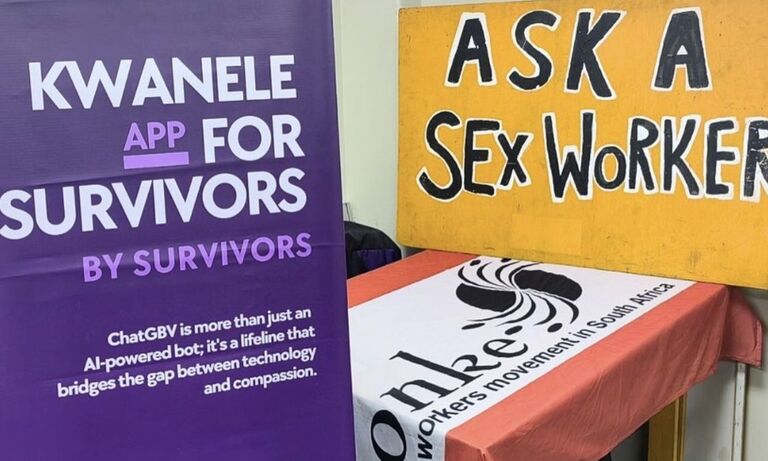
Sex workers in South Africa operate in an environment shaped by criminalisation, violence, and stigma. Police harassment, arbitrary arrests, and public shaming are part of daily life. Despite this, organisations like the Sex Workers Education and Advocacy Taskforce (SWEAT) and Sisonke, a movement of sex workers themselves, have redefined what resistance looks like.
Their work goes beyond calls for legal reform. Through peer education, rights training, and community solidarity, they are building systems of care and protection that the law has failed to provide. For example, SWEAT’s outreach teams offer safe spaces, health information, and legal support to sex workers who face abuse. During the COVID-19 lockdown, when police violence against street-based workers escalated, these networks mobilised food parcels and emergency shelters.
These are quiet, everyday acts of resistance — but they represent something powerful: communities creating their own systems of safety in a world that refuses to recognise them.
One of the most effective strategies for breaking the systems that uphold patriarchy has been storytelling. Sex workers have begun to tell their own stories publicly, challenging the stereotypes that frame them as victims without agency. Through digital campaigns, public dialogues, and participatory research, they are changing the conversation from “saving” sex workers to listening to them.
At a SWEAT-organised event in Cape Town, a sex worker stood up and said, “We are tired of being spoken for. We speak for ourselves.” That simple statement captures the essence of feminist resistance: reclaiming voice in a society that has denied it (SWEAT, 2018).
In my interviews with women advocating for sex workers’ rights—some of whom were themselves part of the industry—the sense of empowerment that came from collective organising was striking. As one woman shared, “I used to hide what I do, even from my family. But when I joined Sisonke, I realised I was not alone — that we have rights, and we can fight”
Another strategy reshaping the fight for gender equality is the formation of alliances across movements. The campaign for decriminalisation has drawn support from feminist scholars, human rights lawyers, public health advocates, and LGBTQI+ activists who see the issue as connected to broader struggles for bodily autonomy and dignity.
The Asijiki Coalition for the Decriminalisation of Sex Work, founded in 2015, is a powerful example of how collaboration works in practice. “Asijiki” means “no turning back” in isiZulu — and that spirit defines the movement. The coalition unites more than 70 organisations, including gender rights groups, church leaders, and trade unions. Together, they lobby Parliament, engage the media, and mobilise at the community level to change minds.
This intersectional approach recognises that patriarchy does not operate in isolation — it is intertwined with poverty, race, and sexuality. By standing together, these groups show that pushing forward for equality means addressing all forms of structural injustice simultaneously.
While legal reform is slow, the movement has already achieved small but significant victories. Public health policies have begun to include sex workers in national HIV programmes, recognising their rights to access care without discrimination. Provincial task teams now engage directly with sex worker representatives, and there is growing acknowledgement — even within government — that criminalisation causes more harm than good.
These shifts are the result of relentless advocacy. Activists use evidence, storytelling, and lived experience to challenge outdated laws. They remind policymakers that sex work is work — and that decriminalisation is not about morality, but about safety, dignity, and justice.
However, my research also shows that decriminalisation alone is not enough. Without tackling the structural inequalities that push women into vulnerable positions — unemployment, gender-based violence, and lack of education — legal reform will only scratch the surface. The real transformation comes when society begins to value the lives and choices of women equally, regardless of class, sexuality, or occupation.
The struggle for sex workers’ rights in South Africa reflects a much wider African story. Across the continent, women and LGBTQI+ people are facing new waves of repression — laws that police sexuality, silence dissent, and criminalise difference. But just as oppression travels, so does resistance.
In Kenya, Uganda, and Namibia, activists are drawing inspiration from movements like Asijiki and SWEAT. They are using digital platforms, community radio, and legal networks to share strategies and amplify voices. These grassroots efforts remind us that progress does not always come from Parliament — it often begins in the streets, the clinics, and the small acts of solidarity that connect people to one another.
As African feminists, we are being called to resist not only the laws that oppress us, but the beliefs that justify them. Patriarchy adapts — it cloaks itself in culture, religion, and respectability — but so do we. We adapt by organising, by telling our stories, by refusing to be silent.
The campaign to decriminalise sex work is about much more than sex work itself. It is a test of whether South Africa’s democracy truly values the rights and dignity of all people. It asks uncomfortable questions about who gets to define morality, whose voices matter, and whose safety counts.
The women leading this struggle — often at great personal risk — are not waiting for permission to be free. They are already building the future they demand: one where laws protect rather than punish, where stories heal rather than shame, and where equality is not a slogan, but a lived reality.
Their courage is a reminder that even when progress stalls, resistance continues — in whispered conversations, in shared meals, in acts of care, and in voices that refuse to disappear. This is what it means to push forward for equality: to keep speaking, keep organising, and keep creating space for dialogue until justice is no longer negotiable.
#PushForward4Equality