Zimbabwe: A local voice breaking barriers for women and persons with disabilities

My name is Anna Mapurazi, Councilor and Gender Champion under Pfura Rural District Council in Mt Darwin District. I am a certified hairdresser, community mobiliser and advocate for women’s rights and disability inclusion. What makes my journey unique is that I stand at the intersection of grassroots activism and local government leadership bridging policy and community realities to ensure no one is left behind.
Before my work began, Mt Darwin faced deep gender and social inequalities. Many women and girls endured gender based violence, early marriages, and limited access to support services. Survivors lacked safe avenues for reporting, and harmful cultural norms silenced their stories. Persons with disabilities (PWDs) were among the most marginalized unable to access public buildings or participate in community development because of inaccessible infrastructure.
Through partnerships with organizations such as Musasa Project, Young Africa, Women’s Coalition, and my collaboration with schools and traditional leaders, I began leading campaigns to challenge GBV, promote the rights of the girl child, and advocate for disability inclusion. Leadership training strengthened my ability to communicate, mobilize, and build strategic networks. I learned that sustainable change requires a multi-sector approach bringing community leaders, authorities, churches, schools and NGOs together around one agenda: empowerment, dignity and inclusion.
Today, Mt Darwin is experiencing a visible and meaningful shift towards equality. Women who once felt unheard now occupy leadership spaces in council dialogues. Survivors of GBV are supported through mobile one stop centers, which bring counselling, legal services and referrals directly to remote villages. Women are not only survivors they are entrepreneurs. Through skills training, several women trained as hairdressers are now earning income, while others are running mushroom farming projects to support their families sustainably. This newfound independence has restored dignity and changed community perceptions of women’s capabilities.
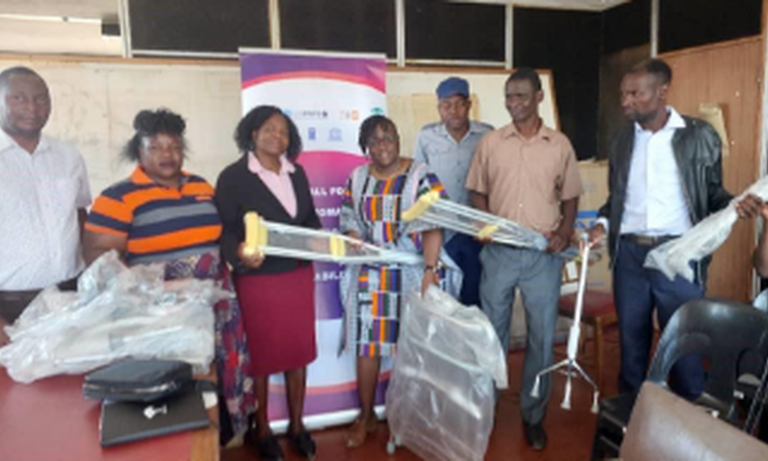
For persons with disabilities, change is just as powerful. Wheelchairs and crutches have been distributed to government offices to ensure equal access. Council buildings are now equipped to welcome PWDs with dignity. The ongoing development of a district Persons with Disabilities Policy Document marks a historic commitment: disability inclusion is shifting from goodwill to formalized local government planning.
Young people are better informed about the dangers of early marriage and GBV. School campaigns have empowered both boys and girls with knowledge of their rights, and some children who had dropped out due to early marriage have returned to school because of renewed advocacy. This transformation is redefining what inclusion looks like in local governance. The community is witnessing structural, social and cultural change driven by collaboration and the belief that every voice matters. The change was achieved through sustained engagement, strong partnerships and a deliberate strategy to amplify community voices.
District level meetings were held to update stakeholders on child rights issues and develop action plans. Partners like Musasa Project supported community dialogues, awareness campaigns and village engagements. Schools played a critical role in educating learners on rights, GBV and early marriage prevention. Mobile one stop centers became a lifeline for survivors. Working with Musasa and village leaders, women were invited to access counselling, legal advice and medical referrals without needing to travel long distances.
As a councilor, I advocated for disability inclusion within council spaces. I pushed for accessible infrastructure ramps, mobility aids and assistive devices and the council responded by equipping offices with wheelchairs and crutches. These changes ensured that PWDs could independently access services. Before these initiatives, exclusion was the norm. Now, participation is the new reality. Women and PWDs contribute to council decisions, schoolchildren speak openly about rights, and survivors find support systems where silence once prevailed.
Anna Mapurazi, Zimbabwe
Comments
Related Drivers Of Change