Zimbabwe: Empowering people with disabilities at grassroots level

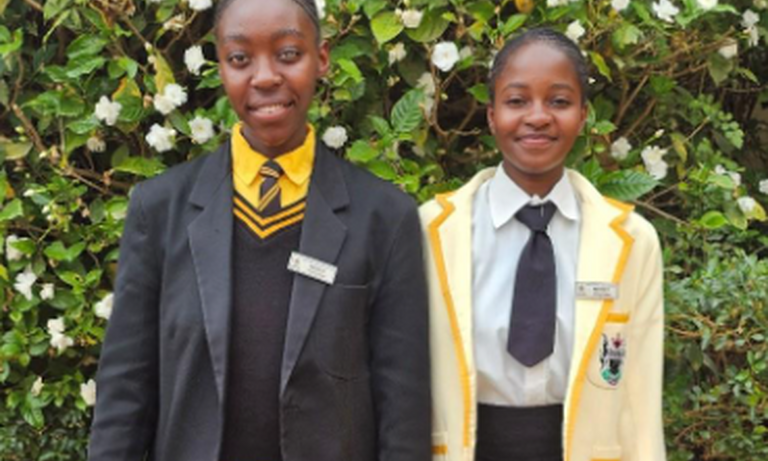
My name is Audrey Mutasa, a learner at Errymaple High School, a public speaker, a Zimbabwe Spelling Bee finalist, and a passionate youth activist. I come from Zvishavane, a small mining town in the Midlands province of Zimbabwe nestled in the Great Dyke. Through my work with the Junior Council and in collaboration with the Zvishavane Town Council, I have been leading a community-based project aimed at transforming the lives of people living with disabilities at grassroots level.
The individuals we work with include the physically disabled, visually challenged, hearing impaired, and members of the albinism community. For years, they have faced layers of stigma, exclusion, and poverty. Many depended on begging as their only means of survival. I often saw people living with disabilities struggling on the streets physically vulnerable, emotionally discouraged, and socially marginalized. These painful images inspired me to take action. Our project focuses on youth empowerment, education, and self-reliance. We believe that disability is not inability, and with the right support, every person living with disability can live independently and with dignity.
Our goal has been to promote integrated education, strengthen access to essential resources, and build self-help income generating schemes that enable people with disabilities to sustain themselves. Through the Zvishavane Town Council and Runde Rural District Council, we secured a piece of land in a periurban area allocated for agricultural and income generating activities. This land became a symbol of possibility a place where people living with disabilities, people with chronic illnesses, people with albinism, the elderly, and those who are hard of hearing could participate meaningfully in productive work. From agriculture to beekeeping, soapmaking, and other income generating projects, individuals who once felt hopeless are now active contributors to their communities.
The transformation has been significant. People living with disabilities who once begged in the streets have regained their dignity through stable livelihoods. Stigma and discrimination have been meaningfully reduced as community members begin to embrace inclusivity and support those living with disabilities. Children with disabilities are now learning in mainstream schools alongside their peers. Through integrated education, learners gain not only academic skills but also a renewed sense of belonging. Parents, teachers, and community members have grown more accepting, and the environment is no longer isolated or hostile.
Self-help schemes have enhanced independence. With income from agricultural projects, beekeeping, and detergent making, families can meet their basic needs. Parents now actively support their children’s development and participate in creating opportunities for them. For many, self-reliance has replaced dependency. This project has also built confidence. People who once felt invisible now stand tall, motivated by a renewed belief in their abilities. The journey began with fundraising efforts, which allowed us to purchase essential items such as braille materials for the visually impaired, creams and sun protective lotions for people with albinism, and wheelchairs and crutches for the physically disabled.
We then conducted educational awareness campaigns to reduce stigma and raise understanding of disability. Through community meetings and workshops, we encouraged families to treat people living with disabilities with respect, care, and equality. Workshops with people living with disabilities helped us identify their individual needs. With support from therapists, teachers, and social workers, we facilitated integration into mainstream education, physical rehabilitation, counselling, and ongoing emotional support. Many learners regained their self esteem and began participating confidently in school activities. We also helped individuals transition into self-help income generating schemes.
Those once confined to begging are now engaged in beekeeping, detergent making, craftwork, and agricultural projects. They have organized themselves into groups, building peer support systems that strengthen their resilience and independence.To maintain momentum, we conduct regular field visits to monitor progress, offer support, and assess emerging needs. A social worker now assists with placing school graduates into vocational training centers, equipping them with lifelong skills for employment and self-reliance. We continue to run awareness campaigns to encourage parents and caregivers to bring children with disabilities into the public eye and ensure they access education.
Through social media, we share testimonies from beneficiaries, inspiring others to seek support. Looking ahead, we plan to expand income generating activities and fundraise for more assistive devices. We also hope to establish workshops that will produce prosthetics, glasses, and other apparatus tailored to individuals’ needs. Tapiwa, who lost an arm fighting a crocodile, began unable to dress or wash himself. With physiotherapy and motivation, he is now fully independent and the captain of a soccer team.
Thulani, who struggled with motor skills and speech, showed remarkable improvement through physiotherapy and counselling. He now participates confidently in school life. Princess, who suffered from cataracts and struggled with near blindness, received optometry services. She can now read and write with ease and looks into the mirror with renewed confidence. Their stories show what can happen when a community chooses inclusion over discrimination and empowerment over pity.
Audrey Mutasa, Zimbabwe
Comments
Related Drivers Of Change