
Zimbabwe: A New dawn

For many in our community, the link between climate change and GBV is not immediately obvious. But for us, it became painfully clear as we watched women walk long distances searching for food and water as crop failures increased. We saw families pushed to the brink by recurring droughts, livestock deaths, and shrinking harvests. And in the tension and despair that followed, violence against women and girls rose sharply. Arguments about food turned into insults, then into bruises. Girls were withdrawn from school, expected to help with chores or find water; their dreams were sacrificed to ease household pressures.
Witnessing this suffering shook us deeply. We knew women deserved better — and we understood that the problem needed to be addressed at its root. So, as young climate ambassadors, we made it our mission to take climate action as a way to break the cycle of violence.
A Young Movement for Change
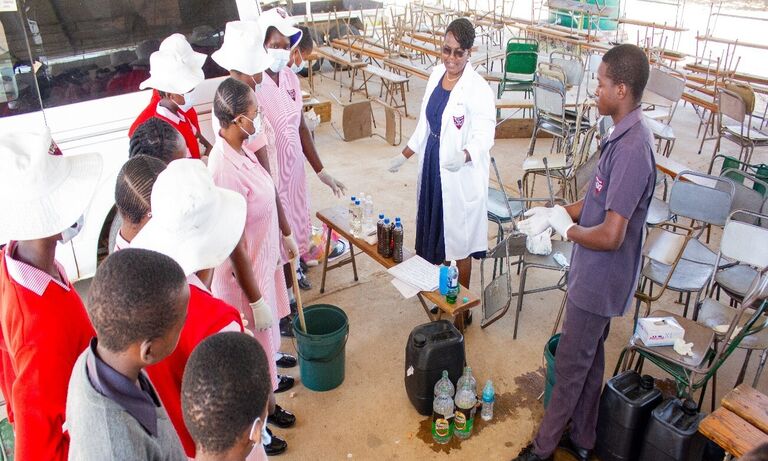
Our work began with simple but powerful activities: clean‑up campaigns, soap‑making projects, painting logs, and beautifying our environment. These initiatives were more than environmental actions — they were acts of resistance against a growing crisis. Cleaner, well‑managed land meant improved farming conditions, restoring hope and reducing household stress. Through these efforts, we saw a remarkable shift: as the environment improved, domestic violence began to decrease. Farmers found renewed confidence; families felt more secure; and our community became safer.
Women who joined our climate action work found a sense of purpose and belonging. They became decision‑makers, project leaders, and ambassadors of environmental protection. For many, this new visibility and participation helped rebuild confidence lost through years of hardship. Climate action gave them a safe space — one that offered empowerment, independence, and the encouragement needed to walk away from violent situations.
Healing Through Collective Action
The transformation in Ntabazinduna did not happen overnight. It unfolded in moments of shared learning, where we came together to understand how environmental instability fuels gender‑based violence.
Our village had once thrived through farming. When the rains failed, season after season, everything began to crumble. The loss of livestock and crops deeply wounded the pride of many men. Daily survival became a desperate struggle. In their frustration, some men directed their anger toward the women who were working tirelessly to keep families afloat. Violence became normalised.
But in the midst of this despair, our group rose with a different vision. We used climate action as a platform for restoring peace, dignity, and hope. Through education, connectivity, and collaboration, we showed that healing the environment could help heal families. As the land recovered, so did the community. Fear loosened its grip. Domestic violence began to decline. Hope returned.
Ntabazinduna started to feel like the peaceful village it had once been — not because someone else intervened, but because young people refused to accept the world as it was.
Sustaining and Expanding the Vision
This movement is far from over. We are committed to scaling up our efforts by bringing in more young people from neighbouring schools. Each school will choose a climate ambassador to represent them in annual meetings and community programmes. We aim to find sponsors who can support women’s leadership in climate action and promote gender-responsive environmental management.
Our plans are ambitious:
- Expand clean‑up campaigns and climate education to Bulawayo and eventually the rest of Zimbabwe.
- Train youth in climate resilience and advocacy.
- Promote the use of renewable energy, recycling, and sustainable practices.
- Empower more women and girls to become leaders in the climate space.
Our vision is global, and we will not stop until women everywhere can live in cleaner, safer, more resilient communities — free from violence.
Evidence of Change
The impact of our efforts can be seen across our school and community. John Tallach students have become role models, proudly representing climate action everywhere they go. Girls who were once pulled from school are returning with renewed determination. Violence in homes has decreased. The patriarchal norms that once dominated our village have begun to fade.
We have the recognition to show for it: John Tallach School was awarded a shield by EMA for being the cleanest school in Matabeleland North — a powerful symbol of what climate action can achieve.
But beyond awards, the real evidence lies in the voices of those who have witnessed the transformation:
“These children are truly game changers.” — Mr Marumise
“They made me understand the value of protecting our environment and mothers.” — Nyasha Moyo
“Future leaders in the making.” — Mrs Ndlovu
Though we still lack formal documentation for many of our efforts, we know the change is real because we see it in our homes, schools, and hearts. Guided by our school motto — “Thy word is to my feet a lamp and to my path a light” — we continue to put God first as we work through every challenge.
Our journey proves one thing: change starts with us. And we are determined to carry this new dawn forward.
By: Vuyiswa Sebele
Comments
Related Drivers Of Change