Jimmy Ngobeni - South Africa

21 years of transformation towards gender balance
Our humanity comes before our culture - many religious and cultural groups are involved in transformation around gender
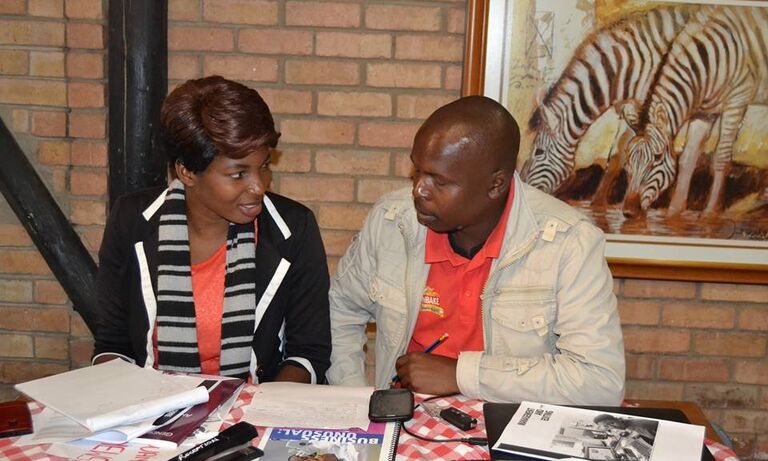
Jimmy is a very polite news editor from Botlokwa, he listens carefully and only speaks when invited. He describes his first encounter with Gender Links (GL) as an eye opener and encouraging in a field dominated by men. "This workshop is an eye opener with regard to empowering women and encouraging them to take part in a field that is dominated by males."
"I'm an editor at work and I have realised the importance of sourcing news from females and giving enough focus to gender stories." Jimmy says he had expected a workshop that would talk about women and women only. Having led the newsroom for quite some time, Jimmy believes most newsrooms and dominated by men and women are looked down on compared to men.
Jimmy shares a joke about his first encounter with GL and laughs. "I was surprised there were women in the conference room". Mr. Ngobeni says he was taken aback by the facilitators who assisted him to understand issues of gender and he believes it was a turning point for him and his newsroom staff. "We had a heated debate where a presenter stood up to her station manager because of the experience she had in the organisation (GL FM)" To Jimmy, gender is not an issue for women but a learning journey that could help many organisations grow.
Shortly after watching the DVD on the SADC protocol, Jimmy believes GL can make a difference in many community radio stations. "The Gender Links video is about women who take top positions in the media and Muslim women who are given a chance to take part in the media streams. It shows that gender balance is recognised and respected throughout the world regardless of strict different cultures."
Although the workshop took only three days, Jimmy believes his perception of women has changed. According to Jimmy, most women are subjected to cultural traditions that belittle them and have little regard for the amount of work they do. "The GL workshop helped me to realize the importance of listening to the opposite sex, irrespective of my cultural background."
Jimmy says Prof Sheila Mmusi made a huge difference in his life as an editor. Jimmy recalls that one aspect of the said gender balance is not only a focus on women but between male and female groups. He said "women need to be given a chance to occupy all these top positions, but if a particular woman is not interested, we can't force her".
Jimmy thinks women and men must be given an equal platform to take part in economic growth. At the Botlokwa community radio where Jimmy is an editor, gender is embraced and women and men are equal. Jimmy notes, however, that even with the knowledge that he has gained there is still huge room for improvement.
Jimmy narrated his story on the application of learning in the following way:
In my organisation there was a serious turn-around in 2012 when I was given the responsibility of the news department. It took almost three years for staff to absorb change and accept it because they were in the department when I took over and I had to lead them. I realise that most people don't resist change but they resist being changed. Change in one's life can be either positive or negative, but it is vital that it is channeled in a good direction.
The first thing to do is to ask your newsroom colleagues what they know about change and how it can be positive or negative. Engage them so that they can see themselves as the ones behind organisational change and embrace their effort to take part in bringing change. Try to "get" their perspective. Your own perspective, goals and belief in the change don't really matter. All that matters is the perspective and beliefs of the other person. We must start by understanding their view of the world. Determine their concerns, fears and assumptions regarding the change. Doing this will definitely help you to counter some of these concerns. But the real benefit in truly understanding their perspective is that you are valuing their opinion and they will feel they are a part of a conversation, not a sales pitch.
Acknowledge their perspective. You may not agree with their assumptions or share their fears and concerns, but you can acknowledge how they feel. Let them know that you understand their point of view and that it is a valid view. Part of the reason people resist being changed is that they never feel validated or acknowledged.
My future plans as head of the newsroom are based on long term and short term planning.
In the long term I plan to rectify the gender balance. We aim to take into consideration female journalists and mentor them to be editors, because currently the majority of newsroom members are men. I want to see a 50/50 gender balance in five years' time (2020).
This will be done by giving recommendations to the station manager and board of directors to consider women when they hire new staff for the newsroom. Transformation is the only way to break the glass ceiling which I have found exists in our newsroom, even though we managed to keep the balance in the management side of the station.
The short term or immediate plan involves focusing on gender stories for current affairs and news bulletins; targeting developmental stories that engage and uplift women and sourcing more stories from women to make them more recognised within the community.
Researching the different programmes that support women; embracing women's month (August) by focusing on what women are capable of as well as encouraging the production team to create promo's and jingles that support women and women's month.