
Zimbabwe: Woman Chief breaking barriers

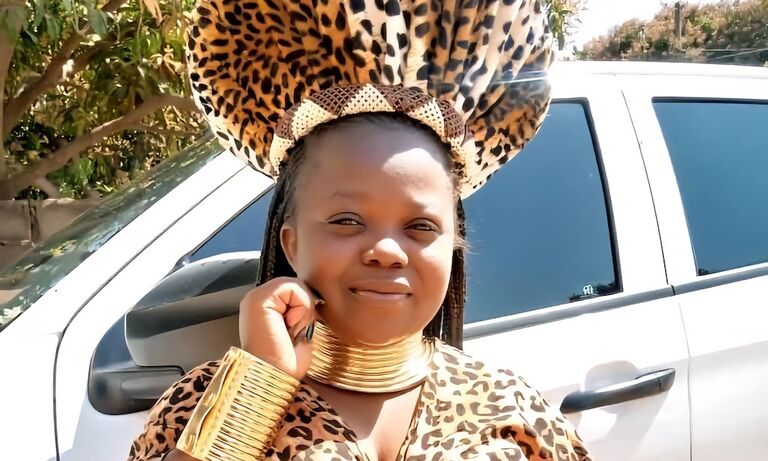
By breaking barriers, Silibaziso Mlotshwa becomes the first female chief in Matabeleland North, Zimbabwe. For over a decade, Silibaziso’s rightful claim to the Mvuthu chieftainship was not just a family dispute; it became a powerful symbol of how patriarchy fights to keep women out of leadership spaces.
At just 31, she has not only made history as the first female chief in Matabeleland North, but also the seventh in Zimbabwe, according to the Zimbabwe Gender Commission. On 15 August 2025, she was finally inaugurated as Chief Mvuthu, ending years of resistance, family battles, and cultural debates over whether a woman could ever lead.
Silibaziso’s father, the previous Chief Mvuthu, died in 2014. The succession process began in 2015, when the District Administrator for Hwange convened a meeting of elders to nominate the next Chief. As the eldest child of the late Chief Mvuthu, Silibaziso was the rightful heir. But the meeting quickly turned into a heated debate, not about her capacity to lead, but about her gender.
The men in the family argued that under Nguni/Ndebele traditions, a woman could not take the throne. They went further and noted that a woman could not perform certain rituals or cultural duties during her menstrual period, and therefore, it would be an “insult” to their culture if she were appointed. This argument revealed the deep roots of patriarchy.
For centuries, women’s bodies have been used as excuses to deny them power. Menstruation, one of the most natural human processes, was framed as a disqualification, a supposed weakness, rather than the life-giving strength it actually is.
The District Administrator pointed out that such reasoning was unconstitutional. Zimbabwe’s Section 56 of the Constitution guarantees gender equality and non-discrimination. But despite this reminder, the men in the family refused to accept it.
Faced with these barriers, Silibaziso refused to accept the injustice. In 2019, she took the matter to the High Court of Zimbabwe, represented by Advocate Perpetua Dube and Thulani Ndlovu of Sansole and Senda Legal Practitioners, with the backing of the Southern Africa Litigation Centre. Her case was clear: as the eldest child, she was the rightful heir. To deny her this right purely based on gender was unlawful and discriminatory.
By 2020, the High Court ruled in her favour. The court set aside the District Administrator’s earlier recommendation of her uncle and ordered that the succession process be redone in line with constitutional principles. The ruling affirmed that women cannot be excluded from traditional leadership simply because of gender, and that the Constitution overrides discriminatory customs. The discrimination continued; however, her chieftaincy had become inevitable, leading to the beginning of her reign in 2025.
This court case revealed something important: patriarchy is not dismantled by laws alone. It is deeply entrenched in culture, attitudes, practices, and systems that fight back, even against the constitution.
Silibaziso’s struggle was not just a personal one; it was a microcosm of what women across Zimbabwe, and indeed across Africa, face when they step forward to claim leadership.
After 11 years of struggle, on 15 August 2025, Silibaziso Mlotshwa was officially inaugurated as Chief Mvuthu. Her installation was more than a family milestone. It was a feminist victory, a constitutional victory and a cultural turning point.
The victory proved that women who stand their ground, supported by allies and the law, can shift the course of history.
In the 2023 harmonised elections, only 12% of women were directly elected to power, and just 28% hold ministerial positions in Zimbabwe’s government. Is this because women are incapable of leading, or is it because society has long told them that leadership is not a “woman’s role,” discouraging interest and causing many to shy away from even trying, silencing ambitions and creating barriers that make even trying an uphill battle?
Women make up 52% of Zimbabwe’s population and nearly half of the electorate, yet only 22 women (about 10%) were directly elected to the 210 National Assembly seats. This stark imbalance highlights the persistent gender gap in leadership across the country. If so few women are in positions of power, who will truly represent women’s interests, advocate for our priorities, and ensure that the issues that matter most to us are pushed forward?
Silibaziso’s triumph is not symbolic, alone, it is deeply practical. When women lead, they bring lived perspectives to community issues that may be overlooked.
Having women like Chief Mlotshwa in leadership ensures that policies reflect the realities on the ground. As a female chief, she represents the struggles and aspirations of women in her community. Her very presence challenges gender stereotypes and opens doors for other girls and women to dream bigger.
Chiefs are not just cultural figureheads; they influence local governance, dispute resolution, and resource allocation. A woman in that position shifts the balance toward more inclusive decision-making. In short, when women lead, entire communities benefit.
Some may argue that barring women from leadership is simply a matter of “culture.” But Silibaziso’s case reminds us of a vital truth: not everything in culture is just or right. Culture is meant to guide and serve people, not to exclude or oppress. It evolves with time, and when it fails to reflect fairness and justice, it must change.
The Constitution of Zimbabwe exists precisely to ensure that the rights of all citizens are protected regardless of culture, gender, or tradition. Silibaziso’s legal battle was not about disrespecting culture; it was about ensuring culture grows alongside justice and equality.
Chief Silibaziso Mlotshwa’s victory goes far beyond Matebeleland North. Her story is one of resilience, courage, and constitutional triumph over discrimination. It is a beacon of hope for every Zimbabwean girl who dreams of leadership in politics, in business, in civil society, and in traditional structures.
It is a reminder that leadership has no gender, and that courage, persistence, and vision. By breaking this ceiling, she has not only claimed her rightful place but also paved the way for future generations of women leaders.
#PushForward4Equality
(Written by By Kudakwashe Emma-Louise Zihonye, a photojournalist and Afrofeminist)