Zim: Solidarity, our strongest defence against backlash

By Vimbai R. Nyika
Growing up, we used to play a game where we would divide ourselves into two teams. One team would hold hands to form a defence line, while each member of the opposing team would run towards it to try to break through. The runner would always start by carefully observing the dynamics of the defence team and, most importantly, whether they were holding hands properly. The runner would always choose to run through a point that they thought was weak and easier. If they went through, they would score one point; if not, they would lose 1 point to the defence team.
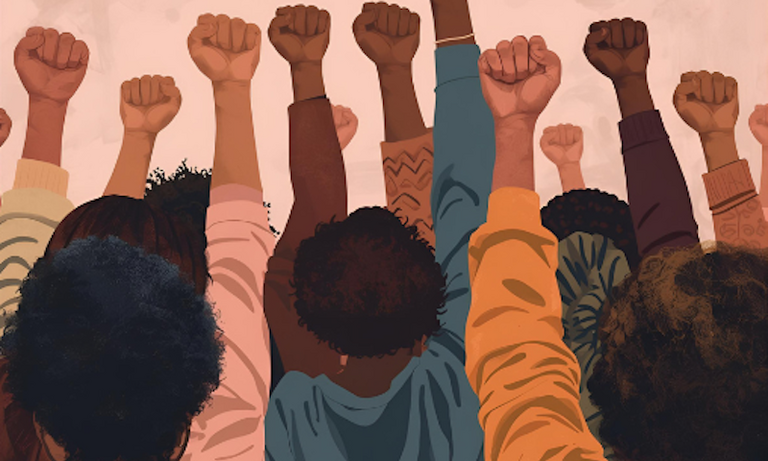
Defending women’s rights requires collective action. We have to hold hands and hold them properly!
It is literally impossible for a single activist, advocate, organisation or survivor to fight gender inequality. In my language, Shona, we say “Chara chimwe hachitswanyi inda”, meaning one finger alone cannot crush a louse – it takes collective effort to challenge patriarchy and gender inequality.
Collective action means coming together, identifying our common enemy (patriarchy, gender inequality, systemic exclusion of women in decision making, etc), putting unique strengths in a basket, unifying our voices, collectively mobilising financial resources, and consciously creating a Feminist Firewall against backlash.
Building alliances across various sectors such as health, education, and legal is essential in integrating women’s rights into essential aspects of public life. Mobilising communities and building their capacity is equally important because they have lived experiences of women’s rights violations and the power of numbers to influence shifts in norms and practices. The voices and participation of cultural and religious gatekeepers are essential – they are thought leaders who can influence community members to create and sustain local movements for women’s rights.
Establishing a strong partnership with the media cannot be emphasised enough, as it has the power to reach large audiences and influence public opinion on women’s rights. We need positive, accurate and unbiased narratives on women’s rights and why upholding them is important for the development of our communities.
Solidarity ensures no one is left behind. Women’s experiences of oppression vary across age, class, occupation, geographical location, economic/social status and disability. A collective effort ensures that all voices are included, thereby ensuring that our advocacy represents the full spectrum of women’s experiences. Solidarity goes beyond inclusion; it is also about the redistribution of power, mutual protection and shared accountability. When we stand together, we empower each other, protect each other’s rights and co-create solutions that are progressive and sustainable. We become our sisters’ keepers.
Backlash thrives in isolation. There is undeniable power in numbers. When we operate in silos as women’s rights activists, we become easy targets for the anti-women’s rights movement. We become fragmented, weaker, and burnt out.
Solidarity creates safety and allows us to respond to backlash with coordinated strength. This means that if one of us is attacked, we all show up and question power, provide care to the wounded and drive a clear message that: WE ARE HERE. Because of the ever-evolving technological landscape globally, backlash has also taken a digital form. We are witnessing increasing resistance to the women’s rights agenda online. There is good news and bad news to this.
The good news is – backlash is a sign of progress. It means the word was spread, whether we all agree with it or not. The bad news is, if left unchecked, online backlash can misinform and disinform the masses, resulting in biased perceptions of women’s rights, which creates fertile grounds for further violations. When a fellow women’s rights organisation is being attacked online, we should stand in solidarity with them. This can be as simple as publicly announcing our solidarity, sharing accurate information, and, in extreme cases, blocking! Tagging, re-tweeting, sharing and liking each other’s posts also create a unified voice.
We have to mobilise resources together and think deeply about how we can be financially sustainable as women’s rights organisations. Financial sustainability is a form of resistance to backlash. The sustainability of our gains and impact relies on this. Donor funding has delivered unimaginable gains, significantly shifting norms and promoting women’s increased participation in public life. Women can now vote, drive, participate in decision-making at different levels, attend school, and are crucial players in development.
However, donor funding is short-lived, and priorities can shift. It is now, more than ever, that we need to utilise our expertise to create diverse streams of income that can support our work. We also need to secure the future by building reserves that will cushion us in the long run. It is very important that we build networks and partnerships, combine our resources and learn from each other’s best practices to maximise impact.
If we go alone, we go faster. If we go together, we go further. Solidarity is our strongest defence against backlash.
#Pushforward4Equality
Comments
Related news