Keeping girls in school key for gender equality

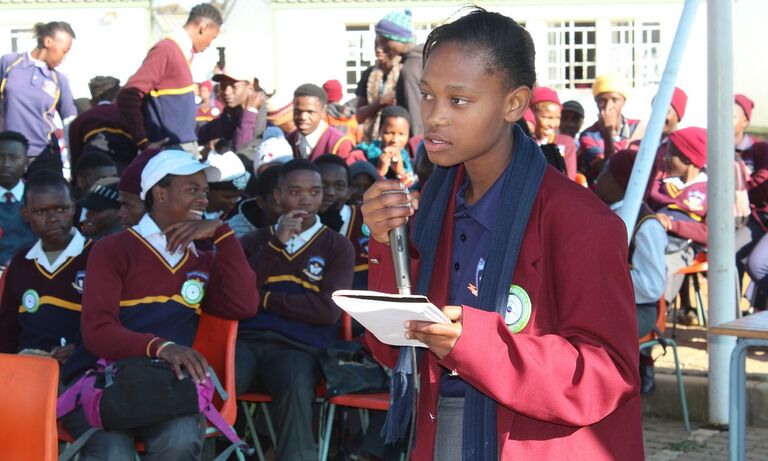
Lilongwe, 11 October: Today the world commemorates the International Day of the Girl Child under the theme EmPOWER Girls: Before, during and after crises. According to UNWomen this day serves to address the needs and challenges girls face, while promoting girls' empowerment and the fulfilment of their human rights.
This day gives us a chance to reflect and focus on gender inequality issues facing young girls in the region.
It is estimated that there are 1.1 billion girls in the world today. UNESCO estimates that 130 million girls between the age of 6 and 17 are out of school and 15 million girls of primary –school age-half of them in sub-Saharan Africa –will never enter a classroom.
In Southern Africa, the SADC Gender Protocol Barometer 2017 notes that gender parity has been achieved in primary and secondary school enrolment in most SADC countries but not all children are in school and secondly some countries have less than 50 percent of enrolment of young girls and boys.
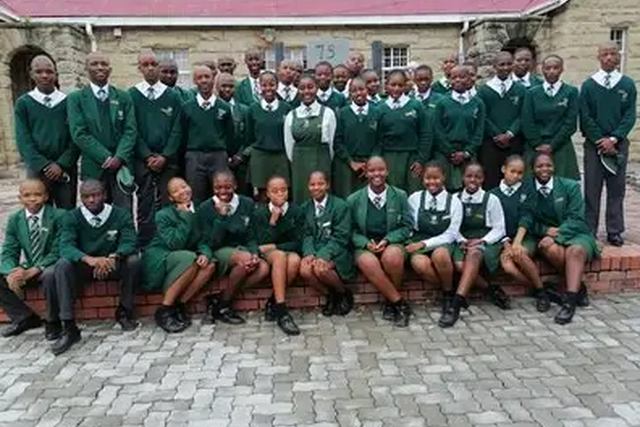
Every girl deserves a chance to education therefore getting girls into school and ensuring that they stay and learn will assist in bridging the gaps in education and empower them. However, poverty cultural norms, early marriages, long distances to school, violence and teenage pregnancies remain factors that fuel high drop outs and even non enrollment.
Despite several initiatives to keep girls in school statistics show that girls continue to drop out of school which is an impediment to addressing gender disparities in education and ensuring equal access to all levels of education.
As the clock is ticking towards to 2030 these figures represent gaps that need to be filled and require action to address these inequalities. Educating the girl child is a pathway to breaking the inter generational transmission of poverty, exclusion violence, exclusion and discrimination and to achieving equitable and sustainable development. Girls who spend a lot of their lifetime in school are likely to have fewer children, and increase their welfare, earnings and house hold welfare.
Being the years of action and results (2015-2030) this is a time not to leave any one behind especially the girl child. It is the time to be proactive and lead a fight against challenges that inhibit girls to exercise their right to education and demand solutions from stakeholder concerned.
Member countries have so far set up several initiatives to keep girls in school such as re-admission policies, bursaries, efforts to ensure that schools have adequate water, sanitation and hygienic conditions providing of sanitary pads amongst others but a lot still needs to be fulfilled.
We need to continued increasing enrolment at all levels of education including tertiary levels for women and men to ensure the requisite skills for growing economies and have longer and standard lengths of compulsory schooling in SADC countries for the girl child to access and complete their education for them to attain a better future. .This is the time for action and results, let everybody be heard and counted!
( Jenipher Changwanda a journalist from Malawi. This article is part of the Gender Links New and Blogs).Comments
Related news