16 Days: Safe abortion, hurdle for women

In late October 2025, sexual and reproductive health and rights (SRHR) advocates in Malawi celebrated a landmark decision by High Court Judge Michael Tembo, who ruled that minors impregnated through sexual violence or rape are entitled to access safe abortion services.
The ruling followed a case brought by a courageous 14-year-old girl (identified in court as AC for legal and ethical reasons) who sued the Ministry of Health after being denied the service following a rape in 2022.
AC also sued a clinician at Chileka Health Centre for refusing to provide the procedure. The court awarded her damages for injury and loss arising from the mental anguish she suffered after being forced to carry the unwanted pregnancy longer than necessary.
AC argued that by denying her the service, the clinician violated Section 19(1) of the Gender Equality Act (GEA), which guarantees the right to adequate sexual and reproductive health, including access to services such as safe and legal termination of pregnancy.
In response, the court ordered the Ministry of Health to amend the Post-Abortion Care Guidelines within 180 days to ensure that minors in similar situations can access safe abortion services.
While the ruling was a major step forward and worth celebrating, it fell short of delivering full justice. Many women in circumstances similar to AC’s continue to suffer in silence.
The court’s directive to amend the guidelines applies only to minors, leaving adult survivors of sexual violence without similar protection or access to safe abortion services.
“The court only addressed the issue brought before it. It took one brave girl to challenge the breach of statutory duties by the authorities. All in all, the judgement has nothing to do with women who are found in the same circumstances,” explains Godfrey Kangaude, the Executive Director of Nyale Institute of Reproductive Health.
Malawi’s abortion laws are a legacy of British colonial rule. Although the country gained independence in 1964, it continues to uphold several colonial-era provisions, including sections 149–151 of the Penal Code, which criminalise abortion except when the procedure is performed to save the life of the woman.
Section 149 states that anyone who attempts to cause a miscarriage by “administering poison, using force, or any other means” commits a felony and is liable to imprisonment for up to fourteen years. Section 243 further allows surgical operations only when they are necessary to preserve the life of the mother.
Section 150 provides that any person who unlawfully procures, administers or assists in an abortion is liable to imprisonment for up to seven years, while Section 151 imposes a three-year sentence on anyone who supplies instruments or substances intended for an illegal abortion.
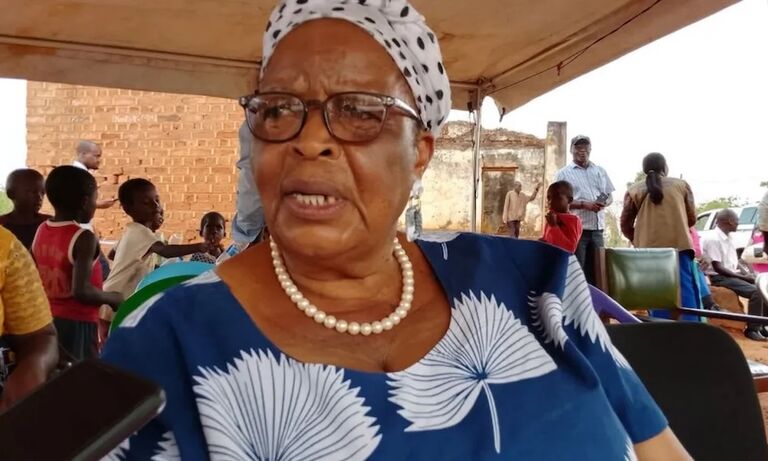
Senior Chief Chikumbu, who is also a women’s rights activist, believes that many women still lack adequate knowledge about their sexual and reproductive health rights, including access to safe abortion services and related legal provisions. She notes that this knowledge gap leaves many women vulnerable to misinformation, stigma and unsafe practices.
“There are a lot of women who are ready to do what AC did, but I think lack of information is making them fail to take bold steps. If these cases are brought to the knowledge of women in the same circumstances, they, too, can take action,” she says.
Kangaude believes that tackling the issue calls for collective action involving victims, civil society organisations (CSOs) and rights activists working together to push for change.
“As CSOs, we need to work together with the women who are victims to help solve these issues. We need to lobby for more action from our members of Parliament,” he says.
However, according to lawyer and safe abortion activist Mateyu Sisya, many women are afraid to come out in the open because they fear ridicule and the stigma that often surrounds the issue.
“Women are willing to fight for their rights, but they are reluctant to come out because they are afraid of ridicule or being described as sinners. Malawi styles itself as a God-fearing nation, so for women to come forward with these issues, they would be taken as sinners.
“However, there is still chance to use the judgement to address issues affecting women. We must lobby the government to ensure that, as it amends the Gender Equality Act, the rights and needs of all women, not just minors, are also taken into account. Much as it was specifically for minors, women can ride on this success and gain something,” Sisya explains.
Malawi remains among the countries with the highest maternal mortality rates, recording 381 deaths per 100,000 live births, according to the Nyale Institute. The Institute notes that unsafe abortions alone account for up to 18 percent of these deaths, many of which are preventable.
It further emphasises that stigma continues to be one of the greatest barriers. Many women who legally qualify for abortion services are still denied care in public health facilities. With limited alternatives, they often resort to unsafe procedures, sometimes with fatal consequences.
The Malawi Government has long expressed its intention to reform these laws. In 2012, then-President Joyce Banda appointed a Special Law Commission to review the existing abortion provisions, following a request from the Ministry of Health aimed at reducing pregnancy-related deaths.
The commission, comprising doctors, lawyers, faith leaders and chiefs, evaluated local evidence and policies in conjunction with international treaties, and visited several African countries for guidance.
After nationwide consultations and a thorough analysis of the situation, the commission in 2015 recommended expanding the grounds for legally permissible abortion.
If passed, the proposed Termination of Pregnancy Bill would grant women the right to seek an abortion (1) if the pregnancy results from rape, defilement or incest; (2) to preserve their physical and mental health; and (3) if the foetus is severely malformed.
Written by Chancy Namadzunda. This article, first published by Atlas Malawi, is part of the Media Parity Capacity Building Programme and republished as part of the programme series.