16 Days: From presence to power


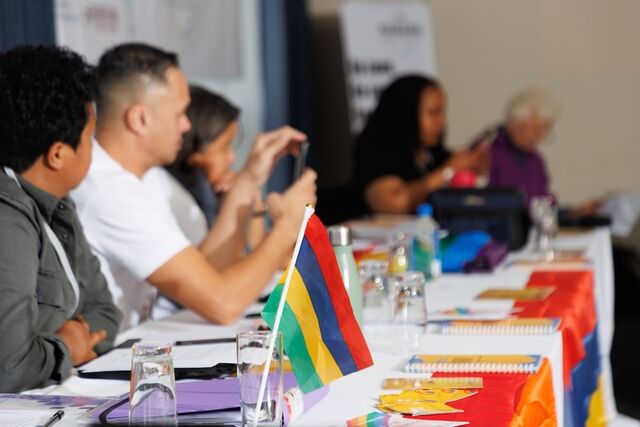
As a Pan African queer feminist and Programme Manager of the Marang Fund, I entered this space fully aware that the formation of the Q20 is not a standalone intervention. It exists within the C20 Civil Society stream, a space that claims to speak truth to power within the G20 architecture. Yet even in this progressive corridor, queer African voices have historically been marginal, negotiable, and conditional. Q20 disrupted that. It forced open a door that was never designed for us and demanded recognition not as guests, but as political actors.
Q20 was a rupture in global governance, a moment where African queer bodies refused to exist as footnotes in policy conversations and instead asserted themselves as authors of global justice. The Q20 Declaration emerged as a powerful intervention into the C20 and G20 processes, calling for structural inclusion across economic justice, health, migration, education, digital rights, legal reform and data sovereignty. But for many of us from the continent, this moment was also about reclaiming narrative power from systems that have historically silenced, criminalised and erased us.
Africa did not arrive at Q20 asking for permission. We arrived, remembering who we are. African Queerness Is Indigenous. African Homophobia Is Imported.
The most powerful act at the C20 was not simply the drafting of a Q20 declaration. It was naming the truth that queerness is not new to this continent. Our ancestors knew fluidity. Our spiritual systems recognised multiplicity. Our languages did not cage humanity into rigid binaries. Colonialism did that. Missionaries did that. The imported law did that.
Our present reality is bound by colonial and penal codes that were never ours. Each African country continues to suffer under the legacy of its specific coloniser. British-imposed sodomy and public order laws in former British colonies criminalise same sex intimacy with brutal rigidity. French colonial legal systems left behind moral policing structures, differently articulated but equally violent. Portuguese-influenced territories retain remnants of imperial penal ideologies that regulate morality and deviance through religious-state power. These legal frameworks are not uniform, yet they all share a common intent: to discipline bodies, criminalise desire and render African queerness illegal in our own lands.
This is why I say with radical clarity: South Africa cannot do this alone. Its progressive constitution is an exception, not the rule. It does not represent the lived realities of queer people in much of the continent. Celebrated legal language in one country cannot mask the violence sanctioned across the rest of the region. Liberation cannot be outsourced to a single state. The Marang Fund alone cannot carry the burden of the Global South. Queer justice must not be mistaken for South African exceptionalism.
We require a continental movement, a regional uprising, and a coordinated resistance that acknowledges that our oppression is system-wide and our liberation must be collective.
Process: From Token Inclusion to Political Intervention
Q20 was not perfect. It emerged in a system not designed for us. There were moments where our presence felt contested, provisional and fragile. But there was also undeniable power; African queer constituencies shaping language, influencing policy positions and refusing dilution of our lived realities.
The Declaration did what previous G20 discourse repeatedly failed to do. It named structural violence explicitly. It acknowledged criminalisation as a driver of poverty and exclusion. It recognised bodily autonomy as a non-negotiable right. It insisted on data justice and visibility. It centred decolonisation as a political imperative.
This process itself became a living example of what we demand: inclusion that is not cosmetic but structural.
What Q20 Made Possible and What It Exposed:
Q20 created something unprecedented: a formalised political voice for LGBTIQA communities within global governance architecture. It carved a space where our struggles are no longer special interests, but central to sustainable development, economic justice and global equity.
It connected African queer movements to a global strategy while grounding that connection in lived realities: unsafe healthcare systems, targeted violence, digital surveillance, educational exclusion and legal erasure.
Yet it also revealed the harsh terrain we are operating within. We are witnessing a global resurgence of highly organised anti-rights and anti gender movements. These forces are strategic, well-funded and transnational. They work tirelessly to erase feminist gains, undermine queer existence and weaponise morality against bodily autonomy. Simultaneously, former Western allies retreat, silence themselves or become selective in their solidarity.
Even within the C20 process, the weight of leadership fell heavily on a few progressive spaces, most notably South Africa. This is dangerous. It creates the illusion that progress is evenly distributed. It is not. Africa remains fragmented in legal protection, fragmented in political will and fragmented in safety. Until that shifts, no single country can claim continental progress.
#PushForward: Sustaining the Mandate
Q20 must not become a symbolic footnote within C20 history. It must evolve into a sustained political mandate. We must demand continuity. We must demand institutionalisation. We must demand resourcing. The work does not end with declarations. It begins with implementation.
Where do we go from here?
We expand Q20 further within the C20 structure. We demand permanent recognition, not temporary presence. We push for regional ownership, not donor-dependent visibility. We insist on African-led frameworks, not imported moral approval.
We call on African governments to repeal colonial-era laws that criminalise queer existence. Dismantle penal codes rooted in the empire. End medical violence against intersex bodies. Fund queer led organisations without restriction or stigma. Embed SOGIESC inclusion across all national development frameworks.
We call on the C20 and G20 to institutionalise Q20 permanently, not symbolically. Commit resources, not rhetoric. Protect queer human rights defenders across the Global South. Ensure African queer leadership remains central to decision-making.
We call on movements and communities to organise beyond moments. Build political power beyond platforms. Reject token inclusion, demand structural participation.
We are not a footnote. We are a force. Q20 was not the destination. It was the door.
And now we #PushForward:
We #PushForward for intersex children whose bodies are still being cut without consent.
We #PushForward for queer Africans navigating violence in silence.
We #PushForward for the generations who deserve to live loudly, safely and whole.
This is not about visibility alone. This is about sovereignty. And as African queer feminists, we do not ask for space. We claim it.
#PushForward is our commitment to memory, to resistance, to justice and to a future where African queerness is no longer forced to justify its existence but celebrated as part of our collective humanity.
(Written by Lusanda Mamba, Project Manager – Marang LGBTIQ Fund, Gender Links Swaziland)
Comments
Related news