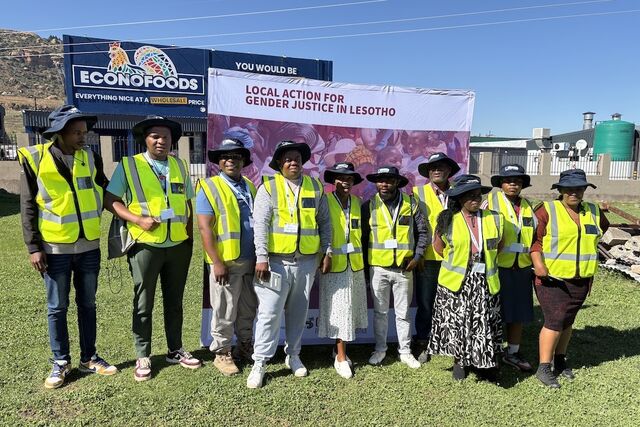
16 Days: Care is power, act to protect women and girls


A 16 Days of Activism Call to Action from the WOSSO Fellows
Every year, during the 16 Days of Activism Against Gender-Based Violence, the world raises its voice to confront one of the most urgent human rights crises of our time: the ongoing violence faced by women and girls. In Southern Africa, this crisis feels especially heavy. Women are not just experiencing isolated incidents of abuse they are living within overlapping systems of harm that undermine their safety, dignity, and rights every single day. This year, as the G20 gathers in Southern Africa, the WOSSO Fellows are calling for a shift in how we understand and respond to these crises. At the heart of this shift is an idea too often dismissed as soft or secondary: care.
Care is not a single issue. It is the thread that connects everything we do, from fighting gender-based violence, to strengthening digital access and safety, to protecting sexual and reproductive health and rights, to advancing climate justice. As WOSSO Fellows working across these areas, we see how deeply care shapes the daily realities of women and girls. When care systems are strong, communities thrive. When they are neglected, violence and inequality multiply. In Southern Africa today, care is being stretched beyond breaking point.
Our region is living through a devastating epidemic of gender-based violence and femicide, with women dying every day. Survivors who reach out for help often find underfunded shelters, limited mental health services, and systems that fail to protect them. This is not only a failure of justice, but also a collapse of care. At the same time, political decisions and funding cuts are weakening SRHR programs, HIV treatment, menstrual health services, and essential healthcare facilities. When SRHR is denied or restricted, women face higher risks of infection, unintended pregnancy, and violence. The withdrawal of these services deepens the vulnerability of women and erodes their autonomy and dignity.
Climate disasters add another layer to this crisis. Droughts, floods, extreme heat, and climate-induced displacement are reshaping the lives of women and girls. In many communities, women are the ones who walk further for water, find alternative food sources, rebuild homes, and care for the sick and elderly during environmental crises. Climate change is forcing them to shoulder increasing unpaid care work, often under dangerous conditions. Yet women are rarely included in climate policy decisions, despite being among the most affected and the most capable of driving community resilience.
The digital world, which should offer escape, education, and opportunity, has also become a space of harm. Online abuse, cyberstalking, misinformation, and digital surveillance expose women to new forms of violence. For many young women, limited access to digital tools means limited access to telehealth, education, employment, and safety resources. Technology can either deepen inequalities or help reduce them, but without a care centred approach, it often does the former.
A care centred lens changes how we understand these problems. It forces us to see violence not only as a physical act but as evidence of broken community systems. It challenges us to think of digital safety as part of holistic well-being. It reminds us of that SRHR services are not optional but essential pillars of dignity and autonomy. It pushes us to recognize that environmental justice is deeply intertwined with gender justice, and that communities can only survive climate shocks when care is built into their response systems.
This is why the G20 meeting in Southern Africa is such a critical moment. The world cannot address violence, inequality, or climate instability without addressing care. As WOSSO Fellows, we are calling on the G20 to invest in women-led and community-led care systems, systems that protect survivors of violence, expand access to SRHR services, build safe digital environments, and strengthen resilience to climate shocks. Protecting funding for SRHR and HIV programs is not just a matter of health; it is a matter of justice. Similarly, technology should be used to expand access to safety, education, and care, rather than creating new forms of exclusion or surveillance.
We are asking the G20 to adopt a cross-sector, care centred policy framework that recognizes how violence, digital exclusion, climate change, and health crises intersect. Women and girls do not experience these issues separately; they experience them all at once. Policies must reflect this reality.
The evidence for care centred investment is overwhelming. When countries invest even three to four percent of their GDP in childcare, eldercare, community health, and caregiver support, women’s employment rises, poverty declines, and economic growth accelerates. Care is not a financial burden; it is a catalyst for economic and social transformation. A Global Care Guarantee would recognise the value of unpaid care work, redistribute it through universal childcare and shared parental leave, and protect paid care workers with living wages and strong labour rights. These commitments are not just morally right; they are economically smart.
As the world marks the 16 Days of Activism, our message is simple but urgent: care is power. Care is protection, care is equality, and care is freedom. A future where women and girls in Southern Africa can thrive is only possible when care is recognized as central to development, justice, and human rights. If the G20 is serious about building inclusive and sustainable economies, then it must fund care like the future depends on it, because it does.
(By Carren Liando, a WOSSO Fellow)
Comments
Related news