Urban municipality of Malaimbandy

Urban municipality of Malaimbandy
The rural commune of Malaimbady was selected as a Center of Excellence for Gender Integration in 2011. Located in the Menabe region, the commune has an estimated population of 33,500, including 17,900 women. With 19 fokontany (villages), the commune has two basic health services, 15 public primary schools, and one secondary school. The population lives mainly from rice farming and livestock breeding.

Introduction

Malaimbandy is an urban commune located in the Menabe region. It is situated along National Road 35 towards Morondava in western Madagascar. The main activities of the population are fishing, trade, livestock farming, and agriculture.
Before Gender Links (GL) intervened, the community was marked by the marginalization of women in society, but also by the patriarchal power of men, ignorance of women's rights, and the “prohibition” of women's participation in political, economic, and social life. In fact, women are not allowed to speak in public or sit in the “King's House.” Women are also prohibited from joining associations.
Since 2012, the municipality has been chosen as a GL center of excellence. By joining the process, the municipality aimed to ensure that the SADC protocol was known to the population in order to increase women's participation in public life and to make the necessary efforts to strengthen the capacities of women and men in gender issues and thus reduce the rate of gender-based violence.
Municipal officials are aware of the importance of the gender approach. Indeed, it is through the integration of this approach that women's rights are respected, family life is improved, and social differences between women and men are reduced, thus promoting “gender-based development” and considering the gender approach as a cross-cutting approach in the management of local affairs.
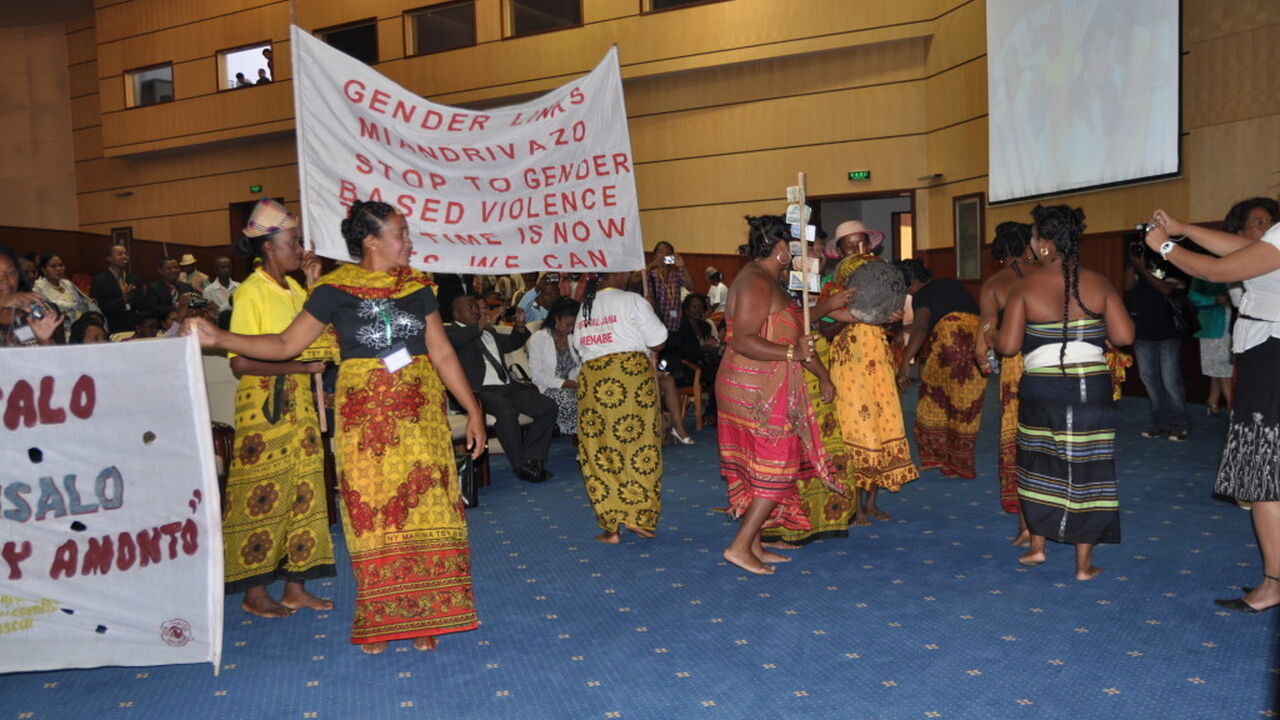
As a center of excellence, the implementation of the action plan on gender and development has enabled this municipality to carry out activities that can bring about change. The municipality has been able to organize awareness-raising, mobilization, and dissemination of the SADC protocol at the Fokontany (village) level. The municipality has raised awareness among the population about the importance of the gender approach in the development process through infrastructure such as the construction of schools and basic health centers to meet the needs of women and children. Currently, the majority of Fokontany in this municipality have access to drinking water, and the municipality has been able to contribute to women's empowerment programs through a series of capacity-building initiatives and a literacy program for the elderly.
The 16 Days celebration is an event organized by the municipality to reduce the rate of violence. The gender committee association also contributes to raising awareness among cohabiting couples to encourage them to enter into civil marriage. In addition, the municipality has drafted a bill and a resolution on equal participation and equal treatment of women and men in the implementation of labor-intensive work. It has been decided that breastfeeding women will benefit from advantages in terms of working hours for breastfeeding.
Training and support for community workers and health workers have been provided. The effective participation of law enforcement agencies has been noted in the fight against rural insecurity. In addition, the municipality was able to allocate budgets to finance the activities stipulated in the action plan initiated by GL. Thanks to the implementation of these various activities, changes have taken place in this municipality. These include the consideration of women's rights in all areas, namely health, education, the environment, and especially in the women's empowerment program. Women are now able to report acts of violence and participate in all public and socio-economic activities. The municipality has initiated several capacity-building programs for women in the areas of health, agriculture, particularly onion cultivation, and, above all, the fight against illiteracy. Men who have participated in the training have become more sensitive to gender issues. Their active participation in all activities organized by the municipality has been very significant. They are among the agents of change in this municipality. Moreover, awareness-raising is no longer limited to women but extends to community leaders and traditional authorities.
The change in the population has been reflected in their participation in the development process, given that the link between the gender approach and the participatory approach is essential. The municipality was able to take a decision, approved by the deliberative body, to help pregnant and breastfeeding women with days off and medical leave. It is important to note that this decision applies to both women and men. A partnership agreement was signed between the municipality and local media to disseminate the content of the SADC protocol and the mainstreaming of the gender approach in local government. The change at the household level has been very noticeable: discrimination is beginning to decrease and equal participation between women and men in decision-making is becoming the norm. There has also been an increase in the school enrollment rate for girls. Parents are convinced that early school dropout is the source of violence against women. Women no longer hesitate to participate in various public meetings.
The municipality of Malaimbady stands out from other municipalities thanks to the SAHA program project promoting good local governance on the one hand, and the implementation of the GL action plan promoting a gender-based approach on the other. Despite the efforts and activities already undertaken in this municipality, barriers remain. Awareness-raising activities are hampered by the attitudes of part of the population. The intellectual level is limited, and the lack of development support partners and divergent political tendencies hinder the initiatives undertaken. To improve the performance of this municipality, various activities need to be developed. These include setting up a monitoring and evaluation system so that other development strategies can be designed and lessons learned can be capitalized on through exchanges and sharing between municipalities of excellence. It is also important for GL officials to visit the field in order to maintain contact with municipal officials and the population in this municipality.