Rural municipality of Bongatsara

Rural municipality of Bongatsara
The rural commune of Bongatsara is located in the district of Antsomondrano, 18 km from Antananarivo. It has a population of 19,988, with an annual growth rate of 40.26%. The commune comprises seven villages.

Introduction

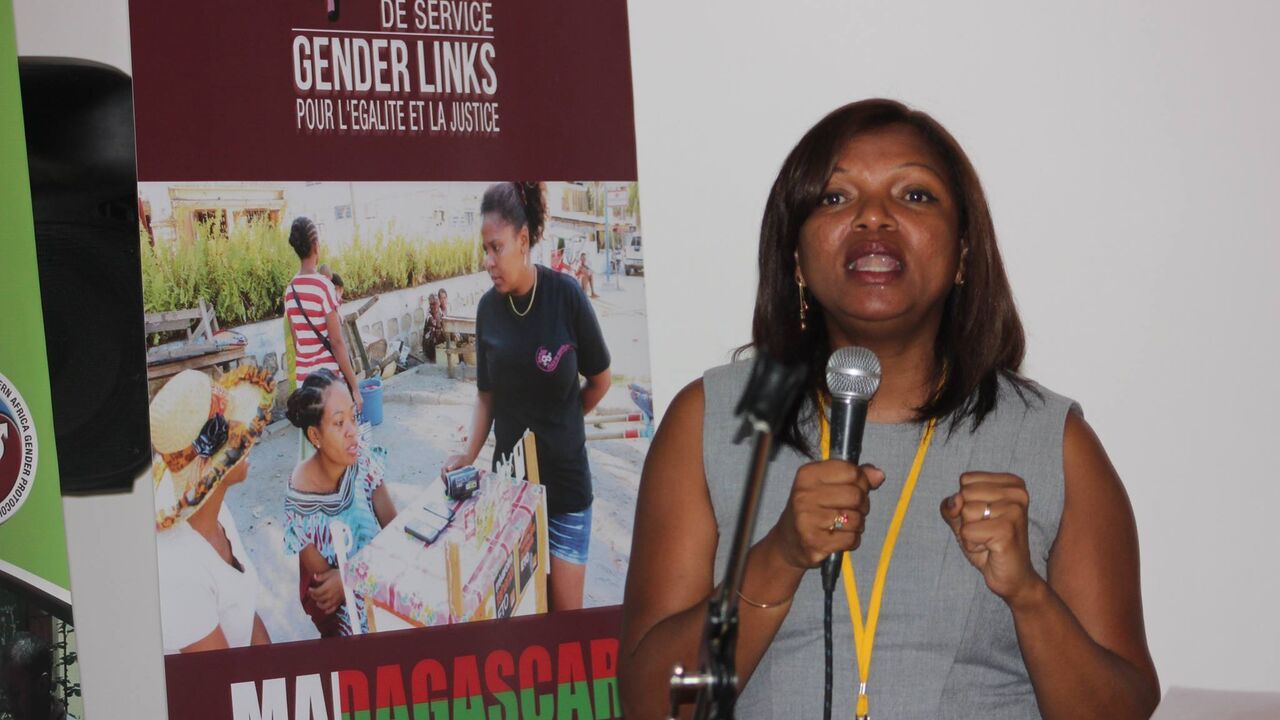
Bongatsara is a second category locality. It is in the rural region of Madagascar although only 15kms from the Capital. “But the service is in the first category!” the Mayor told Gender Links. Being a second category is decided according to the number of inhabitants, but there is a huge range of work and service delivery levels in rural regions. As Mayor and the Head Administrator of the Council, Annick Rabearisoa finds herself in charge of finance and social development of the locality. This is apart from being a counsellor, a friend, a mother, an administrator, a trainer and all other official and unofficial work combined.
“Contrary to developed countries, social and economic development issues in the locality are put in the same basket. The state does not take charge of the health of the population although it gives the minimum. The Council has to fill the gap and take charge of all those in need.” She then showed Gender Links the statistics of the vulnerable people in her locality. “When these people are sick, we give them CSB2 (basic health care) and we do whatever we can. But if they need to do an echography or radiography, we channel them to the proper services, and they get the services according to a well-established list.
In other words, Rabearisoa is the torch bearer of her community. Whenever she finds a dark alley she tries by all means to find the light at the end of the tunnel, so that at the end of the day her community is the beneficiary. Bongatsara is a region where girls leave school because of early pregnancy or abortion. Girls cannot finish their studies, and hence the interest of the Mayor in Gender and Education.
Rabearisoa had confidence in saying she is part and parcel of Gender Links, because she became part of a network of women whose work she had admixed and appreciated. Apart from Claudia, whom she met at the UNFPA, she was agreeably surprised to have two familiar women as Gender Links facilitators for the COE. Collette Vaohita, Former Minister of Environment, Former Deputy Mayor of Tamatave and Former Regional Director at Tamatatve for the Project SEECALINE (fights against malnutrition) Collette, former Minister of Environment and Lantoharitiana Ranoromalala, Civil Administator and high official of Local Government.
The Mayor followed all the stages of the COE, and as soon as the Plan of Action was developed, she put in place Steering Committee on Gender. “This is the basis for the Plan of Action. The Gender Links workshop was run in parallel with a programme of the UNFPA on the role of the media, gender violence and women in politics. 46 participants followed the course.” Rabearisoa committed her Council to implement the Action Plan.