Anjozorobe Urban municipality

Anjozorobe Urban municipality
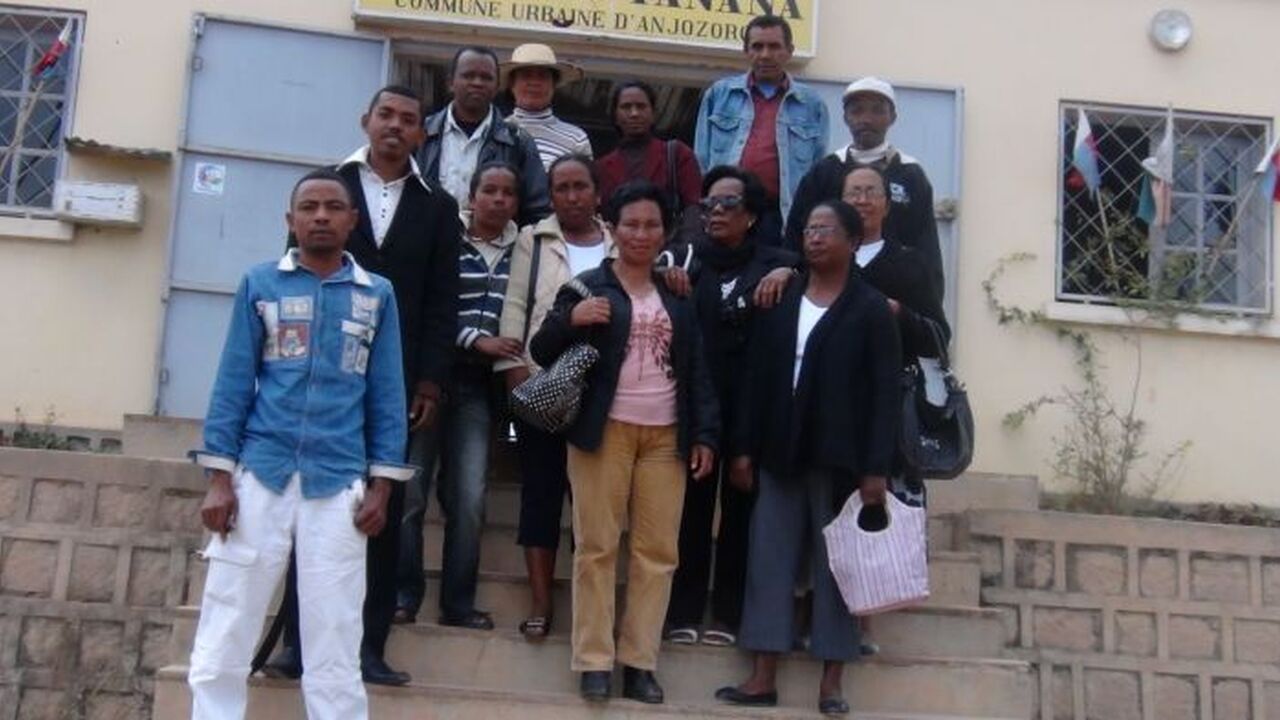
Anjozorobe is located 90 km from the capital. With a population of 24,842 (12,042 men and 12,800 women), the municipality comprises 24 fokontany (villages) and covers an area of 512 km². In terms of educational infrastructure, the municipality has 32 public primary schools, two public secondary schools, and one private university. The municipality also has two public health services. The municipality adopted the Center of Excellence process in 2012.
Introduction

Anjozorobe is a rural commune in the Analamanga region of the province of Antananarivo. It is located 90 kilometers from the capital of Madagascar and is situated on the right bank of the Mananara River, a tributary of the Betsiboka River, the largest navigable river in Madagascar. Before Gender Links' intervention, the commune's policy focused on local development without consideration for the practical and strategic needs of women. The commune only has a communal development plan initiated by a small group at the commune level. Women participate little in the development process, and some suffer from violence. In society, they have been marginalized and rarely dare to speak in public. Furthermore, women do not benefit from family inheritance in the same way as men.
Most of women's time is devoted to their role as wives and mothers: the education, health, and schooling of their children. The integration of gender at the municipal level has enabled officials to recognize that gender promotion is important in order to eradicate acts of violence. It has been noted that no measures have been taken to prosecute the perpetrators. The awareness raised by the Gender Links team during the first meeting enabled this municipality to adopt a policy aimed at integrating women into the development process.
Various activities were carried out. The municipality implemented an action plan on gender and development initiated by Gender Links and developed by the various entities in the municipality (health, education, law enforcement, and fokontany leaders). A “gender committee” was established and works to promote A “gender committee” was set up and is working to promote the participation of women. The movement to combat violence was legally established.
The municipality, in collaboration with the gender committee, was able to disseminate the SADC protocol at the level of the fokontany, decentralized technical services, and churches. Mobilization and awareness-raising sessions for women and men in the development process have been organized. This is to make the population understand that they are involved in the development process. Support and assistance for vulnerable women have been included in the municipality's program of activities. In addition, the gender committee regularly organizes events on gender, especially during the celebration of International Women's Day on March 8 and the 16 Days of Activism.