Southern Africa: Holding a fragile line on gender equality

Durban, 19 August 2026: With five years to go before the 2030 Sustainable Development Goals expire the expanded Southern Africa Gender and Development Index (SGDI) gives the region an overall score of 58%, ranging from 74% in South Africa to 48% in Angola. Eleven countries score 60% or below. Only South Africa, Namibia, Seychelles, Mauritius and Lesotho score higher than 60%.
The most comprehensive basket of gender indicators among all its peers, the SGDI tracks 70 gender targets, including 28 found in the Southern Africa Development Community (SADC) Protocol on Gender and Development adopted when South Africa last chaired SADC in 2008. The latest findings show a region that has consolidated important gains on law, health and representation while facing rising political, legal and financial pressure on those very gains.
The SGDI is being launched at the civil society forum convened under the theme Democratic Futures in Africa by the Southern Africa Council of Non-Governmental Organisations (SAf-CNGO) parallel to the SADC Heads of State summit that took place in South Africa on 17 August. It covers constitutional and legal rights, governance, GBV, health, HIV, sexual diversity, economic justice, climate justice, women, peace and security, and gender and media. Overall, the sixteen member states score best on gender and climate justice and worst on sexual orientation, gender identity and expression.
The 2026 Southern Africa Gender Barometer coincides with a period of accelerating anti-rights mobilisation across the region, from the withdrawal of state subventions to gender machinery in Botswana, to organised transnational anti-rights campaigning documented in Tanzania, Zimbabwe and Madagascar. The findings arrive as the Southern Africa Gender Protocol Alliance begins active work on the shape of the SADC Gender Protocol beyond 2030.
Aligned with regional and global gender equality commitments, the SGDI provides governments, civil society, researchers and development partners with evidence on progress, gaps and priorities to strengthen accountability and inform action. The 2026 interactive edition allows users to explore Gender Equality Scores and observed results by country, indicator and thematic area. Below is a summary of red lights and green lights by sector:
Health gains threatened by funding cuts: Botswana, Eswatini, Lesotho, Namibia, Zambia and Zimbabwe are among 11 countries globally to have reached the UNAIDS 95-95-95 targets; six SADC countries introduced HPV vaccination in 2024 and 2025; Malawi records contraceptive prevalence of 68%. But only Mauritius (66) and Seychelles (42) meet the SDG maternal mortality target, while DRC (427), Madagascar (445) and Lesotho (478) remain more than six times above it. 2025 US foreign aid cuts have already disrupted prevention, testing and services for key populations.
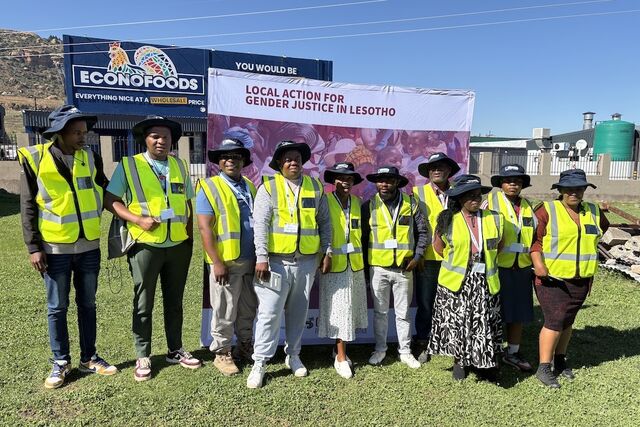
Legal reform advances on GBV, but rates of GBV are unacceptably high: South Africa's GBVF Act took force in 2024; South Africa declared GBV a national disaster in December 2025; Lesotho and Mozambique ratified ILO Convention 190. Yet only two of 16 SADC states (Angola and DRC) have signed CEVAWG; the DRC and Tanzania still have no dedicated domestic violence law, and DRC does not criminalise marital rape. Last week, Lesotho launched a follow up GBV study to a baseline conducted in 2013. This showed that women’s lifetime experience declined from 86% to 66% - still far too high.
Decriminalisation of same sex relations continues to advance, but so does backlash: Mauritius (2023), Namibia (2024) and Botswana (2026 Penal Code amendment) have removed criminal provisions on consensual same-sex relations; Eswatini's Supreme Court ordered the registration of Eswatini Sexual and Gender Minorities in 2026. But several SADC states still criminalise consensual same-sex relations, and legal gains in Namibia, Botswana and Mauritius have been accompanied by hostile rhetoric and organised opposition.
Political representation above global average, but progress is stalling:SADC women hold 29% of parliamentary seats, above the global average of 27.5%; Namibia and Tanzania have women heads of state, five countries exceed 35% women in parliament, and six exceed 30% women in local government. But women's parliamentary representation fell in eight countries after their latest elections. Zambia, whose 13 August 2026 general election results were still being verified at the time of the Barometer's release, is expected to record a substantial increase following 2025 electoral reforms that reserve 20 of the 40 new proportional-representation seats for women.
Mixed results on economic empowerment: SADC adult financial inclusion rose from 60% in 2016 to about 78% in 2025. But women in Africa still spend around 3.5 times as much time as men on unpaid care and domestic work; women account for about 75% of small-scale cross-border traders in the region and face cumbersome procedures, added costs, harassment and violence at borders. Women remain under-represented in tertiary STEM enrolment in every SADC country.
Women carry the burden on climate change: Female agricultural employment reaches 82% in Mozambique, 71% in Madagascar and 68% in Malawi. Mozambique combines the region's highest female agricultural employment with its highest female severe-weather exposure (70%). Women account for only 38% of climate-story sources regionally, and sex-disaggregated environmental data remain limited across most of the region.
Women, peace and security infrastructure is expanding, but implementation and protection lag: Nine SADC states now have National Action Plans on WPS; SADC launched the Network of Women Mediators in Southern Africa in 2025; the 2025 Windhoek+25 Declaration renewed the regional commitment. But women constituted just 7% of peace negotiators globally in 2024, and the UN documented 823 cases of conflict-related sexual violence in the DRC in 2024 alone.
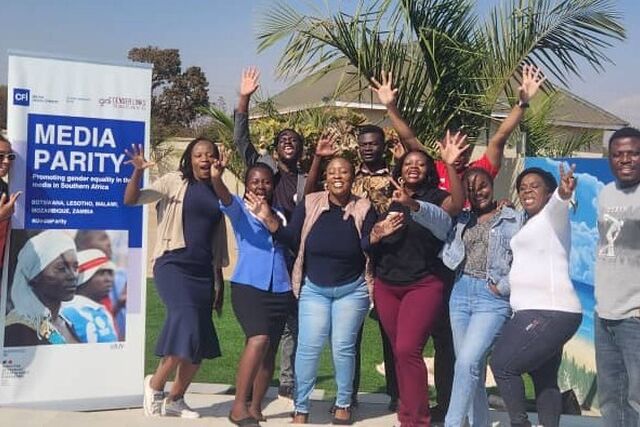
Media gains inside newsrooms have not translated into voice in the news. Women's share of news sources across Southern Africa has risen from 17% in 2003 to 29% in 2026, and women now account for 42% of reporters, up from 31%.
NOTES
Now in its sixteenth edition, the full chapters of the 2026 Southern Africa Gender Barometer, covering eleven themes, will be launched at various points over the next year to coincide with key dates in the gender calendar such as the Sixteen Days of Activism on gender violence from 25 November to 10 December. The Barometer is produced by Southern Africa Gender Protocol Alliance a network of national focal and regional women’s rights networks that campaigned for the gender protocol and now monitor its implementation. Gender Links , a regional women’s rights organisation based in Johannesburg serves as the Secretariat to the Alliance. For further information contact:
Tabetha Kanengoni - Director of Programmes DOP@genderlinks.org.za
Michelle Mutogo Alliance and Fellowships Coordinator Wossoprogofficer@genderlinks.org.za
Colleen Lowe Morna Special Advisor specialadvisor@genderlinks.org.za; 082 651 6995
Comments
Related news