Skip to content

Southern Africa: Strategic litigation across the Marang Fund countries

Wave marron 2x
Southern Africa: Strategic litigation across the Marang Fund countries

Across the five Marang Fund countries, strategic litigation continues to remind us that justice does not always arrive with a loud knock at the door. Sometimes it comes through a court filing, a policy brief, a quiet stakeholder meeting, a survivor-centred referral pathway, or a partner saying, “Let us document this properly, because one day this evidence will matter.”

This month, the Marang Fund celebrates the steady, brave and careful work being led by partners in Botswana, Lesotho, Madagascar, Mauritius and Namibia. While each country is moving through a different legal and political context, the regional direction is clear: communities are building power, partners are strengthening evidence, and the movement is preparing itself to use the law where it can protect, repair and transform.

Botswana: Turning legal victories into lived protection

In Botswana, Marang Fund partners are focusing on advancing protections against hate crimes and hate speech and supporting the emerging marital equality case.
 
The hate crimes and hate speech initiative is being led through a coordinated national approach involving LEGABIBO, BONELA, Friends of Diversity, Botswana Trans Initiative, and Pilot Mathambo Centre for Men’s Health. The work combines legislative advocacy, evidence generation, community documentation, survivor support, and policy engagement. Its purpose is to strengthen justice and accountability where violence, harassment, and prejudice-motivated harm continue to affect LGBTIQ persons and communities.
 
Partners are also supporting the marital equality case, recognising that family, partnership, and legal recognition remain central to dignity, equality, and full protection under the law. This work sits within a broader movement effort to ensure that constitutional rights are not only recognised in principle but also made meaningful in the lives of people and families. Alongside this, Botswana’s formal repeal and legislative alignment of colonial-era provisions criminalising consensual same-sex intimacy are recognised as an important actioned commitment by the attorney general to align legislation with court rulings and promote human rights. This reform is a welcome step in closing the gap between jurisprudence and the statute book.
 
Legal gender recognition also remains an important advocacy priority, with Botswana Trans Initiative continuing to lead advocacy in this area. Together, these efforts show that Botswana’s movement is working across several fronts encompassing protection from violence, family recognition, legal certainty, and dignity in identity. The message from Botswana is clear, legal progress must become lived protection. Court victories matter, but the real test is whether people can live safely, love openly, access services, report harm, and be recognised before the law without fear.

Lesotho Litigation

Lesotho: Protecting bodily autonomy and advancing recognition
In Lesotho, Marang partners are coordinating around two important advocacy areas; the protection of intersex children from harmful medical and legal interference and the advancement of legal gender recognition in national identity and civil registration systems.

For this cycle, partners have prioritised advocacy around parental legal interference in medical sex alteration procedures involving intersex children. This focus places bodily autonomy, child protection and dignity at the centre of reform efforts. Partners are also tracking legal and policy developments, engaging key stakeholders, and preparing advocacy strategies that can support stronger protections for intersex persons and their families.

The legal gender recognition work remains equally important. Existing research has shown that identity documents that do not reflect a person’s gender identity can create barriers to healthcare, employment, banking, travel and safety. For many transgender and gender-diverse people, correct documents are not an administrative luxury. They are a daily safety tool.

Lesotho’s progress reminds us that justice is also found in the right to move through life without having to explain yourself at every counter, clinic or border post.

Mada litigation

Madagascar: Safety first, litigation-ready always

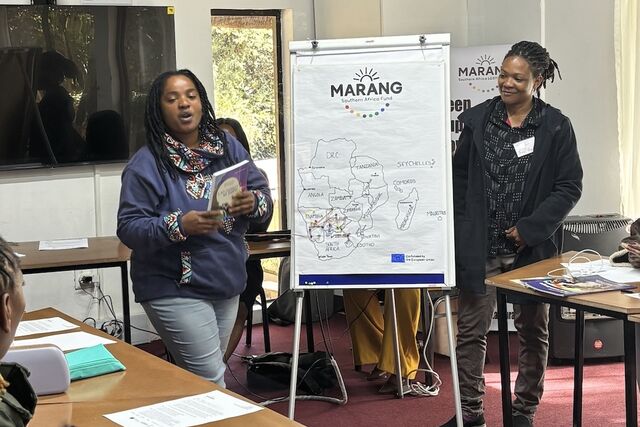
In Madagascar, the strategic litigation training and follow-up work confirmed an important lesson; before litigation can be safe or useful, communities must have reliable ways to document harm, report safely and access support.

Partners are therefore building a safety-led advocacy pathway. Current priorities include establishing a secure coordination platform, mapping referral providers, developing safe space protocols, documenting incidents, creating an incident response flow, sensitising law enforcement, and preparing anonymised case-pattern reports for relevant accountability bodies. The work also includes follow-up on priority cases involving public morality, outing, harassment, detention, blackmail and other patterns of harm.

Madagascar’s direction is not a retreat from strategic litigation. It is a disciplined form of readiness. Partners are strengthening the foundation so that any future legal intervention is informed by evidence, community safety and clear escalation pathways.

At the same time, Madagascar partners are also advancing legal research and movement-building to support the development of a country roadmap on the legal age of sexual majority for LGBTQIA+ persons. This work focuses on understanding the current legal framework, documenting how existing provisions affect communities in practice, and building a shared advocacy position on lowering the age of sexual majority to 18. While litigation is not the immediate starting point, the process is helping partners prepare a stronger evidence base, build community and stakeholder alignment, and identify possible pathways for future advocacy or litigation if needed. It is careful, strategic groundwork, the kind that makes future legal action safer, clearer and more accountable to the people most affected.

There is also promising work on safe spaces and digital referral systems, including exploration of a WhatsApp-based chatbot to support LGBTQ+ people experiencing violence. The idea is not to replace human support with technology. The idea is to create a safer first door into care, referral and protection.

In movement language; first we build the bridge, then we cross carefully.

Mauritius litigation

Mauritius: Advancing legal gender recognition and protection from hate

In Mauritius, Marang Fund partners are advancing advocacy for intersex rights and human rights-based responses to hate speech. The work is strongly alliance-centred, with partners focusing on coordination among grantees and stakeholders, recruitment of alliance members, MoUs, and regular alliance meetings to support joint action.

On intersex rights, partners are undertaking desk research, gathering lived experiences, reviewing legal and healthcare gaps, and strengthening engagement with key institutions, including the Ombudsperson for Children. This work supports a stronger evidence base for advocacy on bodily autonomy, dignity, child protection, and freedom from harmful practices.

On hate speech, partners are strengthening crisis response and documentation systems through the Anti-Haters Attack structure, case management, complaints registers, WhatsApp coordination, and legal complaints to relevant bodies. Human rights defenders and community members have also been trained to improve safety, reporting, and coordinated responses.

Partners are also closely following an independent legal gender recognition case currently before the courts, while staying alert to other LGBTIQ-related cases that may open pathways for support, solidarity, advocacy, or future litigation, including possible developments around marital equality.

Mauritius reminds us that strategic litigation work is not only found in courtrooms. It is also found in alliances, research, documentation, institutional engagement, and the patient work of making sure communities are ready when the law opens a door.

Namibia litigation

Namibia: Challenging exclusion in marriage law

In Namibia, partners are moving forward with a constitutional challenge to provisions of the Marriage Act 2024. The Act defines marriage as a union between persons of the opposite sex and bars recognition of same-sex marriages, including marriages solemnised outside Namibia.

The litigation aims to challenge the constitutionality of these provisions and seek recognition of same-sex marriages, whether solemnised in Namibia or abroad. The case is grounded in concerns relating to equality, human dignity, privacy and Namibia’s international human rights obligations.

This work follows earlier jurisprudence on the residence rights of a foreign spouse in a same-sex marriage solemnised abroad. The current litigation seeks to move the conversation beyond residence and toward broader recognition of the rights and dignity of same-sex couples.

Namibia’s update reminds us that family is not created by paperwork alone, but paperwork often decides whether the law will protect a family when it matters most.

A regional movement with many routes to justice

Across the Marang Fund, not every country is litigating in the same way, and not every context is ready for court action at the same time. That is not weakness; it is strategy.

In some places, the work is in the courts. In others, it is in stakeholder engagement, evidence generation, parliamentary advocacy, safe spaces, media work, survivor support, or coalition-building. Together, these efforts form a regional justice ecosystem. Each country carries a piece of the same promise; that LGBTIQ people deserve dignity, safety, recognition and equal protection under the law.

The Marang Fund remains committed to walking with partners through every stage of this work, from the first community consultation to the final judgement, from the quiet meeting to the public campaign, from the difficult case to the joyful day when someone finally receives a document, a remedy, or recognition that should never have been denied.

The law can be slow; sometimes it even behaves like it is walking to the office in flip-flops. However, the movement is not standing still. Across Southern Africa, partners are organising, documenting, protecting, challenging and imagining better futures into being. That is strategic litigation in its fullest sense, not only going to the courtroom but also building the conditions for justice to arrive and stay.

Comments