Zimbabwe: Rise up of a girl child in Redcliff

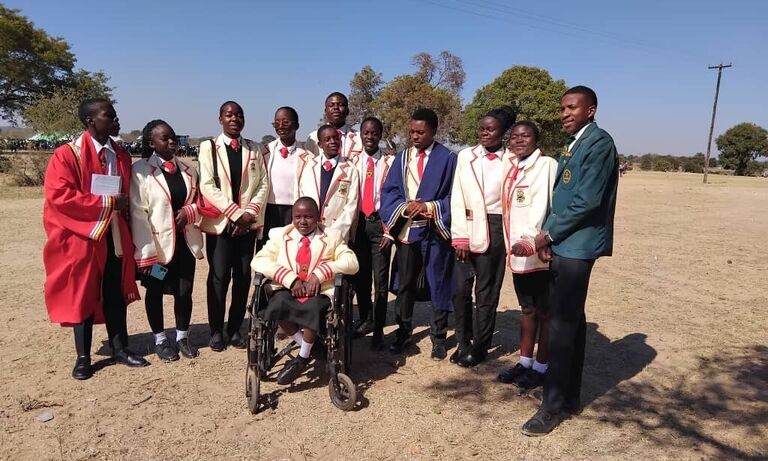
As a junior councillor responsible for youth affairs, I witnessed first-hand how girls were being held back by challenges that should never define their futures—menstrual stigma, lack of sanitary wear, poor sanitation facilities, and family poverty that pushed many out of school.
Although still young myself, my role gave me the responsibility and the platform to advocate for others. Through our organisation, I was entrusted to represent the girl child and youth in South Korea for two weeks—an opportunity that strengthened my belief that girls in Redcliff deserved the same dignity, opportunity, and confidence as girls anywhere else in the world.
But at home, many girls were missing school because of menstrual pain, embarrassment, or lack of pads. Teachers reported that girls were staining their uniforms, isolating themselves, and losing confidence. Dropout rates rose among girls whose families could not afford school fees, stationery, or even basic hygiene products. These issues were not isolated—they were a reflection of structural inequality affecting our community.
Raising awareness and taking action
In response, our organisation launched a comprehensive programme addressing menstrual health, sanitation, and school support for vulnerable girls. We began by distributing sanitary pads to all primary and secondary schools in Redcliff. But we knew that giving pads alone was not enough. Many girls did not know how to use them correctly, how often to change them, or how to dispose of them safely.
So, we conducted awareness sessions in each school, teaching menstrual hygiene management with dignity and respect. Teachers, school authorities, and learners appreciated this practical guidance because it addressed both knowledge gaps and stigma. To support proper disposal, we supplied sanitary bins to schools and encouraged them to maintain clean, private spaces for girls.
We also strengthened local supply by partnering with manufacturers to explore sustainable production of affordable sanitary wear. This aimed to ensure that girls could access pads consistently without depending on donations each month.
At the same time, we addressed school dropouts by supporting girls from vulnerable families with uniforms, stationery, and educational assistance. Several schools sent reports highlighting the extent of need, helping us identify learners who required urgent support. Many of these girls had been suffering silently, and the relief on their faces when they received assistance reaffirmed the importance of this work.
The positive change in Redcliff
The change has been powerful and visible. Schools that once sent complaints about stained uniforms or absenteeism are now praising the transformation. Girls attend school more confidently and participate fully in class and extracurricular activities—even during menstruation. Teachers report that girls are more focused, more present, and more engaged.
Sports participation has increased among girls who previously avoided physical activity during their menstrual cycle. The shame and anxiety that once discouraged them have been replaced with preparedness and self-assurance.
In Redcliff Primary (Ward 8) and other schools, the distribution of pads, the availability of bins, and the educational sessions created an environment where girls feel supported rather than judged. The improvement in hygiene facilities also contributed to better health outcomes and a more positive school experience.
For girls who received uniforms and stationery, the change has been life‑changing. They now walk into school with pride, wearing clean uniforms and carrying books—no longer feeling inferior or excluded because of circumstances beyond their control. This support restored their confidence, and in many cases, prevented them from dropping out entirely.
Sustaining and scaling the movement
To ensure that these gains endure, schools are encouraged to create pad banks so that no girl is left behind when she needs sanitary wear. Parents are engaged in meetings to discuss menstrual health and understand the challenges girls face at school. This helps break intergenerational silence and fosters community support.
Schools are also encouraged to hold Civvies Days as fundraisers for pad banks, reducing pressure on parents who may not always afford pads. Workshops on making reusable cloth pads—run in partnership with the Ministry—aim to empower girls and parents with sustainable skills, especially for those with sensitive skin.
Additionally, initiatives such as charity baskets encourage donations in cash or kind from teachers and learners, supporting both girls and vulnerable boys. In this way, the spirit of giving strengthens the whole school community.
Evidence of transformation
Evidence of this change is visible in improved attendance records, especially during menstruation. Girls who once missed school regularly no longer stay at home. Many have returned to participating in sports, cultural activities, and leadership opportunities.
The community has witnessed reduced embarrassment among girls and increased openness in discussing menstrual health. Parents and teachers who once hesitated now openly engage in conversations that protect and empower the girl child.
Pictures from the distribution events show smiling girls receiving pads, uniforms, and stationery. While some images may be blurred, the joy and gratitude they capture are unmistakable. These moments represent the collective effort of a community determined to uplift its daughters.
As a junior councillor and advocate, I am proud to be part of this movement. We lead so that others may follow. When we lift a girl child, we uplift a family, a community, and ultimately, a nation. The future of Redcliff’s girls is brighter because we chose to take action—and we will continue until no child is left behind.
By: Remekedzai Malunga
Comments
Related Drivers Of Change