South Africa: A young director restoring organisational power through Black queer feminist leadership

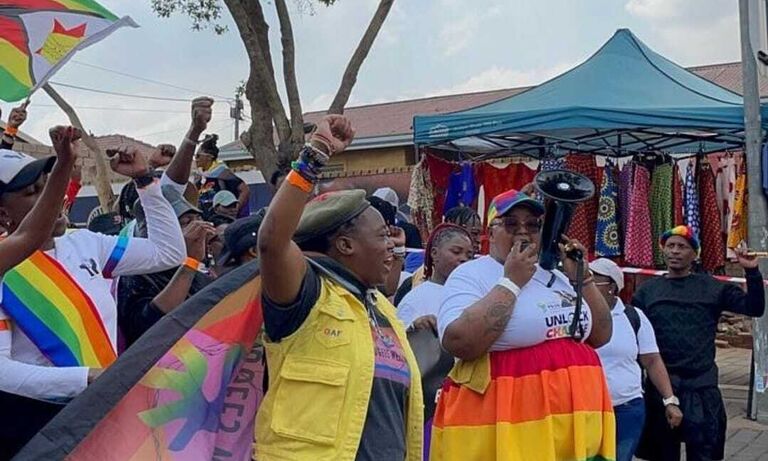
A young Black lesbian feminist leader is reshaping organisational culture, strengthening accountability and amplifying LBQ voices in South Africa’s fight for dignity, safety and justice.
Jamilla Jade Madingwane is a Pan‑Africanist Black lesbian feminist from Eldorado Park whose leadership is rooted in lived experience. Growing up in a community shaped by apartheid spatial planning, violence, and limited opportunities taught her that rights written on paper have little meaning if they do not translate into safety and dignity. This understanding fuels her activism for LBQ women whose lives remain undervalued and unsafe despite constitutional protections.
As a leader of the Forum for the Empowerment of Women (FEW), she carries responsibility for strengthening the organisation during difficult periods balancing advocacy, operations, financial oversight and community accountability. Her leadership is grounded in Black queer feminist values, collective care, honesty and responsibility, creating an environment where LBQ people are centered, validated and protected.
Change emerged through persistent, often unseen work. It required naming violence as systemic, targeted and rooted in patriarchy, heteronormativity and racism even when institutions ignored or minimised LBQ people’s realities. FEW created spaces for LBQ people to tell their own stories, using documentation, community dialogues and survivor‑centered advocacy as tools for healing and political resistance.
The organisation engaged directly with systems that have historically failed LBQ survivors, including the police, justice institutions, and local government. These engagements were challenging but essential in shifting practice and not merely policy. Partnerships with civil society, legal advocates and regional allies strengthened momentum and amplified demands.
This work has resulted in significant changes. Locally, survivors now have safer referral pathways, increased access to support, and stronger trust in activists. Nationally, years of advocacy contributed to greater recognition of hate crimes and the development of better institutional responses. Regionally and globally, South African LBQ narratives have gained visibility, connecting local struggles to broader queer and feminist justice movements.
The change blends service delivery and policy influence. While laws exist, FEW’s advocacy has narrowed the gap between policy and practice. LBQ survivors benefit from increased recognition, validation, and access to justice. Evidence of change includes documented cases, institutional engagement records, community feedback and shifts in public discourse, including the signing of the hate‑crimes bill into law.
Sustaining this change requires strong internal systems, ethical leadership, and community ownership. FEW continues to strengthen governance and accountability systems to ensure long‑term advocacy. Supporting LBQ people to document their own stories ensures leadership is rooted within the community rather than dependent on individuals. Partnerships and networks allow successful approaches to reach new communities.
Ongoing engagement with state institutions remains essential to ensure policy frameworks translate into lived justice. Storytelling remains a core tool for preserving LBQ experiences as evidence, memory and political resistance, keeping the demand for safety and justice alive.
Quotes
Thandeka M, Before, I did not think reporting would make a difference. Through support, I felt believed for the first time.
Khanyi P, For a long time, we survived quietly. Now we have a place that sees us and stands with us.