Centering Queer Voices in IPV Advocacy

Meena Chockalingam – India
In a region where queer lives are often marginalised and intimate partner violence (IPV) remains largely unspoken; I chose to ask a different question: What does safety look like when the state is not an option?
Through my WOSSO fellowship, I focused on a form of violence that too often falls between the cracks, Queer Intimate Partner Violence (QIPV). While IPV is widely recognised, it is frequently framed through cis-heteronormative lenses. Queer survivors, particularly in Asia and the Pacific, often face stigma, legal erasure, or outright invisibility. I knew our advocacy needed to begin with those most affected, and so I organised a regional consultation on QIPV, a first of its kind in our context.
This space brought together queer rights advocates and IPV actors from across the region. It wasn’t about declarations or public campaigns, it was about building trust, sharing survival strategies, and mapping community-led approaches that deliberately did not involve the state. For many, the police, courts, or healthcare systems are not safe or accessible options. So we imagined something different: solidarity-based support systems, collective healing, and resource-sharing rooted in autonomy and care.
This consultation ignited critical discussions that had never been convened in such a focused way. We identified what community accountability might look like, how queer and trans survivors could be better centred, and how resistance can be rooted in relational, non-institutional forms of justice. It wasn’t always easy, these conversations are heavy, complex, and often painful. But for the first time, many felt seen and validated.
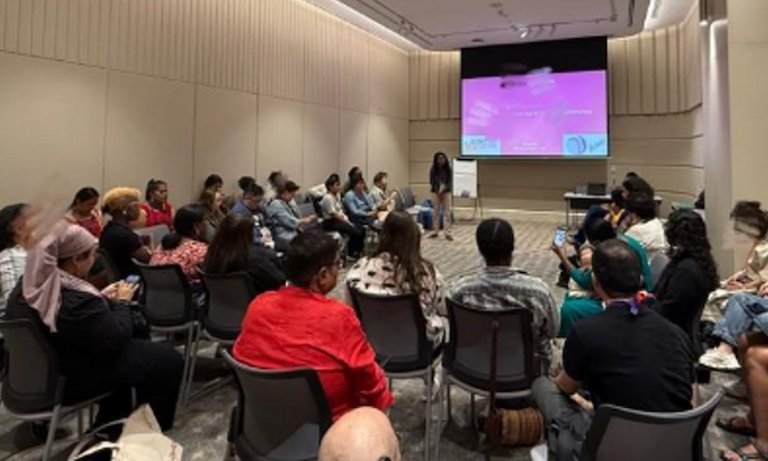
Beyond the consultation, I brought this advocacy to the AWID Forum, where I also organised a global side event titled “Building Advocacy: IPV in Queer Relationships.” There, I connected with activists from Latin America, Africa, and the Middle East, discovering common struggles and shared resilience. WOSSO’s support enabled this global visibility, one that is essential for cross-regional learning and solidarity.
The WOSSO learning spaces helped me reflect on strategy-cause fit: how to adapt advocacy to meet the moment, without compromising on radical care. While my actions may not yet be included in official outcome documents or state agendas, they have seeded new frameworks and sparked quiet shifts, ones that ripple out from community to community.
This is a story about collective imagination and small-scale transformation. It’s about insisting that queer survivors deserve more than inclusion, they deserve redefinition of how justice is pursued. And it’s only the beginning.